Paris, 15th April 2019, 6:43pm.
Inside the ancient cathedral all is quiet. Afternoon light filters through the stained glass.
A fire alarm pierces the silence.
Within minutes, flames tear through the oak roof. Eight centuries of timber explode into an inferno visible across the city. Parisians gather on the Seine’s banks as the spire collapses through the nave in a cascade of embers.
Hours later, the French President stands before the ruin: “Cette cathédrale, nous la rebâtirons.”
This cathedral, we will rebuild it.
On 8th December 2024, five years and seven months after the fire, Notre-Dame reopens, its spire restored, the rose windows gleaming once again.
London, 10th April 2019, 3:47pm.
Five days earlier, it’s a bright spring afternoon in west London.
On Hammersmith Bridge, traffic inches forward, suffocated by congestion. Above, the suspension chains creak under the weight of queuing cars. Cyclists weave between wing mirrors. Beneath the footpaths, invisible cracks spread deeper into the 132-year-old pedestals.
Engineers monitoring the structure see the warning signs of imminent collapse. The decision is taken: close the bridge to motor traffic immediately.
Barriers go up. The traffic melts away.
Six years later, Hammersmith Bridge remains closed to vehicles. The solution proposed by local authorities costs £250m and has no funding.
One might reasonably object that comparing Notre-Dame to Hammersmith Bridge is unfair. A Gothic cathedral and a Victorian suspension bridge are worlds apart.
Fair enough. Instead, consider this comparison: Hammersmith Bridge itself.
In 1882, a boat struck Hammersmith Bridge causing damage that revealed five decades of deterioration. Parliament authorised a replacement in 1883 and provided for a temporary crossing. Four years later, the Prince of Wales opened a new bridge designed by Bazalgette (of London sewer fame). Cost: £83,000 (£9.5m today).
In 2019, ultrasound revealed dangerous micro-fractures in Hammersmith Bridge’s structure. The bridge was immediately closed with no temporary alternative provided. Six years later, the bridge is still closed to traffic (but stabilised). Cost to date: £48m, with full restoration estimated at £250m. Long-term solution: none.
Our Victorian forebears rebuilt their broken bridge faster than we’ve failed to find a solution for ours.
Hammersmith Bridge isn’t just a local transport problem, it’s symptomatic of Britain’s broader state crisis.
This is happening in central London. Not in a rural “backwater”, not in a “left behind” urban centre, but in one of the wealthiest communities in Britain, on a major transport artery. If Britain cannot fix Hammersmith Bridge, what is failing in places that nobody is watching?
This essay examines two questions.
First: how did Britain reach a point where we cannot fix a bridge?
Second: given that reality, what should we actually do about Hammersmith Bridge?
The first answer reveals a state crisis: every actor can block decisions; none can compel action.
The second is more surprising.
When the bridge closed, about 25,000 vehicles crossed it daily and TfL predicted a severe economic impact.
Six years later, 9,000 of those journeys have vanished - not diverted to other crossings, but simply evaporated. Yet the local economy has adapted, air quality has improved, and overall traffic congestion has lessened.
This counterintuitive outcome begs the question: are we actually solving the right problem?
The “obvious” £250m solution may be addressing the wrong issue. The best solution may cost far less, involve no cars, and turn paralysis into opportunity.
Hammersmith Bridge is a testament to Victorian engineering prowess. The present-day bridge is Bazalgette’s 1887 design: a wrought-iron suspension structure with ornate decorative features and coated in deep green paint that blends into the willow-lined bank.
It replaced an earlier bridge constructed in 1827 by local engineer William Tierney Clark. That first bridge cost £80,000 (approximately £8.9m today), was funded by private investors, and operated as a private toll bridge by the Hammersmith Bridge Company. Unusually amongst London toll bridges, it turned a profit. In 1880, it was purchased by the Metropolitan Board of Works and made toll-free.
Clark’s designs at Hammersmith and Marlow so impressed a visiting Hungarian aristocrat that he was later commissioned to build a sister bridge in Budapest, the Széchenyi Chain Bridge over the Danube, which remains a national symbol today.
Fifty years later, in 1882, the aforementioned boat collision and concerns about weight capacity on Boat Race days led Parliament to authorise a replacement. A temporary crossing structure was installed and just four years later, on 11th June 1887, Bazalgette’s bridge was opened at the cost of £83,000 (approximately £9.5m today).
For over 125 years, the bridge received minimal maintenance. This is despite it being bombed three times: by the IRA in 1939, the Provisional IRA in 1996, and the Real IRA in 2000.
Only in 2014 was a comprehensive structural review first commissioned.
The findings were alarming: decades of unchecked corrosion had created micro-fractures throughout the suspension structure, and the Victorian bearings that allow the bridge to flex with temperature had seized solid.
In April 2019, engineers discovered that the micro-fractures had widened enough to close the bridge to vehicles, though pedestrians and cyclists could still cross. Then in August 2020’s heatwave, sensors detected rapid crack expansion. The council’s senior engineer allegedly gave the council leader just 30 seconds to make the critical decision.
Cast iron is unforgivingly brittle; it doesn’t bend, it shatters. With the potential for catastrophic collapse into the Thames, the bridge was completely closed, halting both pedestrian and river traffic beneath.
Did the review and precautionary measures save lives?
Consider Genoa’s Morandi Bridge, a 210-metre section collapsed in August 2018, killing 43 people. The operator had warned in 2011 that collapse within 10 years was possible, yet adequate action was never taken.
Compare too Dresden’s Carola Bridge, a 100-metre section collapsed in September 2024 just minutes after the last tram crossed. The cause was hidden stress corrosion cracking that had existed since construction in 1971.
In 2021, stabilisation work was undertaken and the bridge’s side walkways were made accessible to pedestrians and cyclists. Engineers innovatively filled the cast iron pedestals with fibre-reinforced concrete, installed steel support frames, replaced the Victorian bearings with modern rubber ones, and wrapped the chains in foil with air conditioning to keep them cool during heatwaves.
What can the stabilised bridge carry?
The local council initially claimed the stabilised restriction limited vehicles to 1 tonne (equivalent to a Fiat 500). After a third FOI request and internal review, the local council acknowledged the maximum allowable mass was 3 tonnes (a Volkswagen Transporter). The bridge cannot support regular buses (12-18 tonnes) or normal traffic, but could theoretically support one lightweight vehicle. The stabilisation has secured the structure, but not restored its function.
In April 2025, with stabilisation achieved, the main carriageway was reopened to cyclists and pedestrians, exactly six years after the initial closure, but remains closed to all vehicle traffic including buses and cars.
The stabilisation works to date have cost £48m, five times more than the original construction costs for the entire bridge - why is that?
The explanation lies in a fundamental shift in cost structure.
The 1887 bridge (£83,000, or £9.4m today) was dominated by material costs (perhaps 60%), with minimal professional fees and zero regulatory costs.
The 2019-25 stabilisation (£48m cost) inverts this cost structure: labour comprises perhaps 40%, professional fees have tripled to perhaps 18%, and regulatory compliance (a category that didn’t exist in Victorian times) consumes perhaps 12%.
No itemised accounts exist for either project, but these estimates are based on comparative studies of similar projects (methodology in footnotes).
There has been a profound increase in the cost of British infrastructure. This cost inflation reflects genuine progress, but of a specific kind.
The Victorians built with brutal efficiency: workers died on their projects (accepted as the cost of doing business), heritage protection was non-existent, and accountability was staked on just one engineer’s reputation.
We have replaced this with a system that is better, but also exponentially more expensive: zero-tolerance safety protocols, Grade II listing requirements, extensive insurance and oversight structures. Regulatory compliance (a category that didn’t exist in 1887) now consumes perhaps 12% of the budget.
The Victorians deployed one engineer and one contractor. The modern stabilisation required six major organisations plus multiple specialist consultancies, quangos and charities. Each improvement is defensible on its own merits. Taken together, however, they create paralysis: costs multiply, timelines extend, and every stakeholder gains effective veto power.
These aren’t individual failures but rather a systemic accumulation of red tape that paralyses progress.
The £250m restoration
The first challenging technical problem is solved: the bridge is now stabilised, albeit at significant expense.
But who will fund the complete restoration to return the bridge to its full operational capacity?
In April 2023, the local council submitted a business case to the DfT for full restoration.
That proposed solution is a double-decker system designed by Foster & Partners: vehicles on top, pedestrians in an enclosed tunnel underneath, walking through a dim passage while traffic roars above their heads.
The cost: £250m (and rising with inflation). The timeline: 10 years from approval, meaning 16+ years total since closure.
There is an irony. The entire justification for this solution is heritage preservation, yet this solution will encase the listed Victorian structure in a visual eyesore, forcing pedestrians into a claustrophobic tunnel, ruining the very heritage it claims to preserve.
Here’s where Britain’s infrastructure dysfunction becomes concrete.
Three players are each committed to funding one-third of any restoration:
London Borough of Hammersmith and Fulham (LBHF): Local council and bridge owner. £80m total reserves.
Transport for London (TfL): Transport authority strategically responsible for river crossings but financially crippled despite government bailouts post-Covid. Faces a backlog of 100+ critical infrastructure repairs, with Hammersmith Bridge far down the priority list.
Department for Transport (DfT): National government department, normally provides 85% funding for strategic bridge repairs but has slashed commitment to just 33% for Hammersmith.
Since LBHF submitted their restoration plan in April 2023, the DfT has sat on this business case.
Why have they delayed? It is very likely that the £250m restoration will fail the Treasury’s value-for-money tests, but nobody is yet willing to admit that publicly.
The benefits are modest: reconnecting two wealthy areas across a short river crossing with multiple alternatives nearby. The costs are astronomical: £250m for bespoke heritage restoration, taking 10+ years, with each party exposed to inflation risk.
For context, TfL only spent £42m in 10 years between 2010-2021 for the maintenance of all Thames river crossings.
Some would call Hammersmith Bridge a state capacity failure. But let’s be precise about what has actually failed.
Not engineering ability: British engineers remain world-class, and the stabilisation work completed so far is evidence of that. Not resources: the proposed cost is a rounding error in national budget terms.
What has failed is our political capacity: the ability to make decisions, assign responsibility, and accept trade-offs.
We’ve created a planning system in which every actor can block and add cost but where none can decide, where doing nothing is the safest choice.
In the vacuum left by years of inaction, a cottage industry of alternative proposals has emerged.
Baynes & Mitchell proposed a £110m interwoven structure. Sybarite’s inventive mirror-polished steel “ribbon” was dismissed as “another eccentric press stunt” by the council. Anthony Carlile Architects mocked up a temporary barge bridge. The Manser Practice held an internal competition yielding conceptual designs. The Richmond MP proposed licensed rickshaws. LBHF council have “not ruled out” funding restoration via a resident-exempt vehicle toll (though this appears unviable on basic calculations), whilst the DfT briefly considered permanent closure as a monument.
Even friends regularly offer enlightening new suggestions: inhabited bridges (funded through commercial and residential leases); a version of Wuppertal’s Schwebebahn (a public transport monorail operating since 1897); or London’s failed Garden Bridge.
The problem is not ingenuity. It is a system that blocks any decision-making.
Here is a more facetious proposal: award the contract to a Chinese state-owned operator.
Why China? Well, China’s bridge engineering operates at a scale that is difficult for those of us in a de-industrialised nation to comprehend.
At least 9 Chinese bridges have been built that would span the English Channel.
For instance, the 55km 6-lane trans-oceanic Hong Kong-Zhuhai-Macau Bridge features 23km of elevated sections, a 6.7km immersed vehicle tunnel at 45 metres below sea level, and four artificial islands, completed in just 9 years of construction.
The Huajiang Grand Canyon Bridge, completed in September 2025, is furnished with a “cafe in the clouds” and an artificial waterfall. It spans 2,890m at a height of 625m above the Beipan River and was built in less than 4 years for ~£220m (2.1 billion yuan), less than the proposed restoration of Hammersmith Bridge.
In comparison t these mega-projects, Hammersmith Bridge seems rather modest.
But Britain is not China.
In terms of state capacity, China’s sustained construction programme generates continuous learning and accumulated expertise; Britain builds episodically and as much as half of its wage premium is due to costs rising without corresponding productivity gains.
But in terms of values: we demand zero construction deaths, fair wages, and democratic accountability. China’s infrastructure achievements are staggering, but they’re inseparable from its authoritarian system: bridges built without parliamentary debate, villages demolished, environmental concerns overridden, labour protections minimal. The costs mask 8-15 worker deaths per project and £1-8 daily wages and lower build quality.
Britain’s paralysis isn’t simply incompetence, it’s the cost of worker safety, political accountability and heritage protection.
The question is not “why can’t we build like China?” but “how do we deliver infrastructure within our political and value system?”
£250m for a restoration is an extraordinary sum of money, so how about we just build a new bridge altogether?
At the January 2025 Taskforce meeting, the DfT proposed a demolition and rebuild. This proposal was rejected as legally impossible given the structure’s Grade II listing. But the heritage protection framework is policy, not immutable law. The Grade II listing was only awarded in 2008.
What would it cost simply to demolish Hammersmith Bridge and build a modern replacement?
The brief (assuming permission were granted) would be demolish the existing structure and build a functional and safe 210-metre Thames bridge crossing at Hammersmith, carrying two vehicle lanes plus pedestrians and cyclists.
Answer: £150-225m. A complete replacement would most likely be a beam bridge and require 4-6 years from project start to completion. Overall contingency 20%. The full methodology for my estimate can be found in the footnotes.
There are two caveats to this estimate:
First, I’m not an engineer or architect. This estimate can in no way replace a detailed feasibility study, it is a back-of-the-envelope guess that offers a rough benchmark.
Second, this estimate underplays the vast range of uncertainty in UK infrastructure delivery. Although there is limited ambiguity in the engineering of the bridge itself, the current state of infrastructure construction in Britain means that the final price tag is highly uncertain.
Just compare other recent projects for Thames river crossings. The Rotherhithe Bridge saw costs triple from £100m to £463m before cancellation. The Lower Thames Crossing has spent over £300m on planning alone - more than Norway spent building the world’s longest road tunnel (the Laerdal Tunnel). The Thames Tideway Tunnel escalated from £1.7bn estimate in 2004 to £4.5bn by completion in 2025. The Silvertown Tunnel cost £2.2bn for a straightforward 1.4km crossing. Or consider High Speed 2 (HS2): £40.5bn spent to date (as of April 2025), having achieved very few of its stated aims. Final cost estimated at over £100bn in today’s money. That includes the £100m bat tunnel and the £100m HS2 bridge to nowhere.
Even if the costs of a re-build were acceptable to the Treasury (they’re not) and the legal barriers were removed (they won’t be), demolition would destroy real value. £48m has already been spent stabilising the bridge and this is not simply sunk cost fallacy. The bridge now functions for cyclists, pedestrians, and motorised vehicles up to 3 tonnes, while retaining heritage significance no rebuild could match.
When projects routinely spend hundreds of millions just obtaining permission, throwing away a stabilised structure becomes hard to justify.
The bridge has been closed to motor traffic for six years. Primary school children in Barnes cannot remember when cars could cross. What began as an emergency closure has calcified into permanent car-free status through institutional paralysis.
The solution that is unfolding by default is to do nothing.
This has never been formally proposed, yet everyone’s inaction point towards it. Last month, bridge contractors filed a planning application requesting permission to transport Victorian ironwork to Brighton for long-term storage, indicating no prospect of restoration in the foreseeable future. After all, it could take years or decades before political change unblocks this system to even enable a rebuild, if ever.
To do nothing would imply that vehicle access does not matter. The bridge isn’t really closed - you can still walk or cycle across. And that’s better, isn’t it? We don’t want cars in cities anyway, right?
No! A major London transport link has ceased to function, and there are currently no plans to address it. That should not be acceptable in a competently governed society.
We cannot accept this state of affairs.
But first, we must ask the right questions.
When I began researching this piece, my intuition was straightforward: closing a major bridge carrying 25,000 daily vehicles should lead to more traffic on other nearby crossings and less economic activity on either side.
The evidence shows the exact opposite. Today there is less traffic and more economic activity.
How is that possible?
To answer that question, we must understand:
What happened to the traffic?
What are the social and economic impacts of the closure?
Who has been genuinely disadvantaged?
When the bridge closed in 2019, 25,000 vehicles crossed it each day.
TfL predicted chaos: a July 2019 impact assessment showed 15,000 additional motorised vehicles per day on alternative crossings and estimated “social dis-benefits to exceed £50m per annum.” Local MPs still cite these figures.
But what does the data show six years on?
Today, there is less traffic and congestion on nearby Thames crossings than before the closure.
The data shows traffic has reduced in almost all the locations where increases were initially recorded. By 2024, overall motor traffic volumes across the affected region had fallen by around 10% more than in the rest of London (25% overall). Likewise, total traffic counts on neighbouring road bridges are lower than pre-closure (charts above).
Putney Bridge shows a different idiosyncratic effect. Traffic initially fell back after the closure in 2019, but delays began to increase in 2023. That sequence of events suggests that there are other variables unrelated to the closure that are impacting travel times.
Where did the traffic go?
Cycling data provides part of the answer. Richmond Council’s survey revealed that even a few months after closure, 44% of former drivers had already switched to walking or cycling.
Cycle counts across the area are also markedly increased. This is known in the literature as a “modal shift”. Richmond-upon-Thames now has one of the highest active travel mode shares in Britain.
So, of the original 25,000 daily trips, most shifted to cycling, walking and public transport, and some moved to other bridges.
But here’s the puzzle: TfL reports that 9,000 vehicles (36%) have simply vanished from the road network entirely - they are no longer visible on any crossing between central London and southwest London.
What happened to those 9,000 journeys that simply evaporated?
Was economic activity lost? Were human connections severed? Did relatives stop visiting grandparents? Did businesses stop making deliveries?
The answer may lie in a counterintuitive phenomenon known as Braess’ Paradox: adding capacity to a congested network can worsen performance, while removing it can improve things.
When drivers make individually rational routing decisions, they reach an equilibrium where no single driver benefits from changing route, but this equilibrium is often inefficient for the system as a whole.
In Hammersmith’s case, the closure forced a new equilibrium. The 9,000 vanished vehicles weren’t displaced elsewhere, nor did they represent lost economic activity. They were replaced by alternatives that were more efficient in the new system.
The shopper who made three separate car trips weekly now combines errands or orders online from consolidated delivery services. The school run that meant queueing in traffic now happens on foot or by bike. The commuter who spent 20 minutes driving and searching for parking now cycles in 12 minutes.
After tube strikes, 5% of commuters permanently switch because disruption forces them to discover faster alternatives.
Hammersmith Bridge’s closure worked similarly: people tried new transport modes and often found they were better.
When the bridge closed, TfL predicted economic contraction. The opposite occurred.
Mastercard data shows spending in Barnes increased by twice the London average. Spending increased +21% in Barnes (SW13) and +13% in Hammersmith (W6), compared to London’s +9% average. This held even when the bridge was closed to pedestrians and cyclists.
However, this aggregate spending increase does mask a more nuanced set of changes in local business composition. Data from the same Barnes Community Association survey in 2020 suggested that specialist retailers that previously relied on cross-river customers experienced revenue declines, whilst local businesses serving residential communities tended to adapt most successfully.
As soon as 2020, the closure appears to have reshaped Barnes’ commercial character towards neighbourhood-focused businesses rather than destination retail, potentially strengthening its role as a local high street. Now, six years later, the local economy has entirely adapted to the new reality.
Reduced pollution likely increased dwell time and spending given that air quality improved at every monitoring station across the region, with nitrogen dioxide levels dropping significantly in Hammersmith, most of Barnes, and even Putney.
Emergency services have reported no impact on response times. The London Ambulance Service stated they have “never released any information about the closure impacting response times,” whilst London Fire Brigade data shows no increase in 999 response times in the Barnes peninsula.
West London’s economy hasn’t contracted; it has adapted. This isn’t suppression of activity; it’s optimisation. Economic vitality requires efficient connectivity, not maximum motorised vehicle throughput.
However, there are important confounding factors.
Since 2019, the entire urban transport landscape has transformed through three major forces largely independent of the bridge closure.
The pandemic (normalising remote work and collapsing commuter traffic), regulatory changes (Low Traffic Neighbourhoods, ULEZ expansion, 20mph zones), and new infrastructure (Elizabeth line, expanded cycling networks).
Disentangling the bridge closure’s impact from these confounding factors is nearly impossible, so it is not possible to attribute all these changes definitively to the bridge closure.
But one impact is clear: west London has adapted to reduced car dependency regardless of whether the bridge closure drove or merely coincided with these changes.
It is not necessarily the case that closing bridges improves transport; but it is undeniably true that people and places adapt when given alternatives.
Infrastructure shapes behaviour.
The closure has created genuine hardship for specific groups.
Elderly and disabled residents have been significantly disadvantaged, having lost direct bus routes across the river to Hammersmith with its step-free Tube access, retail outlets and major hospital. Low-income residents have been disproportionately affected. They’re less likely to own cars or bikes, cannot afford taxi detours, and have lost affordable public transport options. Parents with young children face new challenges. Cycling is not always an option, so any journey across the river has become significantly harder.
Specialised retailers have also lost business. Whilst generic local businesses saw spending increases, specialised retailers relying on customers from across London experienced revenue reductions. Similarly, tradespeople and businesses requiring vehicle access face longer detours. Plumbers, electricians, and builders transporting heavier tools lose time and income. Commercial motorised vehicles merit particular attention given ULEZ parallels, where delivery operators have raised concerns about regulatory burdens. However, unlike ULEZ, the bridge closure affects routing rather than compliance costs.
As a local resident who crosses the bridge every week, I see both sides of this argument:
For certain residents and businesses, the closure has created genuine hardship. Equally, however, the constant gridlock has vanished, the local economy has adapted, and cycling - previously a life-threatening exercise - is now pleasant and safe.
The harms are real, but they do not require a £250m car-restoration project. They require targeted public transport solutions.
Ask residents if they want the bridge reopened to all traffic and the answer is obvious: yes.
Maximum choice will always seem the most convenient option.
But that is the wrong question to be asking. As we have established, a full restoration would cost £250m, take years, and likely require a significant vehicle toll.
Given that reality, what’s the best option?
A 2023 poll tested this exact trade-off, and the response from residents was clear. If the alternative was a toll bridge, 50% of respondents would prefer a car-free bridge with cycling, walking and electric shuttles, with 36% in favour of tolling. Similar results were shown in a FareCity survey from 2019.
Given the actual constraints and costs, residents prefer targeted public transport solutions over expensive vehicular restoration.
Finally, we should address a claim that has shaped the entire debate.
Labour Council leader Stephen Cowan has repeatedly stated that the bridge is “legally required to reopen to cars,” indicating that the Secretary of State instructed him on the council’s “Highways obligations.” This assertion has anchored political negotiations around how to restore full vehicular capacity. Mayor Sadiq Khan has also expressed a desire to re-open the bridge to cars.
But in November 2022, the Department for Transport’s Freedom of Information response categorically contradicted this claim:
“The Department has not given any legal instructions to London Borough of Hammersmith and Fulham regarding the management of the bridge – officials and Ministers have been clear that LBHF is the asset owner and decisions on maintenance and repair are for it to take.”
As the owner, there is no clear legal requirement for the Council to reopen the bridge to cars (as they have likely met their statutory obligations, although any formal highway downgrading would require Traffic Regulation Orders under established statutory procedures).
This distinction is not semantic pedantry. If the obligation is political rather than statutory, then the solution space is fundamentally different. The council is not legally bound to pursue a £250m vehicular restoration. It could instead solve the actual mobility problem: providing public transport across the river for those who need it (which may itself be a statutory obligation).
Yet this premise has locked the debate around restoring the existing structure to full vehicular capacity.
So what might a solution look like?
In May 2023, a credible and equitable solution for Hammersmith Bridge was proposed, fully designed and costed.
It cost £10m (25x cheaper than the Foster & Partners solution), permitted cycling and walking, fulfilled public transport needs, and crucially abided by the stabilisation’s weight restrictions.
Ten-passenger autonomous electric pods, running every 2-3 minutes during peak times. Each pod weighs under 3 tonnes when fully loaded, comfortably within the bridge’s limits. The fleet would carry 235-282 passengers per hour. Full integration with Oyster cards and contactless payment. A protected two-way cycle lane alongside and pedestrian walkways. Restructured bus routes. The pods would operate in a single lane with passing points at either end.
Total cost: £10m. Pod fleet (£3m), highways remodelling (£3.7m), public realm improvements (£0.5m), contingency (£2.8m). Timeline: 24-36 months from approval to operational.
The charity Possible spent 18 months developing this autonomous pod system for Hammersmith Bridge. The solution uses proven technology from New Zealand provider Ohmio. The pods are already used today in New Zealand and multiple international airports.
This solution addresses the genuine harms identified earlier. The autonomous pod system provides:
Public transport for those without alternatives: elderly and disabled residents regain direct access to Hammersmith with step-free boarding, young families can cross safely, low-income residents get affordable Oyster-integrated transport.
Reduced congestion for essential and commercial vehicle users: with 9,000 trips already evaporated and additional travellers using pods, tradespeople and businesses would experience a net benefit from reduced congestion on alternative crossings.
This is why the pod solution isn’t just cheaper than the £250m restoration - it’s better.
Why autonomous pods rather than conventional public transport? Standard buses weigh 12-18 tonnes, far exceeding the bridge’s 3-tonne limit. Trams require expensive track infrastructure and permanent structural modifications, the weight of which would be incompatible with heritage constraints. Autonomous pods solve this through lightweight design: each 10-passenger pod weighs under 3 tonnes fully loaded, with ten pods providing equivalent capacity whilst staying within structural limits. The system eliminates driver costs (60-70% of bus operating expenses) whilst enabling 2-3 minute headways impossible with human drivers, maximising throughput and cost-efficiency.
Would the pods risk obsolescence? After all, a restored bridge might serve for decades while autonomous technology is evolving rapidly. But in a rapidly changing transport landscape, the pods deliver adaptable infrastructure with manageable operating costs. Vehicles can be upgraded as technology improves at minimal cost and could be operated publicly like TfL services or through private concession with access leasing and passenger charges. In any case, the pods cost a fraction of the £250m restoration which would likely require perpetual subsidy for changing traffic patterns.
Barriers to implementation exist, but none are insurmountable. The Automated Vehicles Act 2024 already provides a legal framework, while Milton Keynes and Solihull already operate these exact Ohmio vehicles on public roads. The most likely bridge-specific challenges such as weight certification, vibration testing, structural approval are procedural requirements, not engineering barriers.
This proposal solves the actual mobility problems faced by local communities rather than restoring a traffic pattern that was already causing gridlock.
Here is the digital visualisation of the proposal (no sound):
What happened to this proposal?
The Centre for Connected and Autonomous Vehicles offered £200,000 for feasibility studies. Possible assembled a consortium including Ohmio, City Science, and City Infinity. Richmond Council and TfL both agreed to support if Hammersmith & Fulham agreed.
Hammersmith & Fulham refused to engage. The deadline passed. The consortium disbanded.
Since then, Ohmio has begun trials in Solihull and Milton Keynes. Waymo and Wayve will trial autonomous taxi services in London in 2026.
The opportunity for the UK’s first autonomous public transport deployment was lost, but the solution remains viable.
What needs to happen now?
End the pretence. LBHF, TfL and DfT must publicly acknowledge what everyone privately knows: the restoration (£250m+) is unfunded and any replacement (£150m+) is equally unfundable.
Open a competitive tender. Tender for public transport solutions within the stabilised bridge’s 3-tonne weight limit. Offer clear requirements: passengers per hour, Oyster-integrated, delivery timeline.Let the market find the most cost-effective solution. Fast-track regulatory approval for the winning proposal. No multi-year planning inquiries for a bridge that’s already been closed for six years.
Create the destination, invest in the approaches. All three bodies also need to invest in regenerating areas at either end: the retail outlets, cycling infrastructure, public realm upgrades, drainage improvements (co-ordinate with the Hammersmith Flyover redevelopment if that proceed).
Recently, there have been some more positive signs. Various local politicians have begun to more clearly express support for prioritising a public transport solution over simply re-introducing cars. LBHF recently trialled yellow rental carts, demonstrating an appetite for testing new modes of transport.
The Possible proposal would have been the UK’s first autonomous vehicle deployment in real-world public transport.
Hammersmith Bridge offers the perfect testing ground: dedicated straight lanes, low speed, controlled environment. The Government has stated its ambition for technology leadership in autonomous vehicles.
That opportunity was lost when LBHF refused to engage, but the solution remains viable.
The bridge is stabilised. The community has adapted. The technology exists. What’s required is simply the political will to choose the future.
Hammersmith Bridge could become a place where Victorian ironwork frames cutting-edge technology. London’s greenest historic crossing could be the testing ground for Britain’s most advanced public transport solution.
Picture it at dusk: Victorian lampposts glowing, pods gliding silently past, cyclists heading home, the swans gliding along the Thames below. The bridge would no longer be a bottleneck that motorists endure, but a bridge people choose to cross.
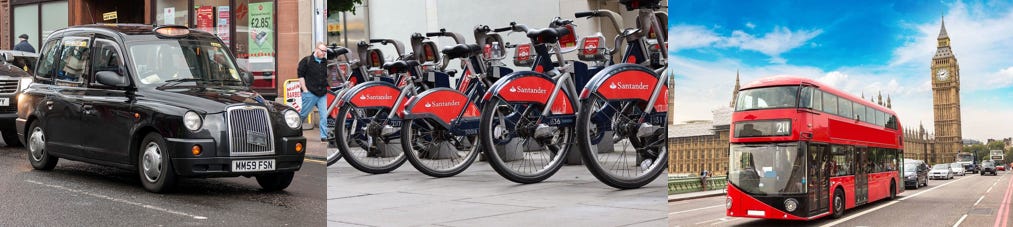
Designed thoughtfully, Hammersmith Bridge’s public transport vehicles could become a timeless and recognisable feature of London’s urban landscape, alongside other distinctive British icons — red telephone boxes, double-decker buses, or black cabs.
That’s the future for Britain that we should be building - one that is even more beautiful than the past we’re failing to resurrect.
Hammersmith Bridge can be one of the greatest river crossings in the world.
Please do get in touch if you are in a position to help solve this challenge or have any feedback.
Let’s build the future.
Will this solution help us solve the vast problem of Britain’s state crisis?
Of course not.
But Hammersmith Bridge teaches a lesson.
Here, the intuitive question based on past assumptions was “how do we restore full vehicular capacity?” The real question we should have been asking ourselves is “how do we solve this mobility problem to ensure a better future?”
While we debate how to restore Victorian infrastructure for outdated traffic patterns, the actual future, autonomous and mass public transport, is materialising around us.
In that sense, Hammersmith Bridge serves as a warning.
If we can’t adapt our thinking here, what hope is there for the toughest problems that we face? For the infrastructure that Britain actually needs to build? For the critical state capacity that we most urgently need to develop?
Hammersmith Bridge is the case study; now Britain must start asking the right questions.
This essay was possible because kind people cared enough to help.
Above all, I would like to thank Leo Murray, who led the charity Possible and wrote a definitive report on Hammersmith Bridge which informed so much of this information in this piece.
Tom Pike, Tim Lennon, and Charles Campion generously shared their expertise, data, and years of work on this problem. Their rigorous research and genuine commitment to solving the bridge’s crisis made this analysis possible.
The Looking for Growth team, Lawrence, Ludo, and Jack, provided invaluable support and encouragement throughout.
I am deeply grateful also to friends Quentin, Aeron, Paramvir, Bob and Jemima, who read early drafts and offered thoughtful feedback.
Finally, my most sincere apologies to every friend, family member, and innocent bystander who endured my monologues about Hammersmith Bridge these past months.
Disclaimer: All posts on this site reflect my personal views only and should not be construed as investment, financial, or professional advice. These views do not represent my employer or any affiliated organisation.