Authored by Charles Hugh Smith via OfTwoMinds blog,
Greed is good up to the point that it delivers ruin.

The primary characteristic of this era is the purposeful confusion of profit and greed, as if they are the same thing. Greed is good because profit is good, and profit is good because the profit motive is the engine of Capitalism which is the engine of global prosperity.
The problem with this logic is greed is not the same as profit. In the sanitized version of the story, the profit motive of each individual magically generates the best possible socio-economic outcome for all via the secret powers of The Invisible Hand of market forces.
This is a fairy tale, of course, for the most profitable arrangement isn't a competitive free-for-all, it's a monopoly that controls the market to its own advantage. Monopolies are by their nature centralized; monopolies snap up or steamroll competitors until they exert centralized power--if not in a single entity then in a cartel that centralizes control of the market.
In the fairy tale about the magic of The Invisible Hand, individuals seek to maximize their private gains by increasing productivity and producing goods and services with more utility-value: higher quality, increased durability, etc. This narrative is core to The Mythology of Progress, which is the belief that Progress is 1) unstoppable and 2) a permanent force that advances as the natural order of things.
In the real world, entities maximize their gains by increasing the price while diminishing the utility-value of the goods and services: profits are maximized by reducing durability (planned obsolescence), reducing quality / quantity and manipulating a monopoly on information to modify the price to extract the maximum profit from each transaction--dynamic pricing is the seemingly harmless cover-term for this exploitation of information asymmetry: the buyer knows little or nothing, the seller knows everything.
This use of cover-stories and terminology is the foundational dynamic of Anti-Progress and Ultra-Processed Life: the authentic term (profit motive) is now the cover story for exploitation-driven greed, and Progress is now the cover story for Anti-Progress--the degradation of quality, durability, transparency and agency.
Greed is not the same as profit. Greed maximizes gains by exploitation, not increasing value. Greed is the operative driver of the current era. The socio-political-economic system is dominated by greed-driven concentrations of power: monopolies, cartels and states.
There are three mechanisms that greatly expand the potential for assembling monopoly / cartel centralization of power:
1) Technology by its very nature leads to centralized ubiquity due to the network effect--the technology that recruits the most users becomes the default access to participate in the economy--participation that is essential to function in a technology-dominated economy. This ubiquity generates monopoly (or quasi-monopoly) which then generates high stock valuations which then provide the money needed to maintain and extend the monopoly.
Technology companies' access to the stock market via initial public offerings (IPOs) offers unique access to a nearly limitless source of "free money" to buy up competitors via issuing more shares of the company's stock.
This immense pool of wealth enables technology companies to buy control of narratives and political power.
2) Credit. If an entity cannot create "free money" by issuing more shares of its stock, if it has access to nearly limitless credit, it can use this credit top buy up competitiors and buy political protection of its monopoly. This is why John D. Rockefeller was obsessed with gaining access to more credit: that was his pathway to establishing a monopoly in the oil industry.
3. The state. Those who buy (or gain by other means) political influence can then create monopolies or cartels via state regulations. To the degree that the state has a monopoly on centralized power, all monopolies and cartels are private-sector / state entities, as centralized privately controlled power can only exist if the centralized state allows it.
As I explain in my new book Investing In Revolution, we inhabit a world in which authenticity has been replaced by self-serving artifice, artifice which enriches those who own or reap gains from centralized, monopolistic, extractive, exploitive entities created by technology, credit/issuance of stock and the state.
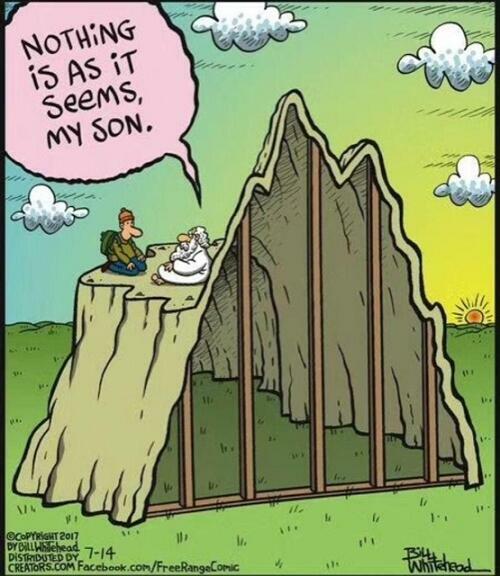
Orwell called this substitution double-speak: greed is positive profit, Anti-Progress is positive Progress, extraction that enriches the few at the expense of the many is just good old profit driving Progress, and so on, a hall of mirrors that spins 24/7 in a digital carnival intentionally designed to be addictive.
Greed is good up to the point that it delivers ruin. We are closer to that phase-change than we imagine--if we can imagine such a phase-change at all.
* * *
My new book Investing In Revolution is available at a 10% discount ($18 for the paperback, $24 for the hardcover and $8.95 for the ebook edition). Introduction (free)
Become a $3/month patron of my work via patreon.com. Subscribe to my Substack for free
Loading recommendations...