The West has been calling Russia's ever-tightening internet regulations on its citizenry a "digital Iron Curtain". Already over a period of months and years of the Ukraine war, various popular US-based social media apps have been throttled and even banned, but this week things have escalated with YouTube and WhatsApp being blocked in Russia:
Russia's internet regulator Roskomnadzor has removed"youtube.com" from its DNS (Domain Name System) servers. If a user tries to access the site directly without a VPN (Virtual Private Network), their router can no longer assign the address to its IP address.
This means that You Tube is no longer accessible in Russia. The WhatsApp domain has also disappeared from Roskomnadzor's servers. The Russian government has also launched a campaign against the messenger app Telegram, leading analysts to say Roskomnadzor is cracking down on platforms beyond its control.
But perhaps even more impactful - in terms of Russians quickly getting news, information, and public statements (even from their own government channels) - is the new move to throttle and block Telegram.
An interesting theory, especially in the wake of the shocking Wagner mutiny of 2023...
Russia’s state media watchdog Roskomnadzor has tightened the screws on Telegram, accusing the messaging giant of failing to curb fraud and safeguard user data, which ironically is similar to what the French government accused the company of when it famously detained billionaire Telegram founder and CEO Pavel Durov.
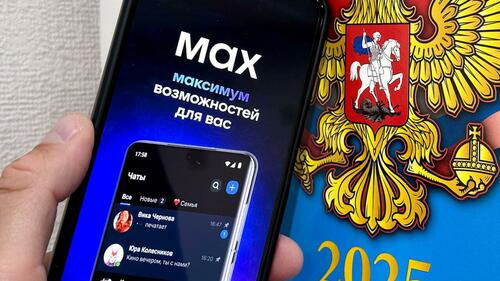
The platform has an estimated over 93 million Russian users, which is more than 60% of the total population, but the Kremlin hopes to replicate with its state-backed messenger, Max. The all-in-one 'super-app' has been described in the following:
Max, a state-backed messenger developed by VK, is being positioned as a patriotic alternative to WhatsApp and Telegram — platforms that in recent weeks have suffered complete or partial disruptions to voice and video calls across the country.
Max is further being dubbed a "state app":
Beyond the glitzy marketing, Max is built to serve a political purpose. Officials want it integrated with the state services portal Gosuslugi via the Unified Identification and Authentication System (ESIA). That would allow citizens to log into government platforms, pay utility bills or sign documents directly through the app, in effect making Max a digital gateway to basic civil services.
But at a government commission meeting in early August, the Federal Security Service (FSB) initially blocked Max's immediate connection to ESIA, citing the risk of personal data leaks. According to IT industry sources cited by Russian media, the FSB submitted a multi-page list of requirements ranging from certified encryption systems to source code audits. Deputy Prime Minister Dmitry Grigorenko, who oversees the project, voiced similar concerns.
BBC has pointed out: "Moscow has made extensive efforts to push Russians to its state-developed Max app, which critics say lacks end-to-end encryption."
As for Telegram, it's loss will be huge for Russians, given that for starters every major Russian media outlet operates a Telegram channel, some even publishing there exclusively.
Major state and legacy outlets including RIA Novosti, TASS, RBC, Interfax, and Kommersant maintain large, highly active channels. In border regions like Belgorod, battered by power outages and municipal disruptions from Ukrainian strikes, Governor Vyacheslav Gladkov uses Telegram to deliver updates directly to residents.
The same goes for many oblasts across Russia's south which have remained a frontline of sorts when it comes to cross-border attacks out of Ukraine.

The other problem in getting rid of Telegram is that Russia's Defense Ministry pushes near-daily battlefield briefings, combat footage, and soldier interviews to its several hundreds of thousands of followers. So clearly any kind of major 'transition' - as is now apparently being forced on the population, won't come easy.
The Kremlin has long warned against Western intelligence infiltration and data exploitation especially via US-based platforms. It has also long battled what it deems 'propaganda' via content on these apps. But to some degree they are also mediums where Russian and Ukrainian officials can directly address the other side, serving the cause of public diplomacy, or at least clarifying each's position.
Loading recommendations...