
Instagram boss says 16 hours of daily use is 'problematic' not addiction
 Reuters
The head of Instagram has defended his platform against claims it caused mental health damage to minors, arguing in a California court that even seemingly excessive use of social media does not equal an addiction.
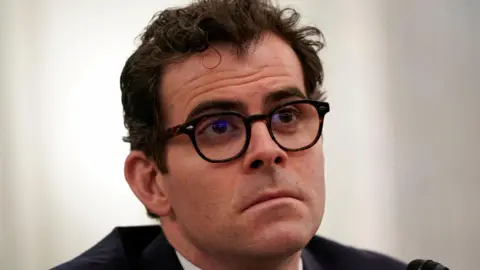
Adam Mosseri, who has led Instagram for eight years, testified in the landmark trial that began this week in Los Angeles, making him the first high-profile executive to appear.
It is expected to last six weeks, and serve as a test of legal arguments aimed at holding tech firms accountable for impacts on young people.
Lawyers for Meta, which owns Instagram, have argued the lead plaintiff in the case, known by her initials K.G.M, was hurt by other things in her life, not Instagram.
YouTube is also named in the suit, while Snapchat and TikTok both reached settlements ahead of the trial.
Mosseri is one of the top executives at Meta, which also owns Facebook and WhatsApp.
It says the jury will have to consider whether Instagram was a substantial factor in the plaintiff's mental health struggles, arguing the evidence shows she faced significant challenges in her life well before she used social media.
Early on in his testimony, he agreed on a broad point made by Mark Lanier, the lead attorney for K.G.M, that Instagram should do everything within its power to help keep users safe on the platform, especially young people.
However, Mosseri said he did not think it was possible to say how much Instagram use was too much.
Whether use was a problem was "a personal thing," Mosseri said, explaining that one person could use Instagram "more than you and feel good about it."
"It's important to differentiate between clinical addiction and problematic use," he added.
"I'm sure I've said that I've been addicted to a Netflix show when I binged it really late one night, but I don't think it's the same thing as clinical addiction."
Yet, Mosseri repeatedly said he was not an expert in addiction in response to Lanier's questioning.
Lanier brought up with Mosseri an internal Meta survey in which the company asked 269,000 Instagram users about their experiences using the app and found 60% had seen or experienced bullying in the previous week.
The lawyer added that K.G.M had made over 300 reports to Instagram about bullying on the platform, asking whether Mosseri had been aware of that fact.
Mosseri said he had not known.
Lanier asked Mosseri what he thought of K.G.M's longest single day of use of Instagram being 16 hours.
"That sounds like problematic use," the Instagram boss answered. He did not call it an addiction.
Mosseri was also asked about a 2019 email exchange between Meta executives, in which they discussed the potential negative impact for users caused by a feature allowing people to change their physical appearance in photos.
Nick Clegg, who worked as Meta's head of global affairs for several years after more than a decade as a Member of Parliament, was among those to raise concern about the image filters.
He said Meta would end up "rightly accused of putting growth over responsibility," which would ultimately have a "regressive" impact on the company's reputation.
Mosseri said the firm ultimately decided to ban image filters that went beyond mimicking the effects of makeup.
After Lanier challenged that claim, Mosseri admitted that the ban on such filters had been "modified", while denying it had been lifted completely.
Meta and other social media companies, including YouTube, Snapchat and TikTok, are facing thousands of other cases brought by their families, state prosecutors, and school districts across the United States.
On his way in, Mosseri was met by a crowd of people outside the courthouse, a mix of onlookers, protestors and parents not involved in the lawsuit, who nevertheless claim to have seen their children suffer from what they say was addiction to social media.
Mariano Janin, from London, is one such family member.
Holding a photo of his daughter Mia, who died by suicide in 2021 when she was 14, Janin said he travelled to Los Angeles to witness the trial and show his support for the idea that social media use should be restricted for young users.
"If they changed their business model it would be different," Janin said. "They should protect kids. They have the technology; they have the funds."
Meta boss Mark Zuckerberg and Neal Mohan, chief executive of YouTube, are among the other high-profile figures expected to testify in the case.