Authored by Dorothy Li via The Epoch Times (emphasis ours),
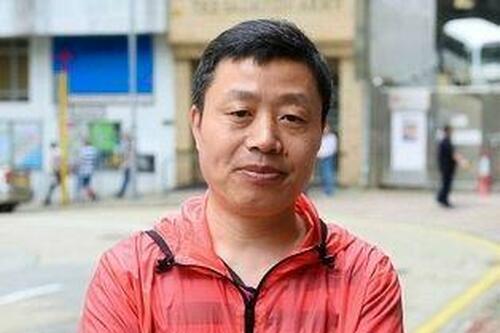
A Chinese journalist whose work exposed human rights abuses committed by the Chinese Communist Party (CCP) has been detained in Beijing for more than 100 days.

Du Bin, 54, was formally arrested in November last year, according to people familiar with the matter who requested anonymity out of fear of reprisal. His case has been transferred to the procuratorate for examination and prosecution as of late January, the sources told The Epoch Times.
Du has been held at Shunyi Detention Center in Beijing since October, when he was taken by police from his residence, according to his sister and rights groups.
Authorities told his sister at the time that Du was detained under suspension for “picking quarrels and provoking trouble.” The vaguely worded charge is often used by the regime to target dissidents and human rights advocates.
Authorities are now pursuing a new charge that may “involve state leaders” after failing to find sufficient evidence to support the initial charge, according to people familiar with the matter.
Details about Du’s case, including what led to his arrest, remain unclear, with authorities citing “state secrecy” as the reason for refusing to provide information to his lawyer.
As a photographer and writer focused on uncovering the history that Beijing seeks to conceal, Du has been targeted by authorities for more than a decade, but this was the first time he had been formally arrested.
Du was taken into custody for 37 days in 2013. His friends told Amnesty International at the time that Du’s detention might have been linked to a documentary exposing the abuses women faced at Masanjia Labor Camp.
Located in the northern Chinese city of Shenyang, the detention facility is notorious for its horrific treatment of female detainees, especially those who refuse to renounce their faith in Falun Gong, also known as Falun Dafa.
The spiritual discipline—featuring meditative exercises and moral teachings centered on truthfulness, compassion, and forbearance—has faced brutal persecution since 1999, when the CCP deemed the practice’s surging popularity a threat to its authority. Torture and abuse are part of the ongoing campaign to wipe out Falun Gong, which had attracted an estimated 70 million to 100 million practitioners in China by the late 1990s.
In two books released in Hong Kong in 2014, Du detailed former inmates’ accounts of torture by Masanjia guards, including shocking female Falun Gong practitioners’ genitalia with electric batons and stripping practitioners naked and locking them up in the cells of male prisoners.
Months after his release in 2013, Du was asked in an interview why he chose to write about Falun Gong, one that he himself acknowledged as the most sensitive topic in China.
“We are all human,” he told The Epoch Times in December 2014. “Using such inhuman methods against others is something I can never accept.”

In December 2020, days before his historical book “Red Terror: Lenin’s Communist Experiment” was set to be published in Taiwan, Du was arrested by Beijing police, again for “picking quarrels and provoking trouble.” He was released after 37 days in detention.
Independent journalists and writers such as Du have endured mounting pressure in recent years as the CCP deepens its grip on society.
In 2025, Beijing once again led the world in the number of reporters imprisoned, the Committee to Protect Journalists stated in its latest annual report, released last month. It marked the third consecutive year that the regime was given the title of “the world’s worst jailer of journalists.”
On Feb. 9, a Hong Kong court handed down a 20-year prison term to Jimmy Lai, founder of a now-shuttered newspaper known for its critical coverage of the CCP, under a Beijing-imposed “national security” law. The court also gave heavy sentences to six former Apple Daily employees on national security charges.
In mainland China, authorities in Sichuan Province recently detained two investigative journalists who wrote about corruption by local Party officials, according to Reporters Without Borders.
International human rights groups have denounced the harassment campaign against Du and called for his immediate release.
“The international community must step up pressure on Beijing to secure Du’s release, along with that of all other journalists and press freedom defenders detained in China,” Antoine Bernard, director for advocacy and assistance at Reporters Without Borders, said in a December 2025 statement.
Human Rights Watch, in a statement following Du’s arrest, said the charge against Du highlighted “the growing intolerance for dissent” under Xi Jinping, the Party’s top leader.

Du is also a photographer who once contributed to international media outlets, including The New York Times. But he was forced to stop after authorities denied him a work permit over his books.
His work includes “Tiananmen Massacre,” which compiles firsthand accounts of the night of June 3–4, 1989, when CCP leaders deployed troops and tanks to suppress unarmed pro-democracy students calling for political reform. That event remains one of the most heavily censored topics in China today.
In an interview with The Epoch Times after his second release, Du appeared calm and undeterred.
“I’m not pessimistic, nor am I afraid,” he said in January 2021, “because my work is based on actual events—all I’ve done is document them.”
Xin Ling and Gu Xiaohua contributed to this report.
Loading recommendations...