
Perhaps the main threat to “traditional” television isn’t that Americans stopped watching video content, it’s that video is everywhere.
Young Americans in particular tend to get their video fix in the “snack aisle”, i.e. on TikTok, Instagram or YouTube, where shorts, reels, highlight clips or whatever the algorithm serves up next are taking up a growing share of screentime.
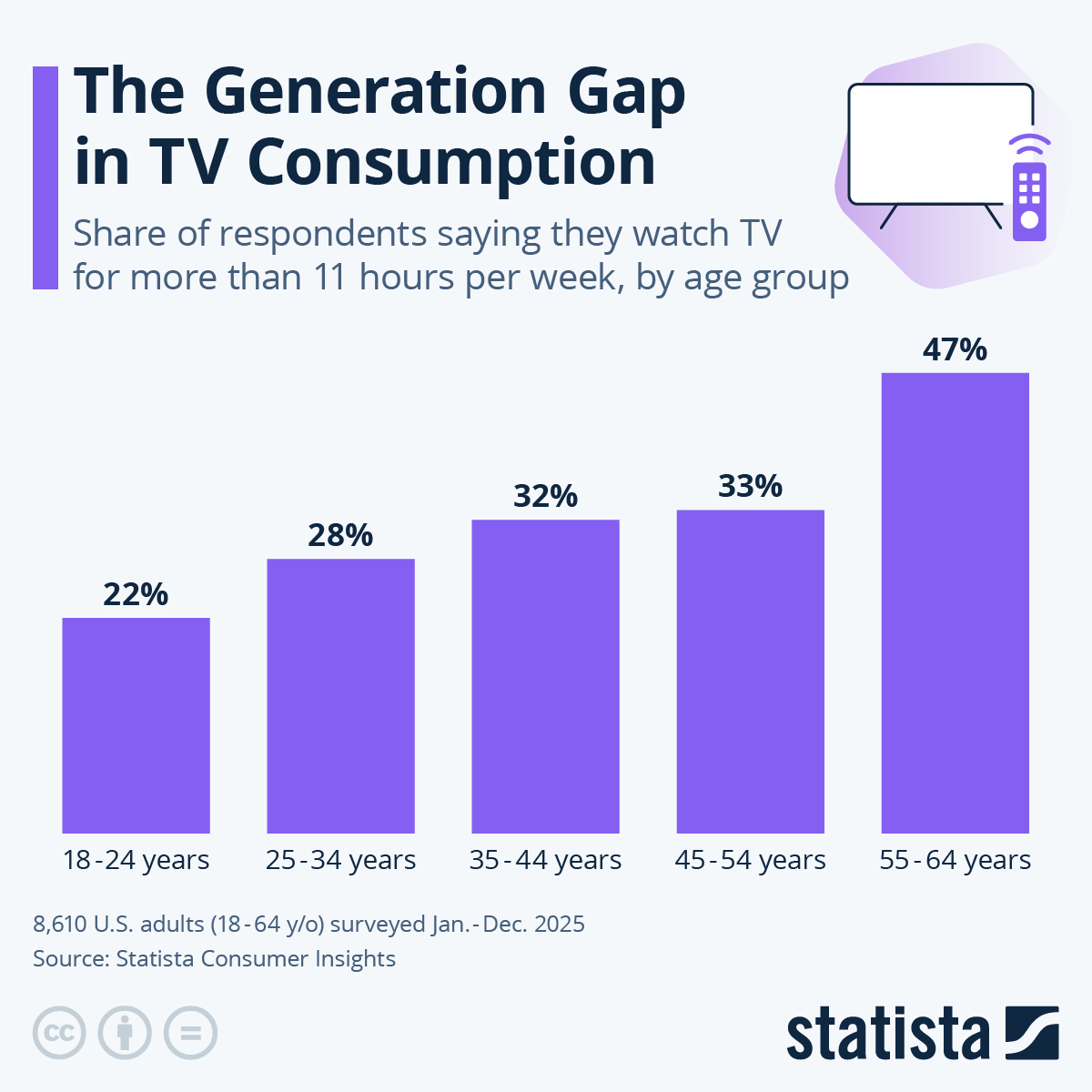
That helps explain why heavy TV use skews older.

As Statista's Felix Richter shows in the chart below, based on data from Statista Consumer Insights, 47 percent of respondents aged 55 to 64 years old, the oldest group included in the survey, watch TV for more than 11 hours per week.
You will find more infographics at Statista
In the youngest group, those aged 18 to 24, only 22 percent of respondents said the same.
So while TV is still very much alive, it’s competing in an increasingly crowded video universe where the default for young people is no longer “what’s on tonight?” but rather “what’s next?”
Loading recommendations...