The only surprise is that the move came so late.
With New York City facing a historic fiscal crisis courtesy of its new mayor, late on Wednesday Moody’s lowered its outlook on New York City to negative, citing the “sizable and persistent” budget shortfalls it’s facing.
The move, which usually precedes a ratings cut in the subsequent several months, came as the ratings company also affirmed its Aa2 rating on the city’s debt, the third-highest level of investment-grade.
Moody’s said the change came after the city’s spending projections showed larger budget shortfalls than previously forecast.
“The negative outlook reflects the emergence of sizable and persistent projected budget gaps that signal underlying structural imbalance and reduced financial flexibility, despite New York City’s still favorable economic conditions,” Moody’s analysts said in a statement Wednesday, perhaps confused how to rate the former mecca of capitalism which was rapidly transforming into a socialist paradise.
Dora Pekec, a spokesperson for Mayor Zohran Mamdani, said the move was premature, citing the $5 billion in additional state funding the city stands to receive under proposed budgets being considered by the legislature.
“These proposals reflect a real commitment by Albany to investing in the services New Yorkers rely on, and the fiscal health of our city,” the statement said. Moody's ignored the protest.
New York City Comptroller Mark Levine said on Wednesday that the change was “a sobering wake-up call about the fiscal challenges ahead for us.”
The Comptroller warned that New York City must close a deficit of at least $5.4 billion this year and next year even as Wall Street bonuses are at record highs, and every major source of revenue, apart from corporate taxes, is rising. “Unfortunately, our expenses are growing even faster,” he said in testimony to city council members on Wednesday. As we said: "socialist paradise"
Levine said that the city’s operating expenses are projected to be $4.53 billion higher than its revenue in fiscal 2026, and warned that a proposed property tax increase floated by Mamdani would put the levy near its limit.
The mayor’s $127 billion budget relies on drawing from the city’s rainy-day fund, which would limit the city’s ability to weather the next economic downturn.
Spending on the city’s schools total $36.9 billion, a 31.5% increase since 2020, even as enrollment has fallen by 100,000 students, according to the comptroller. Moreover, the city’s housing voucher program has been growing at 4% per month and is estimated to total $2.6 billion next year.
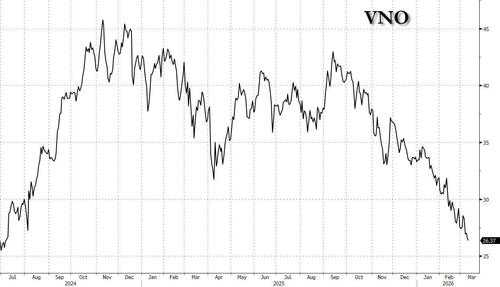
But the real gut punch would be if New York proceeds with the planned tax hike on the city's wealthy, a move which will decimate the city's revenue as the ultra wealthy will move to Florida (as their California peers have already done), as well as leading to an exodus of office tenants, something which the collapsing stock price of commercial real estate giant Vornado has already sniffed out.
