Authored by Brandon Smith via Alt-Market.us
It’s the magic number, the line that’s not supposed to be crossed; when a nation’s public debt finally exceeds its GDP. Historically speaking, it’s not a sign of doom like many economists suggest. Numerous countries have sustained for decades with a ratio of well over 100% and many other factors have to be considered before it’s officially time to panic. Of course, there are some cautionary tales.
Greece and Argentina are two examples. A number of developing countries shave been hit with precipitous decline after they hit the 100% mark. In the case of the US, having access to the world reserve currency changes the dynamic dramatically. Debt does not act like debt in an environment where global trade and investment is mostly is priced in dollars and you control the ability to print those dollars at will.
That said, the recent historic milestone has many people suddenly worried about the state of the US system and the precarious nature of the geopolitical landscape going into the future.

Gross national debt for the US crossed the 100% mark back in 2012. The official public debt touched 101% last month. This factor combined with the inflation of the Biden era and the geopolitical uncertainty of the Trump era has the media talking out loud about the kind of crisis we alternative economists have been warning about for quite some time.
It’s certainly an startling change; alternative economists are no longer the voice in the wilderness. But let’s consider for a moment WHY the mainstream has decided to adopt a crisis posture after so many years of ignoring the obvious.
It’s Okay To Talk About A Crash If It Can Be Blamed On Trump
The corporate media has a clear economic bias; optics must be good for establishment endorsed leaders and optics must remain bad for any political leaders on the naughty list. Regardless of what a person might think of Trump’s presidency so far, it’s impossible to ignore the fact that the media spins his every move into a negative, even when he succeeds beyond expectations.
The tariffs are a perfect example – After Trump announced his aggressive strategy to counter outsourcing, the media and Democrats asserted that an unprecedented inflationary disaster was inevitable. This never happened.
They claimed consumers would have to eat the cost of the trade taxes on international corporations. This didn’t happen either. In reality, the CPI barely budged in response to tariffs. Why? Because companies are absorbing the higher costs (as I and some other economists predicted).
The retail markups on goods made overseas are substantial. International conglomerates have plenty of room to take the hit while avoiding raising prices on the shelf. Trump knows this, and anyone who has studied export markets knows this. Yet, the demonization campaign against tariffs was absolutely frantic.
This is just one example of a false threat; an imagined crisis fabricated for the sake of political interests rather than the for sake of protecting the American people. It’s important to be able to discern between very real economic dangers and false narratives designed to target and scapegoat.
Suddenly The Mainstream Is Noticing US Debt
The Committee for a Responsible Federal Budget (CRFB), a Washington-based fiscal watchdog, released a sweeping new report this week warning that policymakers are “woefully underprepared” to handle the next recession or financial shock.
They assert that the national debt crossing the 100% benchmark is one signal among many that the US cannot handle a surprise destabilization event, though they note that interest payments on that debt are the greater concern. By 2036, according to Congressional Budget Office projections, debt is on track to reach 120% of GDP with interest swallowing $0.26 of every dollar the government takes in.
The report also warned about rising inflation dangers associated with monetary policy. This falls in line with reports of tensions between Trump and the Federal Reserve, but corporate news sources are painting the Fed as a kind of “wayward institution” stuck in the middle of a bad situation they have nothing to do with. In reality, the Fed is the cause of most of our nation’s debt and inflation problems; they enable the money printing bonanza and they are unaccountable to the American public.
Fortune Magazine has tied threats of inflation and debt accumulation to the Iran war, and Bloomberg has published articles lamenting an inevitable “wave of global inflation” due to the conflict. I find this fascinating given the media’s refusal to accept that inflation existed after the 2020 election. Bloomberg even asserted that rising inflation was a “mirage” and Fortune reprinted those claims.
The question is not what Trump will do in the face of a crisis event; rather, we must ask what the Fed will do? Will they raise rates again to mitigate inflationary pressure, or will they turn the money printers back on to stave off any potential deflationary consequences. Given their track record, it is likely the Fed will inflate, but high interest rates at this time could also be devastating.
With the GOP ostensibly in control of the government the bankers might be able to divert all blame onto conservatives policies, and to me this is the real concern. Will the Fed pull the plug on the economy simply because they have a convenient scapegoat?
Geopolitical Black Swan Or Minor Blip On The Radar?
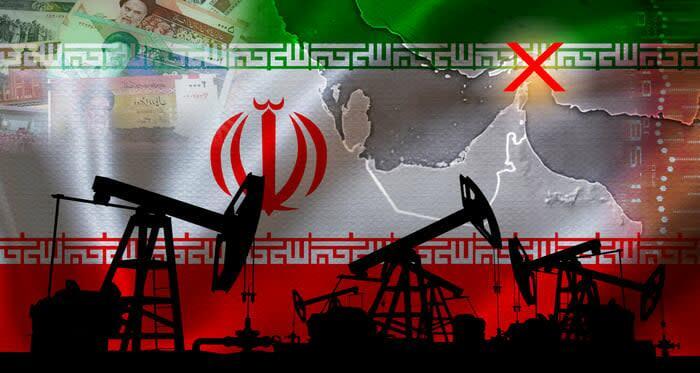
Over the past couple years I have warned extensively about war with Iran, specifically in relation to the Strait of Hormuz and the 20% of global oil shipments that travel through it every year. The war itself is superfluous; I have little doubt that the US can and will destroy the majority of Iranian military infrastructure within a couple months. The greater danger is how easy it will be for insurgent elements to keep the strait closed using simple guerrilla tactics.
It doesn’t take much to block up the narrow strait and threaten global oil prices. Securing it would have to be a top priority of the Trump Administration, which seems to be the case given Trump’s latest statements. Troops on the ground are unavoidable to ensure the Hormuz remains clear, and this is going to ruffle a lot of feathers.
The strait is the only legitimate geopolitical leverage Iran has against the US, but not in the way many people assume. It is true that IF the Hormuz remains contested for more than a couple months, the economic effects could cascade into the markets and cause serious instability. However, this instability will initially affect the East, not the West.
Only 7% of US oil imports and 6% of European oil imports pass through the Hormuz. In comparison around 50% of China’s oil imports and 40% of India’s imports rely on the strait. The hardest hit, however, will be Japan, with over 70% of their oil imports relying on ships passing through the Hormuz. And, as most economists know, Japan’s markets are deeply intertwined with US markets through the Yen carry trade.
In Japan, ongoing oil-driven inflation could pressure the Bank of Japan to tighten policy through rate hikes or reduced bond buying. This narrows the carry trade differential, eroding carry profits and potentially triggering an unwind. In other words, it will no longer be cheap for investors to borrow Yen at near zero rates and then buy assets in the US.
Prices would have to rise considerably in order to trigger such a cascade, though. It’s important to note that the panic over an impending energy crisis is currently based on speculation and not legitimate shortages.
When an actual crisis occurs, we’ll know it. When shale oil drillers in the US ramp up production because they KNOW the high prices can sustain them, then it’s time to worry. When we see sustained weekly gas price spikes of 10%-20%, then it’s time to worry. If foreign countries initiate a large scale dump of the dollar as the petro currency, then it’s time to worry.
The war itself would have to carry on for many months to create these conditions and I’m not convinced yet that this will be the case. The expectation among many on the political left (and among libertarians) is that the war in Iran will carry on for years because that’s what happened in Iraq and Afghanistan.
I have to ask this question, though: Has anyone considered the possibility that those wars lasted for decades because they were DESIGNED to go on for decades? Who decided the objectives? Who decided the parameters for success? Who decided that occupation was necessary? It was establishment Neo-cons and Democrats that created the necessity of occupation out of thin air. “Defeating the enemy” became a secondary concern.
The length of the Iran war will not be decided by the current Iranian regime, it will be decided by Trump. If the only objective is to destroy Iran’s ability to project military power and to secure the Hormuz (and avoid occupation of the greater territory), then the war will be short and there will be no energy crisis.
This is not my endorsement of the war in general, just the facts. There are much bigger threats to the US economy and the global economy than Iran right now.
The Real Danger
Iran has the potential to become a “linchpin” disaster, but the conditions are not right for one yet. For now, I continue to believe that the most significant danger to the global economy and the US economy is still the European oligarchy and their push for war with Russia over Ukraine. Any move by the Europeans to deploy troops to the region could result in a large scale war that would dwarf the events in Iran and completely derail already fragile economic structures.
If you’re worried about global Armageddon, look to Ukraine, not Iran.
The largest secondary hazard is domestic. NGO funded leftist riots, terror attacks and movements to burn the country to the ground in the name of Marxist “deconstruction” are more perilous to the US than most of the populace understands. Add to this the increasing number of Islamic terror attacks and we’ve got a recipe for civil breakdown. Internal insurgencies would have to be handled by the armed citizenry rather than sitting around and relying on the government to do everything.
Then you have the Federal Reserve and the Catch-22 policy conundrum. The central bankers could, theoretically, collapse the US economy at any given moment using the sudden whiplash of a large rate hike or a large stimulus program. The financial system would not be able to adapt this time. With Trump in office I would argue that the bank is MORE likely to do this.
There is a fine line between vigilance and hysteria. We have to be careful not to blackpill ourselves into oblivion over events like tariffs or the war in Iran. That said, there are indeed very real catalysts brewing within geopolitics and on the home front. At bottom, there are people out there that desperately WANT the US to collapse.
For them, every crisis is an opportunity to push their agenda forward whether those crises are engineered or not. By extension, some threats are fabricated and exaggerated to conjure up a public frenzy, manipulate popular opinion and destroy the US from within. Knowing what is real and what is illusion is essential to our nation’s survival.