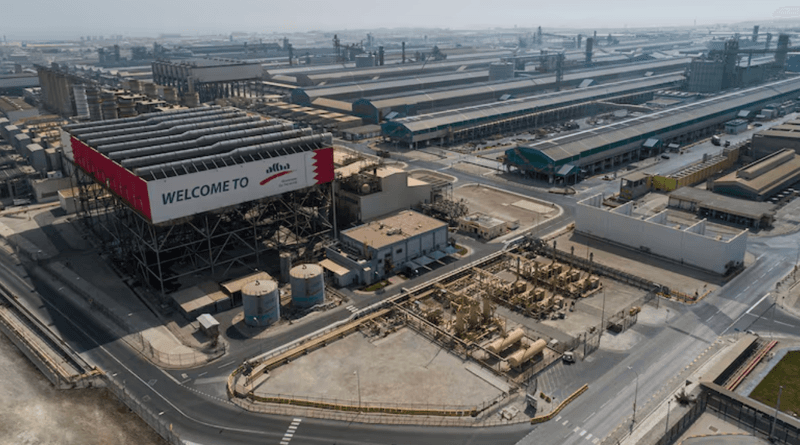
The world's largest single-site aluminium smelter in the Middle East cut its output by about 20% on Sunday, marking yet another troubling development for the global economy. The disruption in the Strait of Hormuz is no longer just an energy story - it's now spreading into industrial metals. These second- and third-order effects could soon disrupt global supply chains and tighten aluminium availability, thus pressuring prices higher.
Bloomberg reports that Aluminium Bahrain (Alba) began a controlled, safe shutdown of three reduction lines on Sunday to preserve business continuity amid heavily disrupted maritime shipping routes through the Hormuz chokepoint.

This production shutdown accounts for about 19% of Alba's total output capacity of 1.62 million tons per year, representing roughly 2.2% of global aluminium production. The suspension aims to preserve its inventory of raw materials.
In 2025, Gulf Cooperation Council members produced around 6.16 million tons of aluminium, or about 8.35% of global supply, according to the International Aluminium Institute (IAI).
Alba's cutback, along with the risk of broader disruptions to the aluminium market in the Gulf, could drive aluminium prices in the London market even higher.

The latest ship tracking data of the Hormuz chokepoint shows tankers anchored on both sides of the strait's entry and exit points. Traffic remains muted.

Meanwhile, Iranian Foreign Minister Abbas Araghchi assured the world on Saturday evening that the Hormuz waterway was open to all vessels, except those linked to the US or Israel.