Authored by Steve Watson via Modernity.news,
Tucker Carlson sat down with independent journalist Glenn Greenwald for a pointed exchange that cut straight to concerns over free speech limits and the risk of domestic fallout from the ongoing Iran conflict.

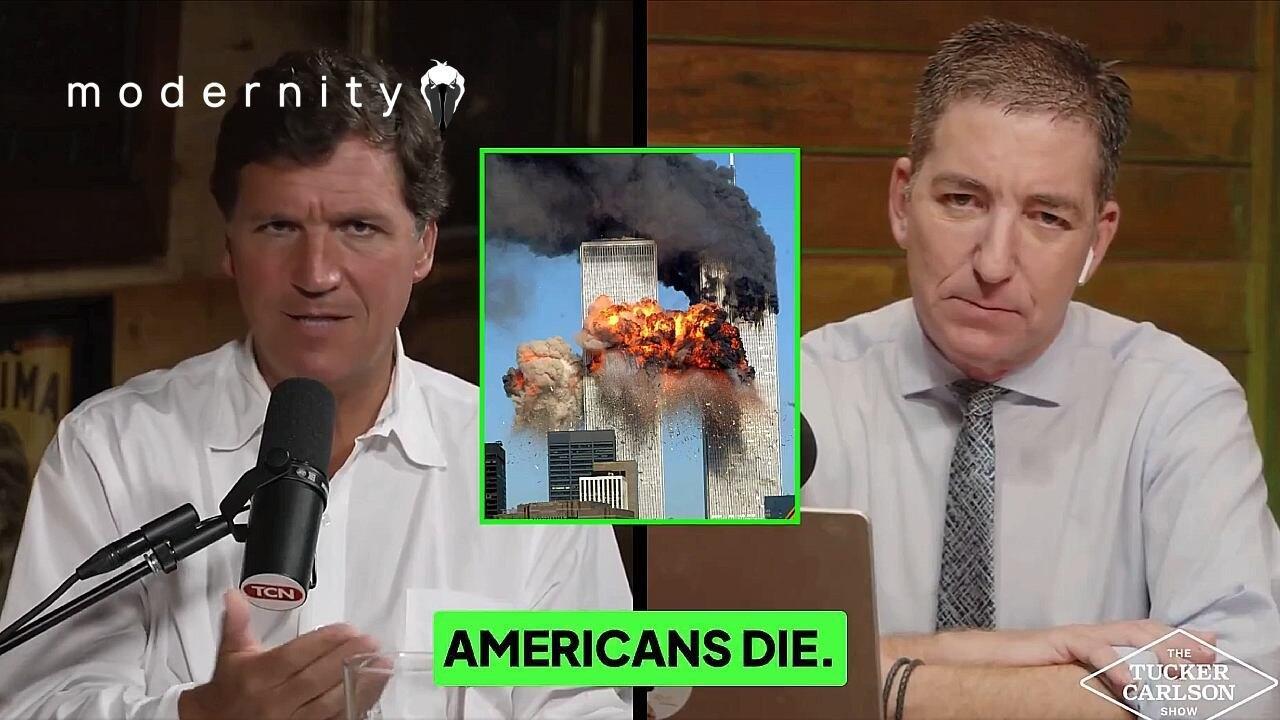
Greenwald laid out a sobering scenario: mass casualty attacks on U.S. soil could trigger sweeping “emergency measures” that, once imposed, become fixtures of American life—just as the Patriot Act did after 9/11.
The conversation opened with Greenwald addressing a noticeable imbalance in what passes for acceptable criticism in public life.
“It’s interesting that there’s no criticism of our country that is banned or even discouraged — only of a foreign country,” Carlson observed.
Carlson pressed further: “If you can’t criticize a foreign country, then that country’s in charge, right? What other conclusion should I draw?”
Greenwald responded: “I can’t really provide you with a cogent one.”
The discussion then turned to security threats inside the United States.
“Are you concerned that there could be attacks here in the United States?” Carlson asked.
Greenwald answered directly: “I feel like there was already an attack in the United States. That Austin shooting. We haven’t heard much about it, but it seemed pretty clearly linked to the Iran war.”
He added: “I would be very, very surprised if there aren’t others.”
Greenwald went on to outline the broader pattern such events could set in motion.
“I do think if it gets to the point where this really gets out of hand and you start to see mass casualty attacks in the United States, the history of the United States and other countries leaves no doubt that emergency measures will be instantly imposed, and those emergency measures don’t go anywhere when there are emergencies.”
He pointed to a clear historical precedent.
“That was the history of the Patriot Act. The Patriot Act was this radical, extremist, un-American law that we needed, supposedly, in the wake of 9/11. They assured us, ‘Oh, don’t worry, it’s going to be temporary.’”
“Here we are, 2026. It’s part of our woodwork, and nobody ever talks about it anymore. That’s how quickly these things can get normalized,” Greenwald concluded.
The exchange highlights a recurring tension: how quickly governments can expand surveillance and emergency powers in response to crisis, only for those powers to linger long after the immediate threat fades. Greenwald’s reference to the Patriot Act serves as a reminder that assurances of temporariness often prove hollow once the machinery of control is in place.
Critics of such measures have long argued that they erode foundational liberties under the guise of protection. The pattern repeats across administrations and conflicts—temporary becomes permanent, exceptional becomes ordinary.
Greenwald’s warning carries weight precisely because it rests on documented history rather than speculation. The Austin incident, however briefly covered in mainstream outlets, fits into a larger conversation about spillover effects from foreign entanglements reaching American shores.
As tensions persist, the question of how the U.S. responds to any future incidents remains open. What is clear from the record is that once emergency frameworks lock in, rolling them back demands sustained public vigilance.
Freedom does not defend itself. History shows it slips away quietly when citizens stop paying attention to the fine print attached to every new “temporary” power grab.
This interview arrives on the heels of fresh scrutiny surrounding Carlson himself.
Just days earlier, the White House denied claims that Carlson had been targeted in what amounted to a CIA spy operation tied to his pre-war communications with Iranian contacts and potential FARA implications.
Your support is crucial in helping us defeat mass censorship. Please consider donating via Locals or check out our unique merch. Follow us on X @ModernityNews.
