By Ethan Howland of UtilityDive
The U.S. Department of Energy’s secretary has broad authority under the Federal Power Act to declare emergencies to keep power plants from retiring, and those emergencies don’t have to be imminent, DOE told a federal appeals court last week in response to challenges over its orders keeping a Michigan coal plant online.
“The statute’s text grants the Secretary discretion to determine that an emergency exists,” DOE said in a March 17 brief with the U.S. Court of Appeals for the District of Columbia Circuit. “This expressly includes a sudden increase in demand, a shortage of generation facilities, or other causes.”

The brief is the DOE’s first defense in court of the 90-day emergency orders it began issuing last year to prevent fossil-fueled power plants from retiring. So far, the orders have targeted six power plants — all but one coal-fired — totaling about 4,300 MW.
Generally, in those orders, DOE said the power plants need to keep running to prevent blackouts in the face of rising electric demand. The DOE has not allowed any of those orders to lapse, using its authority under the Federal Power Act’s section 202(c) to issue new 90-day orders when the old ones expire.
The brief was in response to challenges brought against the DOE over its May 23 order directing Consumers Energy to continue running the 1,407-MW, coal-fired J.H. Campbell power plant in West Olive, Michigan, past its May 31 retirement date. The department has renewed that order three times since.
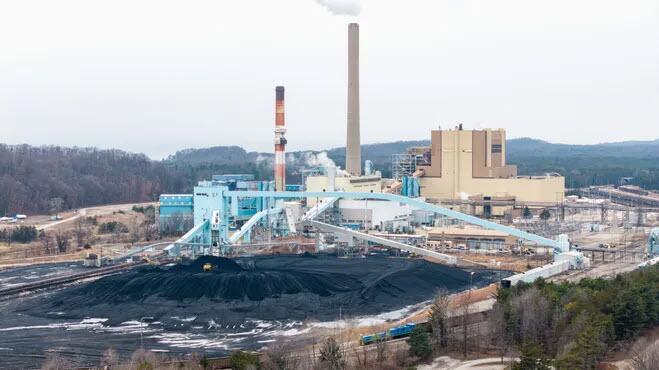
Michigan, Minnesota and Illinois as well as the Sierra Club and other groups have challenged the emergency order. In part, they contend that DOE failed to show the Midcontinent region around the Campbell power plant faces an energy emergency.
In its brief, DOE said the Federal Power Act defines emergency broadly.
“It does not require imminence or an unexpected development,” DOE said. “The Secretary is also granted broad discretion to use his ‘judgment’ on what ‘will best meet the emergency and serve the public interest.’”
Moreover, the statute lacks strict procedural requirements, according to DOE.
“Contrary to Petitioners’ contentions, the Secretary was not required to prepare any particular analysis, weigh alternatives, or to select the best theoretically possible emergency response,” the department said.
When DOE considered issuing an emergency order for the Campbell power plant, the department found that electricity demand was rising, major power plants were retiring and new power sources weren’t coming online fast enough, it said. The Midcontinent Independent System Operator was at “elevated risk” for reliability problems and higher than normal temperatures were expected, DOE told the court.
“The Secretary interpreted the totality of this evidence and applied his expertise to find that an emergency exists,” DOE said.
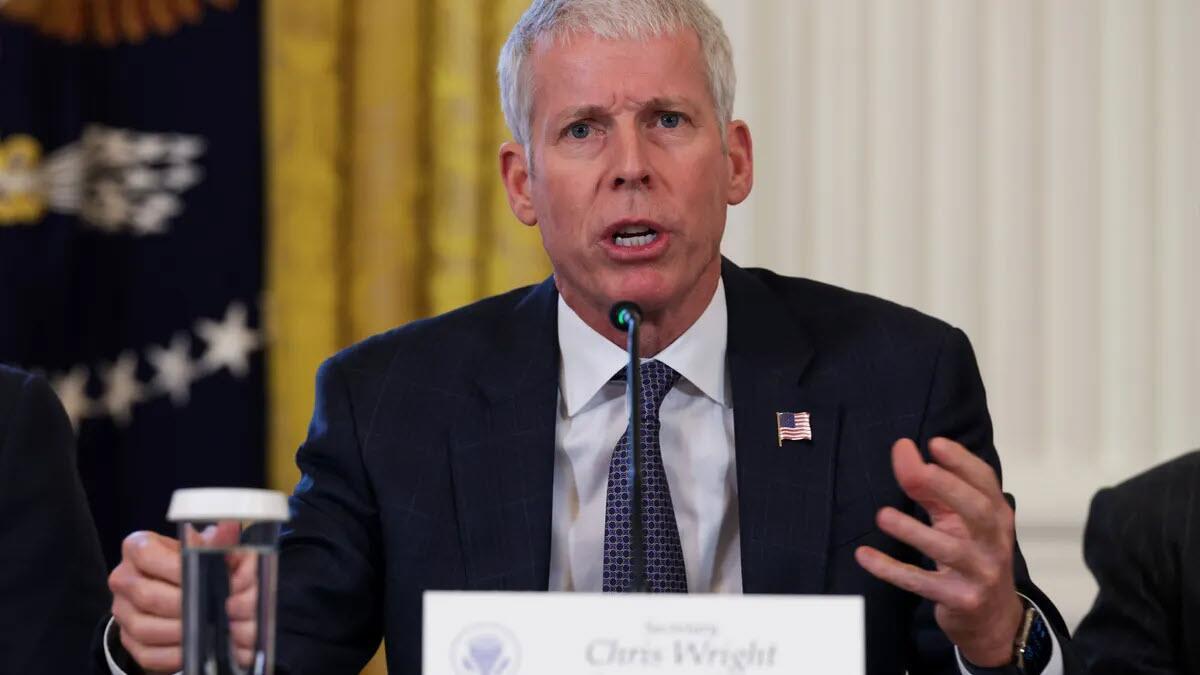
DOE noted that Secretary Chris Wright ordered the Campbell plant to operate under “economic dispatch” to reduce ratepayer costs.
If the court finds a legal flaw in the 202(c) order, it should send the issue back to DOE instead of vacating the order and limiting its ability to issue similar orders, government lawyers argued.
“The Secretary must be able to use section 202(c) to protect public health and safety, particularly in anticipation of extreme weather events like the recent Winter Storm Fern and the ensuing, prolonged cold snap,” the DOE said.
In the seven months after DOE ordered the Campbell plant to stay online, it produced 3.6 million MWh, down 39% from 5.9 million MWh generated over the same period in 2024, according to the latest U.S. Energy Information Administration data.

Consumers Energy spent about $254 million keeping the Campbell plant operating per the DOE orders through December, according to a Feb. 10 filing at the U.S. Securities and Exchange Commission. It received $119 million in revenue from running the plant in the second half of last year and has asked the Federal Energy Regulatory Commission for permission to recoup $135 million in costs from MISO ratepayers, said CMS Energy Corp., which owns Consumers.
Consumers urged the appeals court in a brief to not weigh in on the cost-recovery issue, which is being handled by FERC.
The utility asked the court to “avoid unintended consequences for those separate proceedings, including making clear that any decision here does not assume the availability of refunds or otherwise affect FERC’s decision-making in those separate proceedings.”
DOE continues to issue emergency orders to keep other fossil-fueled power plants running. On March 16 it issued its second emergency order for TransAlta’s 730-MW, coal-fired Centralia power plant in Washington. The company must make the plant available to run until mid-June under the order. The company had planned to shut it down at the end of 2025.
TransAlta’s president and CEO, John Kousinioris, said during an earnings call in February that the company was complying with the orders, but he did not expect the plant to run given “how flush” the state was with hydropower.
“Our primary focus is more on getting clarity on the existing order,” including how TransAlta will recoup its expenses from keeping the unit online, Kousinioris said.
Other generators under 202(c) orders are in Colorado, Indiana and Pennsylvania.