Solar power has been around for a long time now. Once upon a time, it was mostly the preserve of research projects and large-scale municipal installations. Eventually, as the technology grew ever cheaper, rooftop solar came along, and cashed-up homeowners rushed to throw panels on their homes to slash their power bills and even make money in some cases.
Those in apartments or rented accommodations had largely been left out of the solar revolution. That was, until the advent of balcony solar. Popular in Germany, but little known in the rest of the world, the concept has brought home power generation to a larger market than ever.
Photovoltaic solar panels were very expensive to manufacture, a long time ago. This made it difficult for solar power to compete with traditional energy sources like fossil fuels. High install costs and limited power output made the business case difficult, even if the energy from the sun itself was effectively free. However, as the desire for cleaner sources of energy ramped up over the years, solar panel production ramped up in turn. Economies of scale did their thing, and panels grew cheap enough for individuals to consider installing them on their own homes. This led to the widespread uptake of rooftop solar, with installations commonly in the 5 kW to 10 kW range with inverter hardware to allow feeding energy back into the grid in a safe and controlled manner.
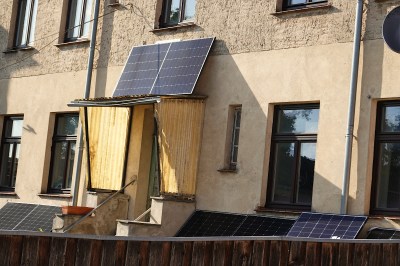
The problem with rooftop solar is that not everybody owns their roof. A great many people around the world live in apartments, or rent, and are not in a position to make permanent adjustments to their home. These groups were largely left out of the solar revolution. That was, until solar panels grew so cheap and power bills grew high enough that even small-scale installs started to make financial sense.
In Germany in particular, small solar installs have become quite popular, and the country has become a hotbed for so-called “balcony” solar installations. These involve simple setups of one or two solar panels which are designed to be easily mounted on a balcony or other outdoor area of a home, rather than permanently installed on a rooftop.
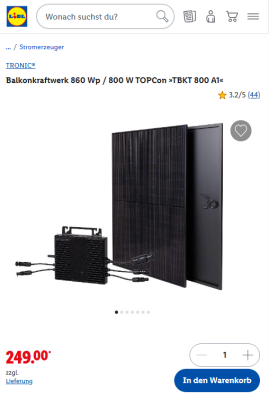
They come with small inverters to convert the DC output of the solar panels into AC power, which plug straight into an existing home power socket. This do-it-yourself install method eliminates the need for hiring an electrician, further improving the affordability of the system. The inverters used with these systems include anti-islanding protection so that the solar system does not power any circuits if the grid has been deenergized for service or repair.
Balcony solar does have some limitations compared to rooftop installs. Often, installation angles are imperfect for making the most of the sun available. There are also limitations to how much power you can get out of such a system. Germany’s initial regulations for “balkonkraftwerk” systems stated that feed in power had to be limited to 600 watts to avoid potential issues with household wiring and sockets that were never designed for feed-in solar power.
Updated regulations allow up to 800 watts of feed-in, with an additional regulation that the installed panels do not exceed a level of 2000 watts peak output. It might sound like a mismatch, but it’s possible to use the excess power from the panels to charge a battery when the output exceeds the 800-watt limit. Having larger panels with higher peak output is useful, too, for when the sun isn’t shining so bright. A 2000 watt peak panel setup will be outputting 800 watts or more far more often than a set of panels that only delivers 800 watts in peak conditions.
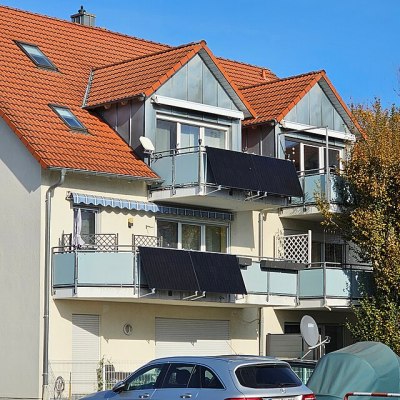
Despite the limitations, or perhaps because of them, it’s a cinch to get yourself going with solar in Germany. Just head to your local big box store, purchase a kit, and hang it off the side of your house. Once you plug it in to the wall, you’re pretty much done. Most kits come with some sort of app for monitoring the system so you can keep an eye on how much your panels are generating. The ease of access has led to an explosion in installs, with over 1 million balcony solar setups already operating in the country.
Thus far, balcony solar has been largely a German thing. However, other parts of the world are catching on. Other European nations like Spain, France, and Belgium have all got on board the train already. In the United States, the state of Utah has already approved a framework for balcony solar installs, and Virginia is following close behind. The key has been carving out special measures to allow easy, cheap DIY installs for small solar systems.
Typically, setting up rooftop solar in most states requires signing an agreement with the local utility regarding power feed-in to the grid, as well as hiring professional contractors for the installation. This adds a huge amount of cost which a small solar system would never recoup in a reasonable amount of time. By eliminating these hurdles for small-scale plug-in setups, they become viable and far more accessible to more of the community.
Balcony solar is unlikely to be an instant gamechanger that drastically shakes up the power grid. Most installs are low power. Their juice is mostly sucked up to run a fridge and a TV or two, and few make major feed-in contributions to the broader grid. However, their popularity in Europe shows that there is a serious eagerness amongst the broader community to get on board the solar train any which way or how. At the very least, balcony solar is a grand business opportunity and one that is bringing sustainability to more corners of the urban and suburban landscape than ever before.
Featured image: “Sogenanntes Balkonkraftwerk” by [Triplec85]