Submitted by Cameron Rowe, Co-Founder and CEO of Sentradel,
Most people don’t think about what the “cloud” actually is. It’s a physical building full of servers storing everything from your medical records to your social media. Every Google search, every ChatGPT query, every hospital pulling up your health history routes through a data center. Right now, those buildings have about as much aerial protection as your local Costco.
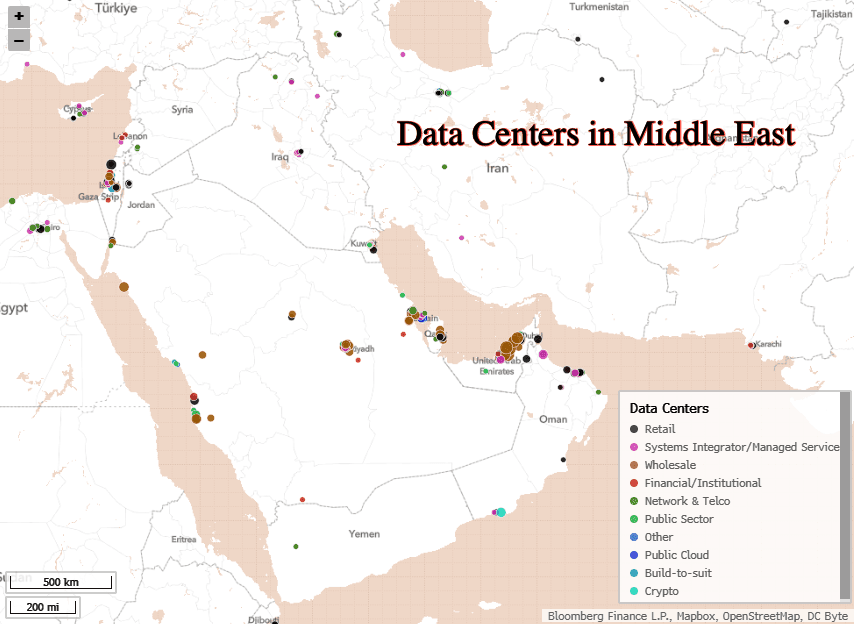
In March 2026, Iranian Shahed drones struck three AWS data centers in the UAE and Bahrain. Multiple availability zones went down simultaneously, taking core services like EC2, S3, and Lambda offline, cascading outages to banks, payment platforms, and ride-hailing apps across the region. It was the first confirmed kinetic attack on a hyperscale data center run by a U.S. company. Shortly after, Iranian state media published a list of “Enemy Technology Infrastructure,” including Microsoft, Google, and Oracle facilities, painting targets on every major cloud provider in contested regions.

Yes, the cloud is distributed. Workloads can fail over. But data still lives somewhere physical, and partial corruption or destruction can be devastating in ways a temporary outage doesn’t capture. Medical records, financial transactions, and AI training datasets are worth hundreds of millions. When those are gone, they’re gone.
Global data center capex is approaching $1 trillion in 2026. The top four hyperscalers are collectively spending nearly $600 billion on infrastructure this year. That’s the physical backbone of modern life, sitting behind chain-link fences, with no ability to stop a drone costing between $30,000 and $80,000.
These facilities were never built to survive military threats. Security was designed around physical intrusion and cyberattacks, not one-way attack drones that cost a fraction of what they destroy.
Decentralization helps at the margins, but hundreds of billions of dollars poured into existing mega facilities can’t be shifted overnight. The real answer is layered detection and intercept: radar, RF sensors, EO/IR tracking, and kinetic or electronic defeat systems working together around these sites.
Autonomous counter-drone system

Watch: Autonomous counter-drone system
The military may eventually provide coverage for the most critical nodes, but they’ll prioritize their own assets first. And human life should come before server racks. That’s exactly why data centers need to be more proactive about protecting their own infrastructure rather than waiting for someone else to do it. Sentradel is already marketing counter-drone solutions to data center operators; it's likely to become more important over the next year as these kamikaze drones continue to improve rapidly in AI, speed, and payload.