Authored by John R. Lott Jr. via RealClearPolitics,
It may sound hard to believe, but except for a very limited group of personnel, the military has treated its bases as gun-free zones. Until Thursday, only designated security forces – such as military police – could carry firearms while on duty. Commanders punished any other soldier caught carrying a weapon severely, with penalties ranging from rank reduction and forfeiture of pay to court-martial, dishonorable discharge, criminal conviction, and even imprisonment.

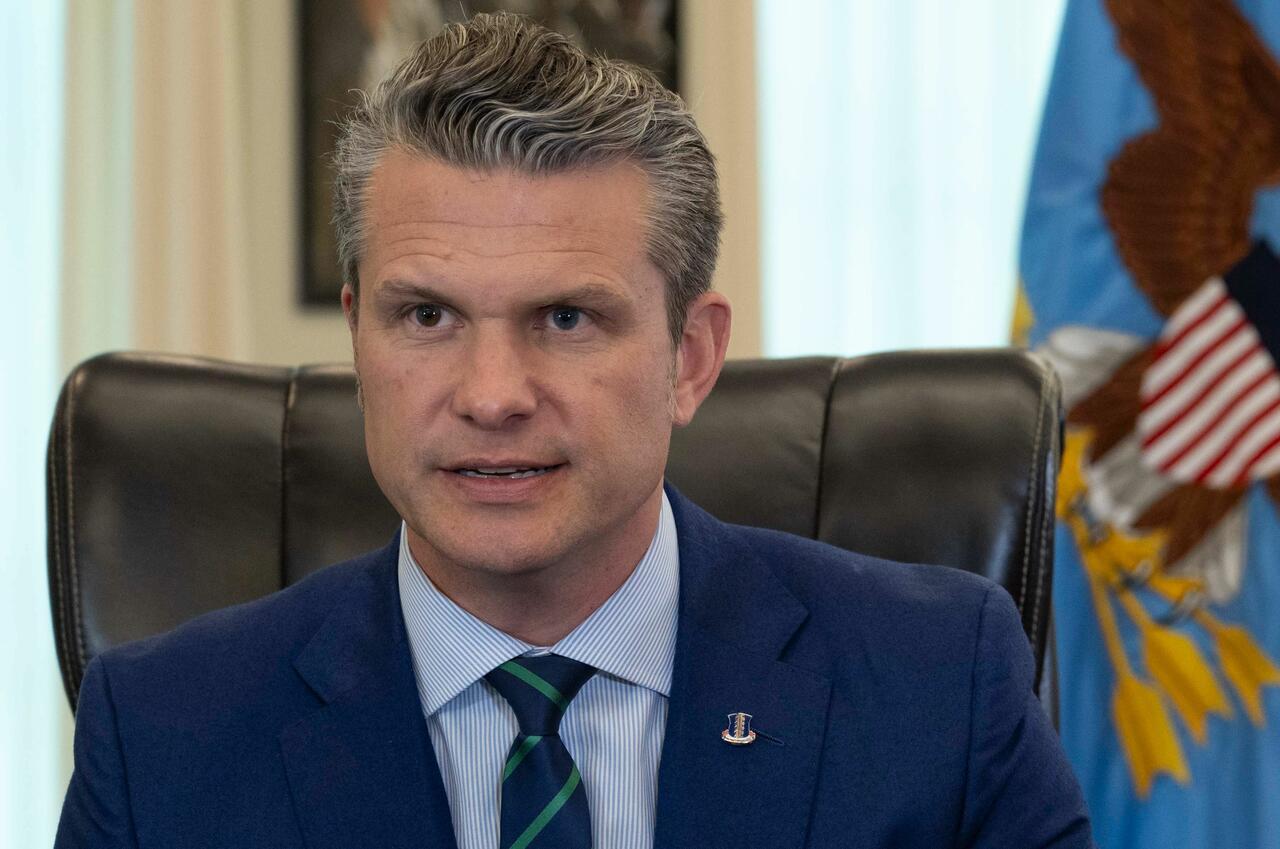
That changed with a statement from Secretary of War Pete Hegseth.
“Before today, it was virtually impossible. Most people probably don’t know this. It is virtually impossible for War Department personnel to get permission to carry and store their own personal weapons aligned with state laws where we operate our installations. I mean effectively our bases are gun-free zones unless you’re training or unless you are a military policeman.”
Consider the attacks at Holloman Air Force Base (2026), Fort Stewart (2025), Naval Air Station Pensacola (2019), the Chattanooga recruiting station (2015), both Fort Hood shootings (2014 and 2009), and Navy Yard (2013). Across these attacks, 24 people were murdered and 38 wounded. In each case, unarmed personnel – including JAG officers, Marines, and soldiers – had to hide while the attacker continued firing.
Yet when the military deployed U.S. troops to Iraq and Afghanistan, it required them to carry their weapons at all times – even on base. Those soldiers needed to defend themselves against real threats, and there are no known cases of them turning those weapons on each other. The policy worked. Soldiers carried firearms without creating internal violence.
So why make it easier for attackers to target troops at home? Why force soldiers – like those at Fort Stewart – to confront armed attackers with their bare hands?
It wasn’t always this way. In 1992, the George H.W. Bush administration started reshaping the military into a more “professional, business-like environment.” That shift led to tighter restrictions on firearms. In 1993, President Clinton rewrote and implemented those restrictions, effectively banning soldiers from carrying personal firearms on base.
If civilians can be trusted to carry firearms, military personnel certainly can. As Hegseth noted, “Uniformed service members are trained at the highest and unwavering standards.”
Why would a soldier risk such severe penalties? Because those penalties do not deter attackers. Someone planning to murder fellow soldiers will not stop because of gun laws. Most mass attackers expect to die during the assault, so the threat of additional punishment carries no weight. Even if they survive, they already face multiple life sentences or the death penalty.
But those same rules weigh heavily on law-abiding soldiers. A soldier who carries a firearm for self-defense risks becoming a felon and destroying his or her future. These policies disarm the innocent while signaling to a determined attacker that no one else will be armed.
Military police guard base entrances, but like civilian police, they cannot be everywhere. Military bases function like cities, and MPs face the same limitations as police responding to mass shootings off base.
Uniformed officers are easy to identify, and that gives attackers a real tactical advantage. Attackers can wait for an officer to leave the area or move on to another target – either choice reduces the chance that an officer will be present to stop the attack. And if the attacker strikes anyway, whom do you think they target first?
Research shows that civilians with concealed handgun permits are more likely to stop active shooting attacks. By contrast, although police stop fewer attacks, attackers kill them at much higher rates – police are twelve times more likely to be killed.
After the second Fort Hood terrorist attack, Army Chief of Staff Gen. Mark Milley – then commander of Thirds Corps at that base – testified to Congress: “We have adequate law enforcement on those bases to respond … those police responded within eight minutes and that guy was dead.” But those eight minutes proved far too long for the three soldiers who were murdered and the 12 others who were wounded.
Time after time, murderers exploit regulations that guarantee they’ll face no armed resistance. Diaries and manifestos of mass public shooters show a chilling trend: They deliberately choose gun-free zones, knowing their victims can’t fight back. While we don’t yet know if the Fort Stewart shooter made that same calculation, his actions fit a pattern seen in dozens of other cases. It’s no coincidence that 93% of mass public shootings happen in places where guns are banned.
Ironically, soldiers with a concealed handgun permit can carry a concealed handgun whenever they are off base so that they can protect themselves and others. But on the base, they and their fellow soldiers had been defenseless. Fortunately, that has all now changed.
Allowing trained service members to carry on base restores a basic ability to defend themselves and others when seconds matter most. Policies that disarm the very people we trust in combat do not enhance safety – they leave our troops unnecessarily vulnerable where they should be most secure.
John R. Lott Jr. is a contributor to RealClearInvestigations, focusing on voting and gun rights. His articles have appeared in publications such as the Wall Street Journal, New York Times, Los Angeles Times, New York Post, USA Today, and Chicago Tribune. Lott is an economist who has held research and/or teaching positions at the University of Chicago, Yale University, Stanford, UCLA, Wharton, and Rice.