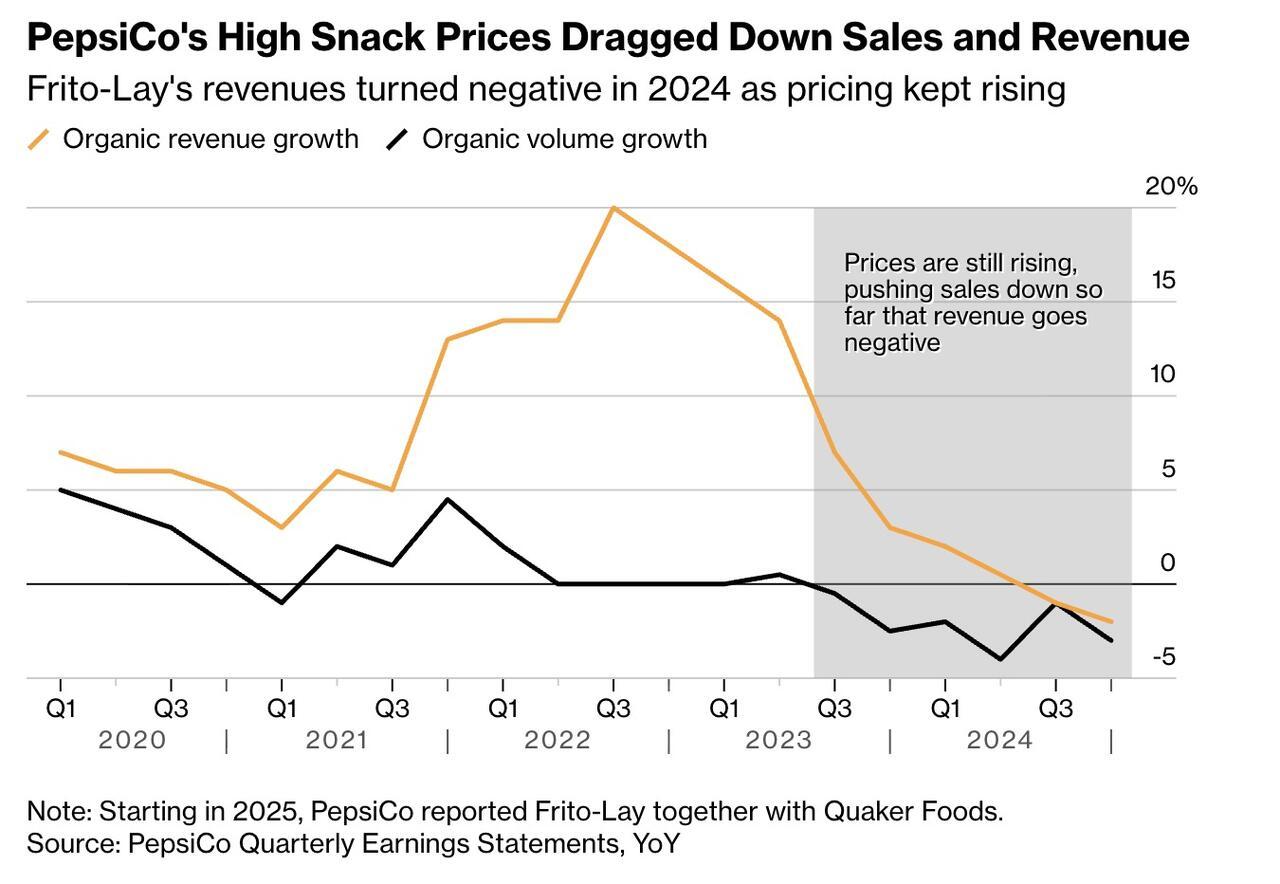
Turns out there's a price point for everything where consumers just stop paying. Guess that whole "price as a rationing mechanism" talk means something after all...
Just ask Pepsi. The iconic brand had recognized for some time that its Frito-Lay snack prices were becoming too expensive, with major retailers like Walmart repeatedly raising concerns, according to Bloomberg.
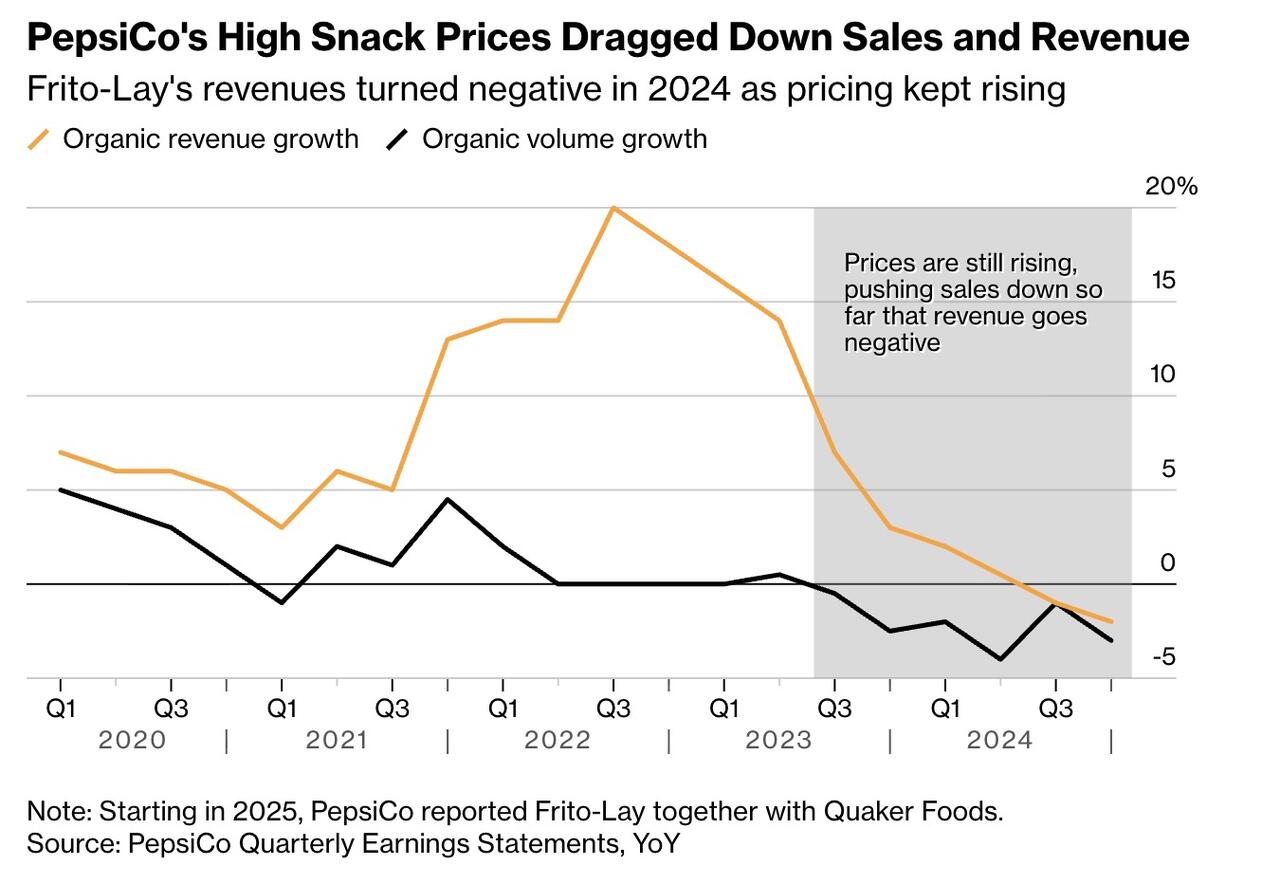
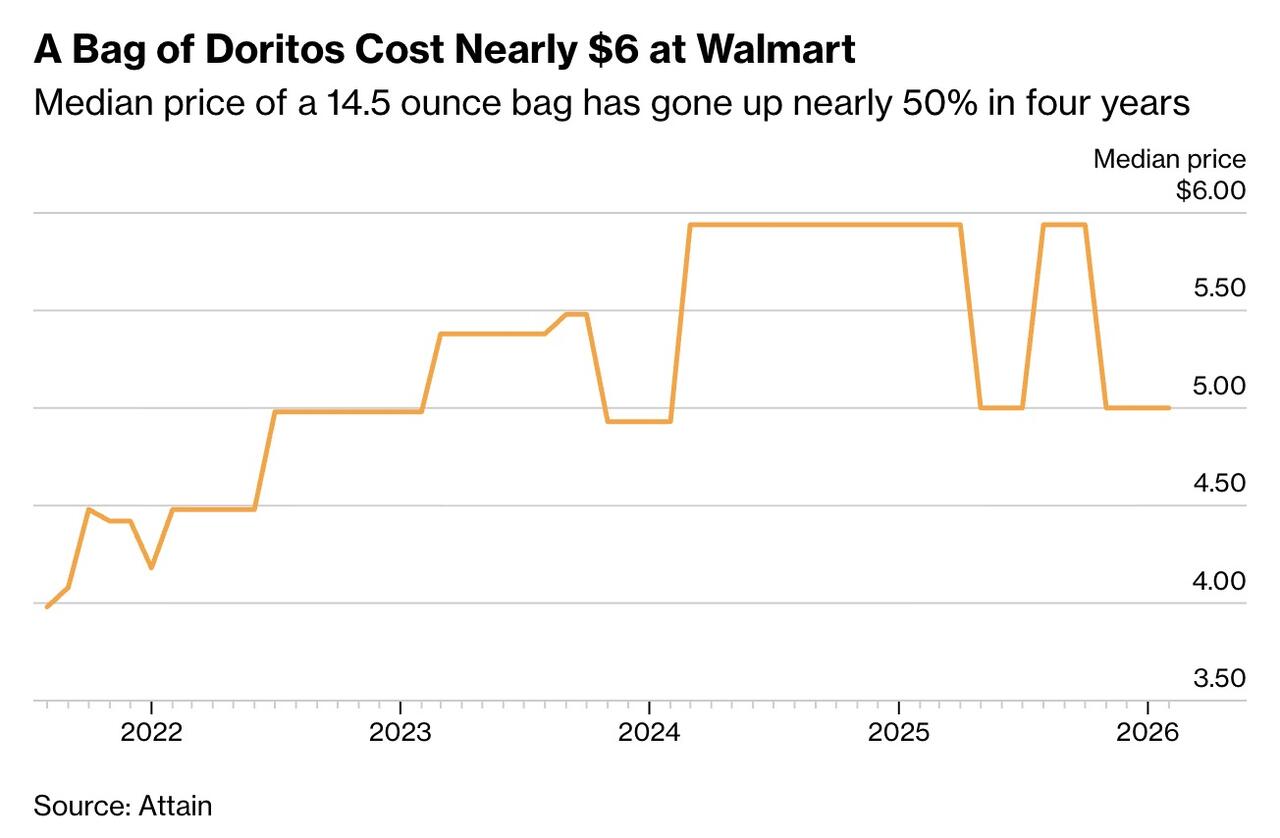
Even so, prices remained high as sales declined, with some chip bags climbing past $7. Popular products such as Doritos saw sharp increases, jumping nearly 50% since 2021. In response, retailers began allocating more shelf space to lower-cost store brands and competing products.
Bloomberg writes in a new report that in early 2026, PepsiCo finally moved to reduce prices, cutting some snack items by as much as 15%. This decision followed two consecutive years of Frito-Lay missing internal revenue targets. However, new challenges quickly emerged. Rising oil prices tied to global conflicts increased costs for production and packaging, which could weaken the effectiveness of these price cuts and limit their ability to bring customers back.
Prior to these external pressures, analysts believed that moderate price reductions might have been enough to improve sales. Company executives said they planned to assess the results by mid-2026, after earlier test runs showed encouraging increases in product demand. In return for lowering prices, PepsiCo also secured additional shelf space at large retailers, with full implementation expected nationwide.
The report notes that for several years, leadership had struggled with how to address pricing. Executives were reluctant to lower prices because of concerns about short-term financial losses. Instead, they experimented with strategies like reducing package sizes and offering temporary promotions, but these efforts failed to reverse declining sales. A turning point came in 2025 when Rachel Ferdinando reviewed the business and concluded that price cuts were unavoidable.
At the same time, the company was facing broader pressures. Frito-Lay’s long streak of consistent revenue growth came to an end, and it began losing ground to more affordable competitors. Other major food companies had already started lowering their prices, increasing the urgency. Meanwhile, PepsiCo was also investing in higher-priced, health-focused products, which added complexity to its pricing decisions.
The situation can be traced back to the pandemic period, when PepsiCo raised prices to offset supply chain disruptions and rising labor costs. Consumers initially accepted these increases, but over time the higher prices became harder to justify. Although revenue briefly surged, shoppers eventually began cutting back. Even as demand weakened, the company hesitated to reverse its pricing strategy.
By 2025, it became clear that affordability was a key concern for consumers. Price reductions were first tested in select markets and then expanded more broadly in 2026. While discounts have attracted some buyers, overall demand remains uncertain. PepsiCo now faces the ongoing challenge of maintaining lower prices while dealing with rising costs and cautious consumer spending habits.