Authored by Ameya Paleja via Interesting Engineering,
Avalanche Energy, a fusion energy startup, has won a $5.2 million contract to build radioactive batteries that can power a laptop-class system for months. The contract is part of the Defense Advanced Research Projects Agency’s Rads to Watts Program, which aims to build next-generation, compact, resilient nuclear batteries with higher densities.

Radioactive batteries aren’t an entirely new concept. They have been around for years and have made their way even to Mars on NASA’s Perseverance and Curiosity rovers. Another type of radioactive battery is used in medical implant devices and sensors, but all these devices face the same issue: low energy density.
Lithium-ion batteries, which are used everywhere from wearables to grid-level storage facilities, have high energy densities, storing up to 300 watt-hours (Wh) per kilogram. In comparison, radioactive batteries generate only about 2 watt-hours per kilogram, which the Rads to Watts Program aims to address.
What will Avalanche do?
The contract awarded to Avalance aims to build a radioactive battery that can power a laptop-class system for months. However, the battery will weigh only a few kilograms and deliver more than 10 watts per kilogram of energy. This is a major jump in power output for radioactive batteries.
However, given that DARPA projects typically have defense and space applications in mind, these batteries will also need to be resilient in challenging environments, such as extreme temperatures and radiation exposure in space, where conventional electronics degrade rapidly.
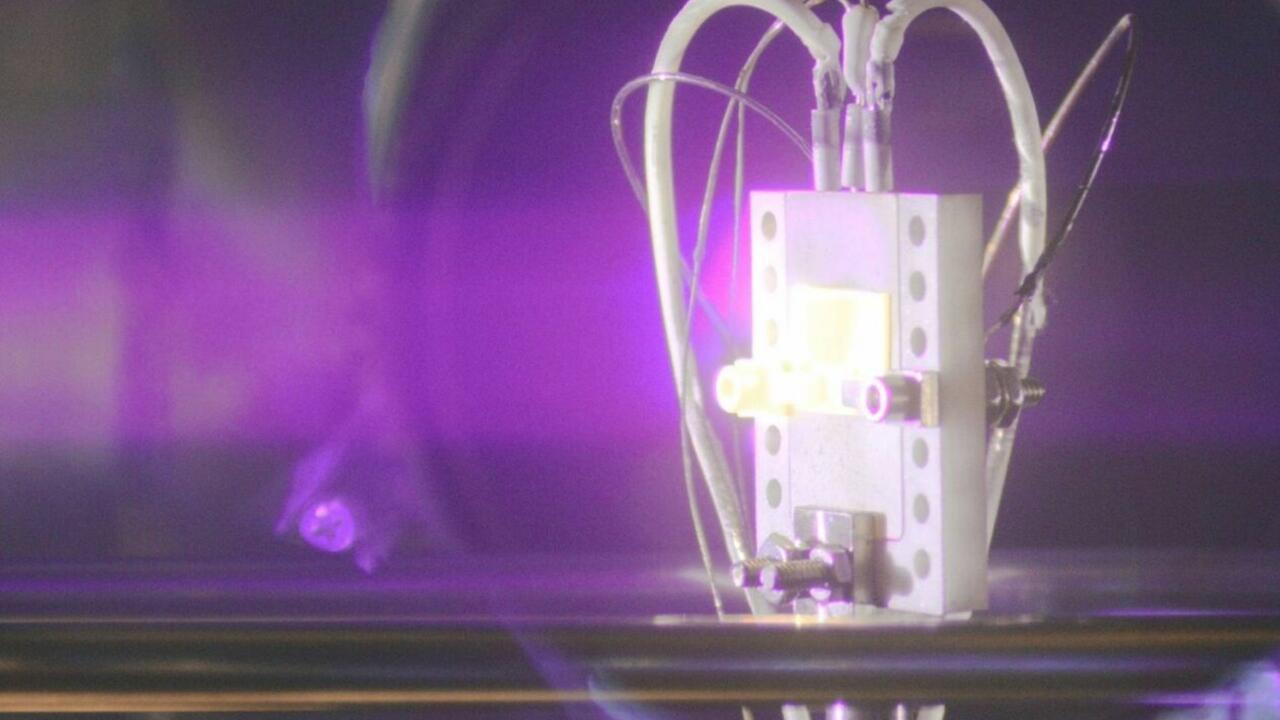
Avalanche will work to build solid-state microfabricated cells that convert alpha particles emitted by radioactive isotopes into electricity (alphavoltaic cells). This is quite similar to how photovoltaic cells convert sunlight into electricity. These cells will convert the kinetic energy of alpha particles into usable electricity, powering a laptop-class device.
Avalanche will test the battery’s operational resilience using particle accelerators and active radioisotopes. It will also lead a team of researchers from the universities of Utah, Caltech, Los Alamos National Laboratory (LANL), and McQuaide Microsystems.
How will it advance fusion energy tech?
Since Avalanche is a fusion energy startup, taking up a project that uses nuclear fission technology might seem counterintuitive to Avalanche’s core mission. Yet the underlying physics is relevant to Avalanche’s long-term plan of building a portable fusion energy device.
During the project, Avalanche will build degradation-resistant microchips that will be used in alpha-voltaic cells and eventually in fusion devices.
“The DARPA contract represents a critical milestone in our path to practical fusion power,” said Robin Langtry, co-founder and CEO of Avalanche Energy, in a press release.
“The direct energy conversion technologies we’re developing under Rads to Watts will be essential for extracting power from fusion reactions efficiently. We’re building the capabilities today that will enable tomorrow’s fusion systems to deliver reliable, portable energy for defense, space, and commercial applications.”
“The very same fusion machines that produce high-energy alpha particles will also produce high-energy neutrons. The neutrons produced are also efficient at creating the same radioisotopes needed for the Rads to Watts program, creating a reinforcing supply-and-technology flywheel around Avalanche’s core fusion platform,” the company said in the press release.
Avalanche has already built its technology demonstrators but has not yet achieved a net-positive energy gain. So, a compact fusion energy device that is portable is a little way in the future. We will keep you posted if there are updates in that direction.