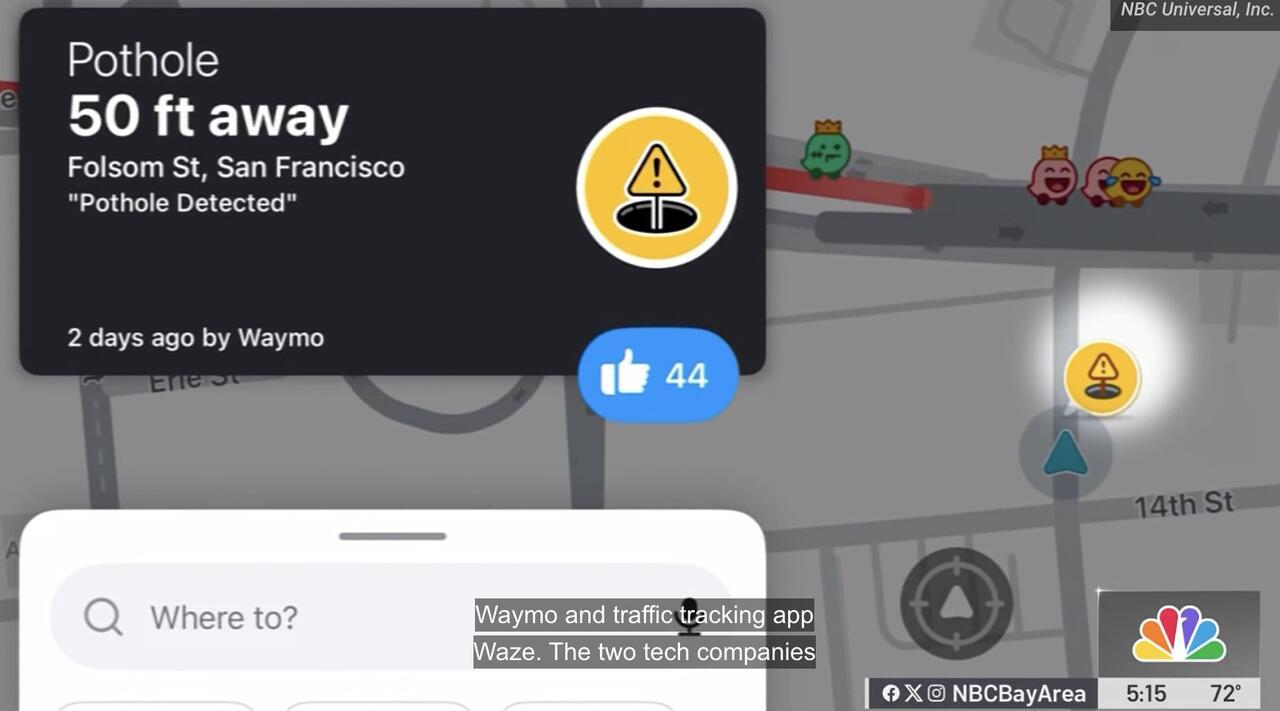
A smart new approach to fixing road issues is taking shape in San Francisco—and honestly, it’s finally a good idea.
Waymo, known for putting driverless cars on city streets, is now teaming up with Waze to help identify potholes. Using data from its self-driving vehicles, Waymo can detect rough road conditions and automatically flag them in the Waze app, according to a new report from NBC.

Drivers using Waze can already see these reported potholes, but the bigger impact comes from Waze’s “Waze for Cities” program. Thousands of cities use it to collect real-time road hazard data, giving local agencies a clearer picture of where repairs are needed.
The report notes that San Francisco officials say this won’t replace existing systems like 311 reports, but it adds another valuable layer of information. Crews still aim to fix major issues within a few days, while also making sure all neighborhoods—not just high-traffic areas—get equal attention.

This kind of tech-driven system actually makes a lot of sense. Bringing something like this to places like New Jersey or New York could seriously improve how quickly and fairly road repairs get handled.
Before partnering with Waymo, Waze had already developed a crowd-sourced approach to identifying road hazards like potholes. Drivers using the app could manually report issues in real time, tagging exact GPS locations of potholes, debris, or rough road conditions, which were then shared with other users to improve routing and safety.
Over time, Waze also leveraged passive data—such as repeated sudden decelerations or erratic vehicle movement patterns—to infer the presence of road irregularities without explicit reports. This combination of active user input and behavioral data allowed Waze to build a dynamic, continuously updated map of road quality, laying the groundwork for more automated detection methods later explored in collaborations with autonomous driving systems.