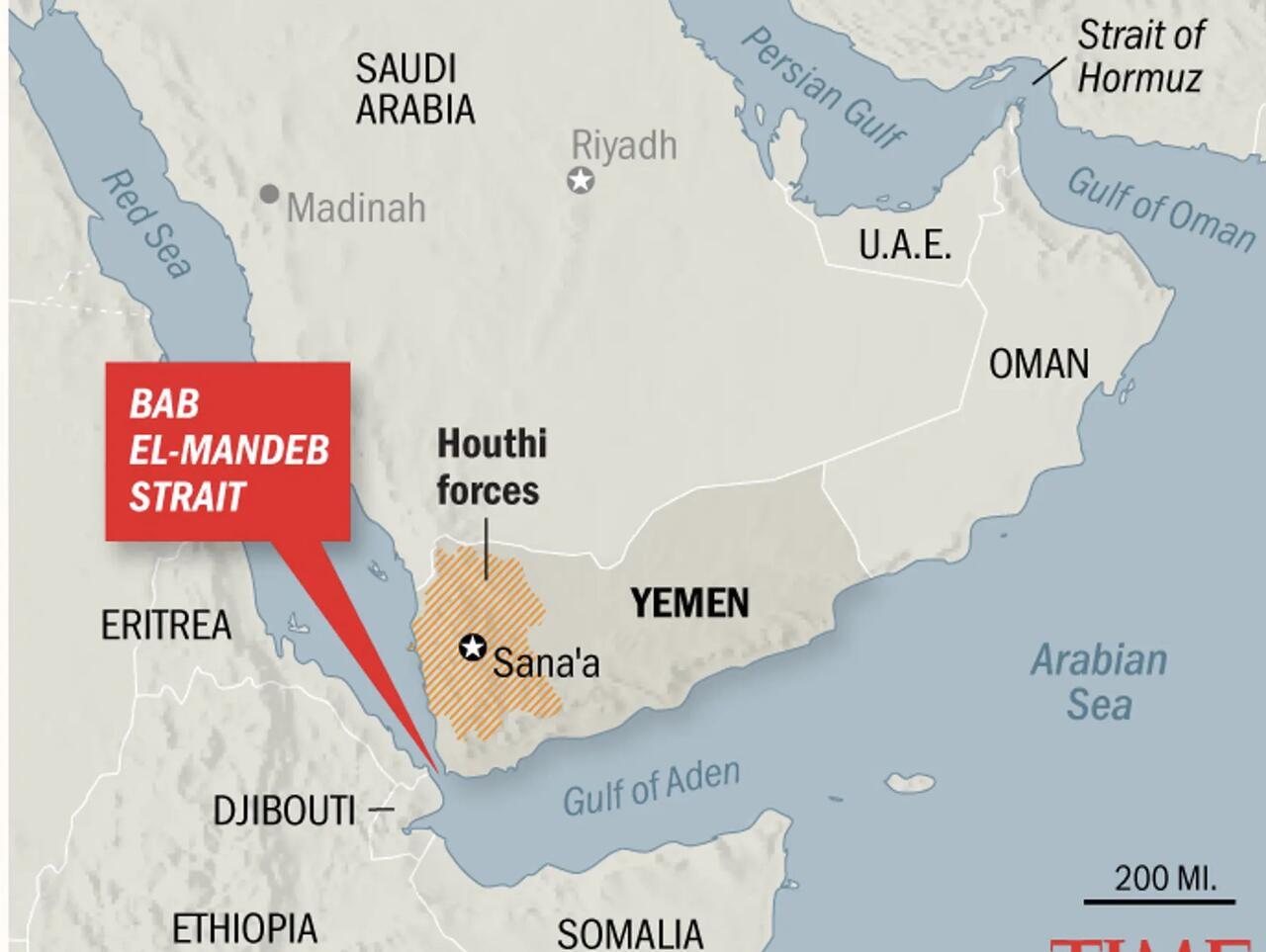
Wary of Iranian escalation that shuts down Red Sea traffic, the Kingdom of Saudi Arabia is asking the Trump administration to back off from its newly-implemented blockade of Iranian-linked shipping in the Strait of Hormuz, the Wall Street Journal reported on Monday evening. On Sunday, a senior advisor to Iranian Supreme Leader Mojtaba Khamenei warned that Iran has "large, untouched levers" to respond to such a blockade.
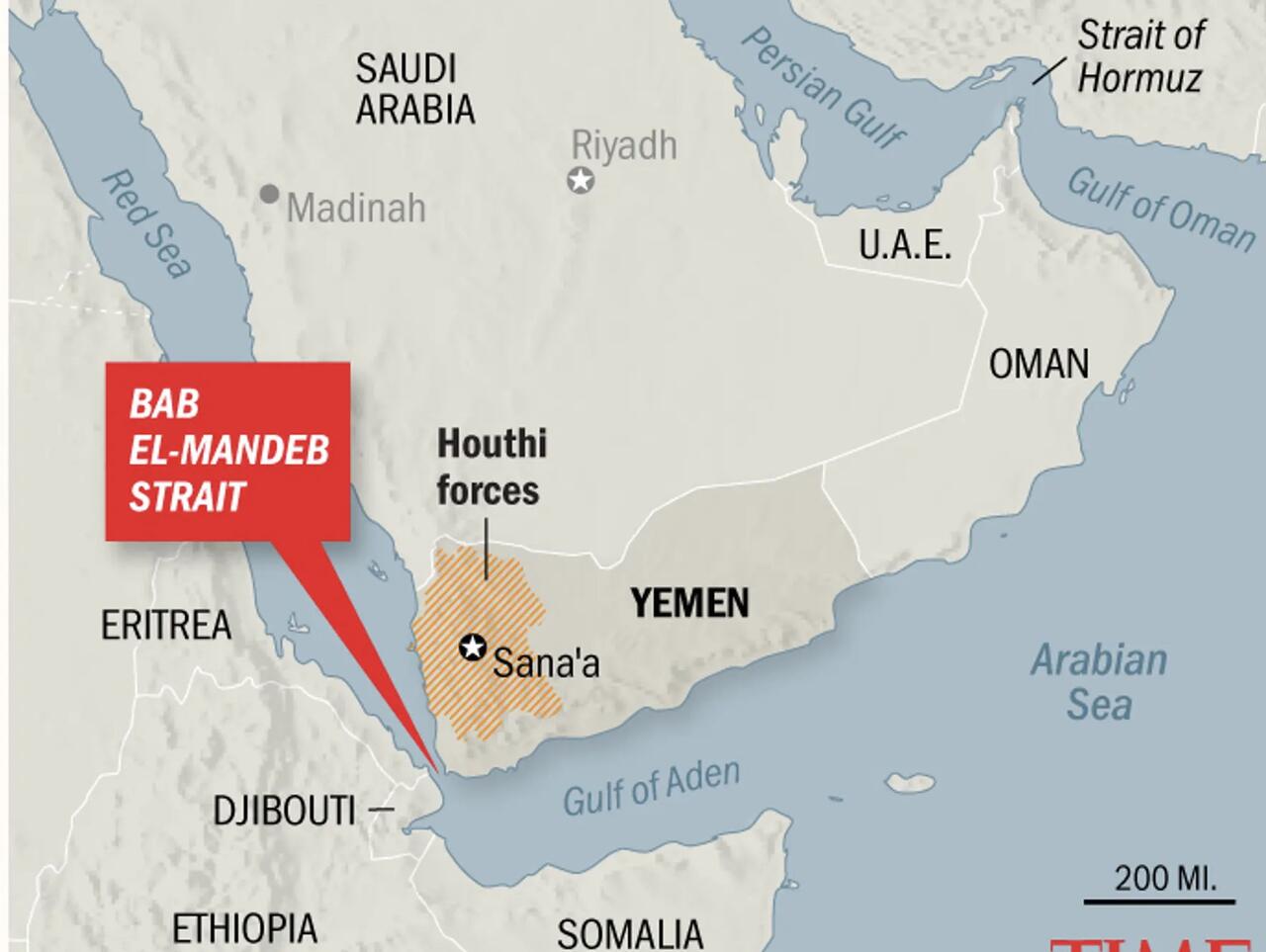
Earlier on Monday -- at 10am ET -- the US blockade took effect, backed up by more than 15 Navy ships, including some equipped to dispatch helicopter-borne commandeering squads. The ships were expected to position themselves outside the Strait of Hormuz, for fear of Iranian attacks. Their mission: Prohibiting any maritime traffic from approaching or departing from Iranian ports, regardless of how the ships are flagged. Shortly before the blockade's commencement, the United Kingdom Maritime Trade Operations Centre issued a notice advising that "maritime access restrictions are being enforced affecting Iranian ports and coastal areas, including locations along the Arabian Gulf, Gulf of Oman, and the Arabian Sea east of the Strait of Hormuz."
Describing Saudi unease, Arab officials who spoke to the Journal noted that Iran could answer the US blockade by shutting down the Bab al-Mandeb, a 20-mile-wide, 70-mile-long choke point that links the Red Sea to the Gulf of Aden and the Indian Ocean. To accomplish that, Iran could tap the Houthis, the political and military organization that controls much of Yemen. “If Iran does want to shut down Bab al-Mandeb, the Houthis are the obvious partner to do it, and their response to the Gaza conflict demonstrates that they have the capacity to do it,” Adam Baron, an expert on Yemen at the New America policy institute, told the Journal.
Saudi Arabia recently has been able to get its oil exports back up to their prewar level of around seven million barrels a day despite the blockage in the strategic strait by piping its crude across the desert to the Red Sea. Those supplies would be at risk if the Red Sea’s exit route were closed as well. -- WSJ
After the Israeli onslaught on Gaza following the Oct 7 2022 Hamas invasion of Israel, the Houthis showcased their ability to disrupt traffic at the chokepoint, with a combination of anti-ship missiles, airborne and seagoing drones, and even commando boarding parties. A major US operation to suppress those Houthis attacks on Israel-linked shipping in 2025 proved costly, with America reportedly losing 2 F/A-18 Super Hornet fighters and several MQ-9 Reaper drones, in addition to consuming expensive ordnance. All told, it was reported to have cost more than $1 billion before an Oman-brokered ceasefire ended America's "Operation Rough Rider."
Saudi energy officials told the Journal that the Houthis had promised they wouldn't attack Saudi Arabia or Saudi ships navigating through Bab al-Mandeb, but emphasized that such commitments could evaporate under pressure from Iran. There's also the possibility of the Houthis taking a page from the Iranian playbook and charging tolls on ships going through the choke point.
The US blockade follows Iran's own closure of the Strait of Hormuz a few days after US and Israeli forces collaborated in a Feb 28 surprise attack. Over that time, Iran has selectively let some ships transit the strait, including those serving China and India, but some 13 million barrels per day have been cut off from the world. Oil prices have surged over $100 a barrel, and shortages have already started causing mayhem in east Asian countries that depend heavily on Gulf imports.
The latest maritime drama in the Strait of Hormuz -- a waterway that's normally transited by vessels supplying 20% of the world's oil needs -- comes after high-level US-Iranian talks in Pakistan failed to achieve an agreement that would bring the US-Israeli war on Iran to a conclusion. The United States is reportedly demanding that Iran suspend nuclear enrichment for 20 years, while Iran has offered to suspend it for some period of less than 10 years.