Authored by Mriogakshi Dixit via Interesting Engineering,
In the dizzying heights of a chemical storage facility, a new kind of worker is punching in. China has reportedly deployed its first “embodied” intelligent humanoid robot designed for high-risk industrial operations.
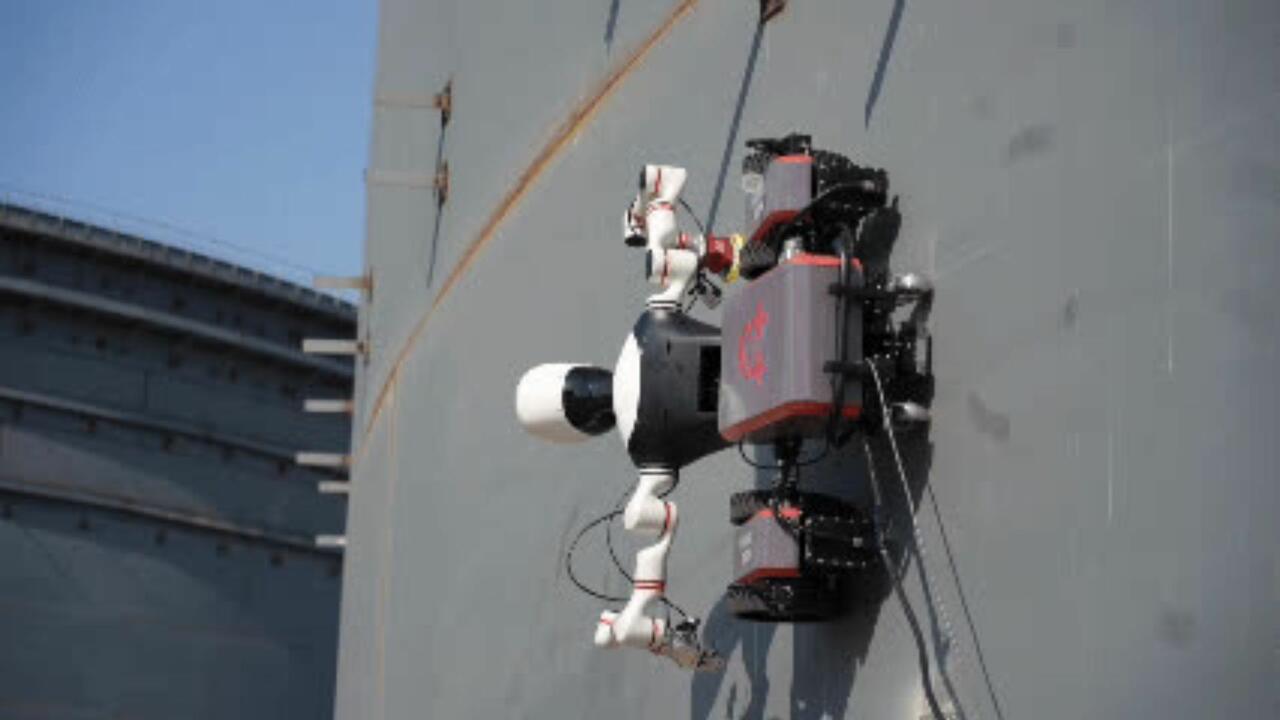
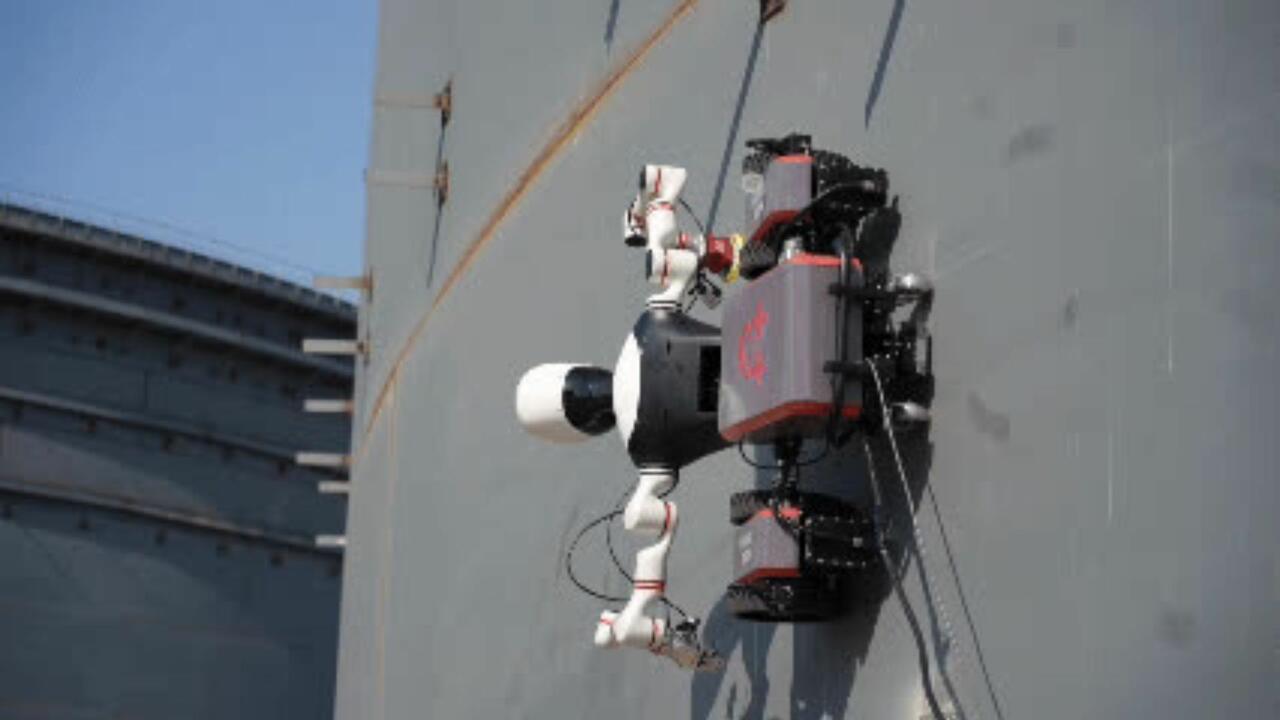
This isn’t just a fixed machine; it’s a 90-kg (198-pound) robot that can climb walls and work where humans can’t.
Interestingly, the multi-purpose system is intended to replace human workers in hazardous conditions, such as chemical storage tank construction.
According to reports, this machine uses a magnetic chassis to stick to walls, allowing its humanoid upper body to operate on any metal surface.
The robot could be used to execute core industrial tasks, including precision welding, rust remediation, and routine inspections.
15 degrees of freedom
Compared with earlier wall-climbing robots that were limited to a single repetitive function, this new system is said to be a multitasker.
It moves beyond basic cleaning or inspection by leveraging advanced AI to adapt to its environment and handle a wide range of complex industrial tasks.
With 15 degrees of freedom and dual arms, the robot mimics human flexibility to safely multitask on scaffolds, performing precision tasks such as simultaneous welding and grinding.
According to CGTN, this physical agility is driven by a massive AI brain trained on 100,000 hours of data, enabling it to navigate complex environments with ease.
This “embodied intelligence” allows the robotic machine to perceive its surroundings, adapt to complex real-world scenarios, and improve its performance through ongoing experience.
Moreover, it uses a tethered cable system to eliminate the power limitations that usually hold mobile units back.
This constant supply of energy allows for nonstop, 24/7 operation, ensuring the machine stays productive without the downtime required for recharging.
Built for the danger zone
Tested at a large chemical storage site, the 90-kilogram robot uses a wheeled, magnetic chassis to move steadily across vertical metal surfaces.
Its powerful electromagnetic adhesion enables it to perform complex operations while supporting additional weight, ensuring it remains mobile and secure even on steep walls.
In the future, entire fleets of these robots could maintain shipyards and refineries. It could lead to a new era where heavy infrastructure can essentially take care of itself.
Prior to this, China reached another milestone by integrating an embodied intelligent robot into SAIC Motor’s electric vehicle division’s mass production line.
The humanoid robot, known as “Nengzai No. 1,” has officially joined the battery assembly line for the Buick Electra E7 at SAIC Motor.
This move is a major step for the Shanghai-based carmaker as it starts combining smart, human-like robots with its regular factory machines.
China’s dominance in the humanoid sector is backed by massive state support, with over 140 companies focused specifically on humanoids and $26 billion in dedicated investment.
Even Elon Musk has acknowledged China’s lead in this “priority industry,” which benefits from extensive supply chains and government subsidies.
By 2050, the global market for these robots could reach $7.5 trillion, and China is positioning itself to lead that charge by deploying humanoids in factories and private homes.