Authored by Prabhat Ranjan Mishra via Interesting Engineering,
Chemists in the United States have discovered a new way to turn natural gas into liquid fuel.
The team from Northwestern University has successfully converted methane directly into methanol in a single step. They harnessed tiny bursts of plasma — or mini “lightning bolts” — in glass tubes submerged in water.

Using pulses of high-voltage electricity
“We’re using pulses of high-voltage electricity,” said Northwestern’s Dayne Swearer, the study’s corresponding author.
“If the electrical potential is high enough, lightning bolts form inside of our reactor the way they do during a summer thunderstorm. We’re taking advantage of that chemistry to break methane’s bonds without heating the entire system to extreme temperatures.”
While the current method is reliable, it’s energy intensive and emits millions of tons of carbon dioxide per year globally. Using just electricity, water and a copper-oxide catalyst, the new process could offer a cleaner, electrified path to producing one of the world’s most widely used chemical building blocks, according to a press release.
Methanol is a versatile, high-demand industrial chemical
The team also revealed that the methanol is a versatile, high-demand industrial chemical used to make many products people use every day. It also is commonly used as an industrial solvent and is gaining attention as a cleaner-burning fuel for ships and industrial boilers.
One of the world’s most used commodity chemicals, methanol is a key ingredient in plastics, paints and adhesives. More recently, researchers have explored methanol as a promising liquid fuel because its combustion produces lower sulfur emissions and particulate pollution than gasoline and diesel, as per the release.
Industry generates methanol through a multi-step process
The team also pointed out that currently, the industry generates methanol through a multi-step process, starting with steam reforming. First, methane is reacted with steam at temperatures exceeding 800 degrees Celsius to break it into carbon monoxide and hydrogen. Then, those gases are recombined under extremely high pressures — 200 to 300 times standard atmospheric pressure — to form methanol. Tearing methane apart and rebuilding it consumes an enormous amount of heat and inherently generates carbon dioxide along the way.
“The extreme temperatures are needed to break the unreactive chemical bonds between carbon and hydrogen in methane,” Swearer said.
“Then, you must use high pressure to squeeze all those molecules together onto the catalyst in order to make the methanol molecule. It works, but it’s not the most straightforward path to making methanol from methane.”
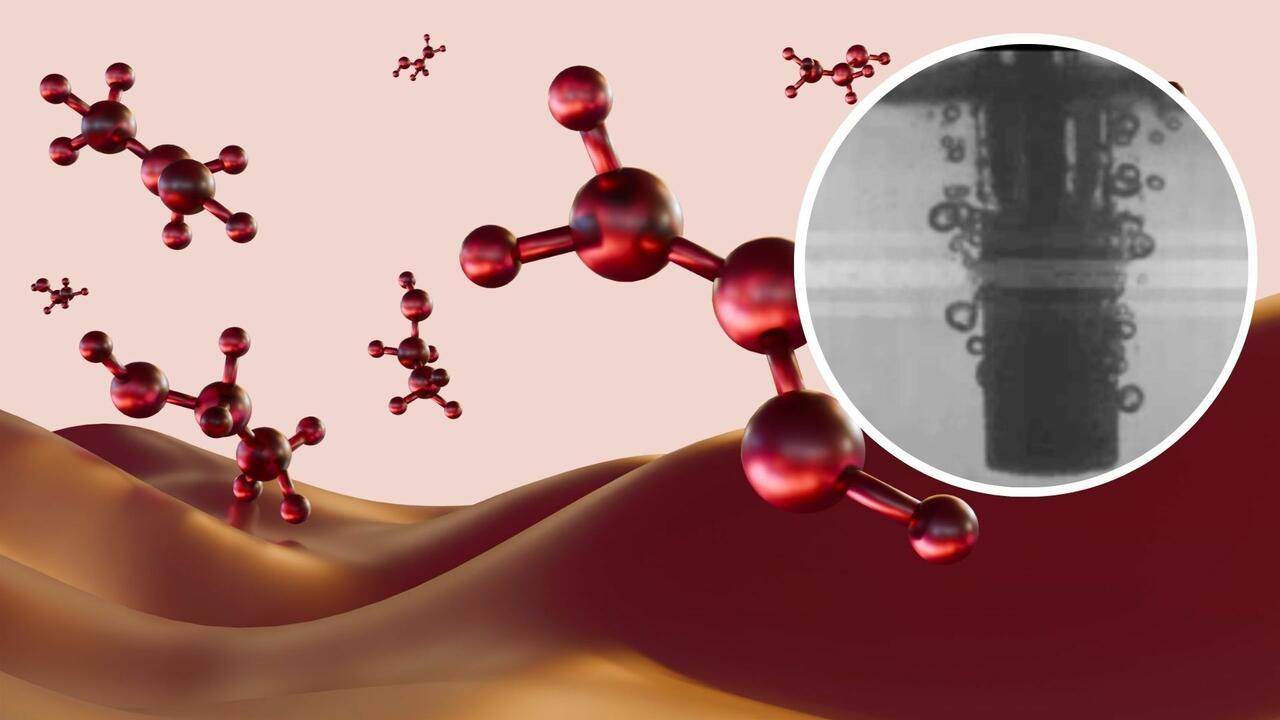
For the new single-step process, James Ho, a Ph.D. candidate in Swearer’s lab and the study’s first author, built a plasma “bubble reactor,” which is essentially a porous glass tube coated with a copper oxide catalyst. Then, the team flowed methane gas through the tube while applying electrical pulses.
The electricity transformed the methane gas into plasma, splitting methane and water into highly reactive fragments. Those fragments then recombined to form methanol, which immediately dissolves into the surrounding water. That rapid “quenching” stopped the chemical reaction at the right moment, preventing the methane from decomposing into carbon dioxide.
“More than 99% of the observable universe is comprised of plasma,” said James Ho. “But even though it’s ubiquitous, it really is an untapped resource in the field of chemistry. The reason we use cold plasmas is because we can produce them at low temperatures and normal atmospheric pressure conditions.”