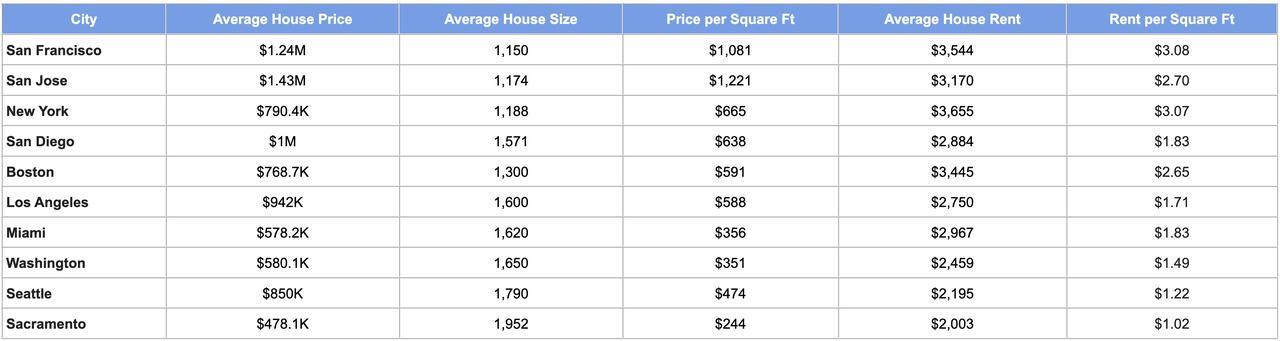
An April 2026 housing report by Highland Cabinetry highlights a growing affordability crisis across major American cities, revealing that the true cost of housing goes beyond total price and is better understood through the lens of cost per square foot. By analyzing home prices, rental costs, and average property sizes across 40 large cities, the study shows where Americans are paying the most for the least amount of living space. This approach offers a clearer picture of value, emphasizing how much space residents actually receive for their money rather than just the overall cost of buying or renting a home.
At the center of this trend is San Francisco, which ranks as the most expensive housing market in the country for both buyers and renters. Homebuyers in the city pay more than $1,000 per square foot on average, with a typical home costing around $1.24 million for just over 1,100 square feet. Renters face similar challenges, with average monthly rents exceeding $3,500. Despite these high costs, the amount of space available remains limited, meaning residents often pay a premium for relatively small living areas. This imbalance between price and space has made San Francisco the clearest example of how housing value has eroded in dense urban markets.
Just behind San Francisco is San Jose, which actually surpasses it in terms of price per square foot for homebuyers. In San Jose, the average cost exceeds $1,200 per square foot, pushing typical home prices to around $1.4 million. The rental market is similarly expensive, with monthly costs rivaling those in San Francisco. These high prices are largely driven by strong demand tied to the region’s technology sector, where high salaries continue to fuel competition for limited housing supply. As a result, even relatively modest homes command exceptionally high prices.

On the East Coast, New York City presents a different kind of affordability challenge. While the cost per square foot to purchase a home is significantly lower than in California’s top markets, rental prices are the highest in the nation, averaging more than $3,600 per month. Apartments in New York also tend to be smaller than those in other cities, which means renters often pay more per square foot than they would in San Francisco. This creates a situation where buying may appear more attainable on paper, but renting remains financially burdensome for a large portion of the population.
Other major cities such as San Diego, Boston, and Los Angeles also rank among the least affordable when measured by space value. In these markets, home prices remain high while property sizes vary, resulting in elevated costs per square foot that continue to strain both buyers and renters. California in particular stands out, with multiple cities appearing in the top rankings, reflecting a broader statewide issue driven by housing shortages, population demand, and long-term price growth.
The report attributes much of the current situation to economic conditions that emerged during the COVID-19 pandemic. Historically low interest rates made borrowing more accessible, encouraging a surge in homebuying activity. This increased demand led to intense competition, rapidly driving up prices across the country. Although interest rates have since risen, housing prices have remained elevated, leaving many Americans priced out of homeownership and facing high rental costs instead.
One of the most significant social impacts of these trends is the shift in living arrangements among younger adults. In cities like New York and San Francisco, it has become increasingly common for professionals to share apartments well into their 30s in order to manage costs. While this may offer a short-term solution, it reflects a deeper issue within the housing market, where affordability challenges are reshaping expectations around independence, space, and long-term living.
Ultimately, the findings of this study highlight a critical reality about housing in modern America. The issue is no longer just about how much people pay, but about how little space they receive in return. As urban populations continue to grow and housing supply struggles to keep pace, the cost per square foot will remain a key indicator of affordability, shaping how and where people choose to live in the years ahead.
You can access the complete research findings here.