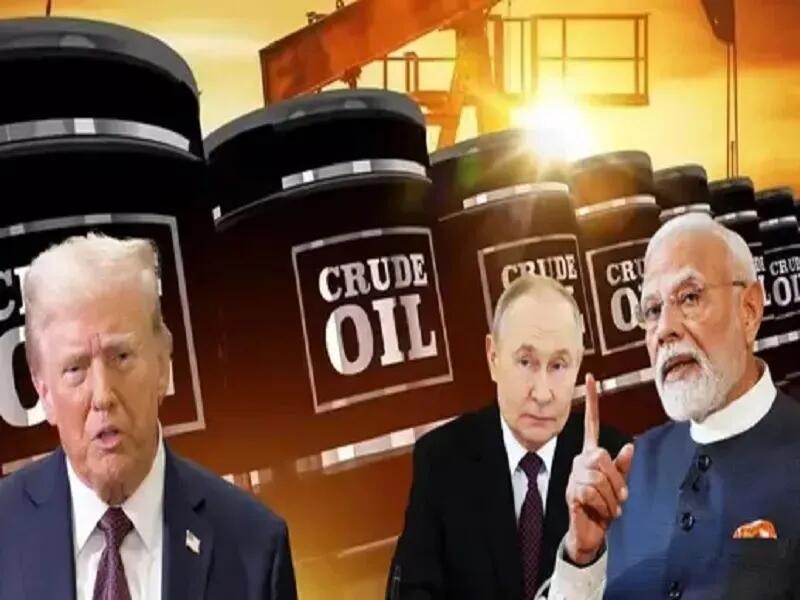
Both benefit from this since the US wants to avoid India sliding into turmoil amidst the global energy crisis and possibly offsetting its envisaged role as a counterweight of sorts to China while more energy revenue from India preemptively averts Russia’s potentially disproportionate dependence on China.

The Treasury Department renewed the US’ Russian oil sanctions waiver on Friday two days after Secretary Scott Bessent said that this wouldn’t happen.
It remains unclear what exactly accounts for this flip-flop, but it’s possible that Trump 2.0 concluded that a deal with Iran might not be reached as soon as some optimists expected, so it’s better to keep Russian oil on the global market for another month to maintain global economic stability. Russia and the US’ shared Indian partner gains the most from this.
The IMF recently assessed that India will remain the world’s fastest-growing major economy for this year and the next at 6.5% growth in both, and maintaining this is imperative for both Russia’s and the US’ interests. That’s because India balances between both, having been perceived as tilting a bit closer towards the US in February after the interim Indo-US trade deal was agreed to but then recalibrating back to Russia last month due to the global systemic consequences of the Third Gulf War.
As was explained here in March when the US issued its Russian oil sanctions waiver for India before making it global, “The new world order that it envisages has India playing a prominent geo-economic and geopolitical role, especially vis-à-vis China, ergo why it temporarily waived the sanctions on Russian oil purchases in order to avoid India sliding into turmoil and possibly offsetting this scenario if it didn’t.” As for Russia, it supplies India not just to make a profit, but also to advance its own strategic goals.
These relate to relying on India as an alternative pressure valve from Western sanctions pressure for preemptively averting potentially disproportionate dependence on China and bolstering India’s new tri-multipolarity balancing act for accelerating the global systemic transition to complex multipolarity. Far from feeling like India “betrayed” it as Pepe Escobar falsely claimed last month, Russia recently offered to supply India with as much energy as it wants, which it obviously wouldn’t do if it felt “betrayed”.
On that topic, India had scaled back its import of Russian oil in January to 1.06 million barrels per day amidst speculation about its compliance with US sanctions as its trade talks with the US were nearing their end, but then nearly doubled this last month. According to the Times of India citing Kpler, “India’s purchases of Russian crude reached 1.98 million barrels per day in March”. April’s were 1.57 million barrels per day but are expected to rise next month after maintenance at a major refinery is completed.
India is therefore expected to remain the primary beneficiary of the US’ renewed sanctions waiver, which advances the US’ and Russia’s goals that were earlier described, but the US is also expected to end this policy and resume its secondary sanctions threats against Russia’s oil clients in the event of peace with Iran. Lavrov warned the world last month about Trump 2.0’s plans for global dominance, especially in the energy industry, which could take the form of pushing through the “DROP Act” in pursuit of this goal.
It’s premature to predict whether India would comply with future US pressure to once again scale back its import of Russian oil since it’s required to fuel its economic rise much more than the interim Indo-US trade deal is. At the same time, if Pakistan helps mediate a US-Iranian peace deal, India might want to remain in the US’ good graces to prevent the US from pivoting to Pakistan at its expense.
The interplay between these four and China, the US’ strategic rival, will determine the future of regional geopolitics.