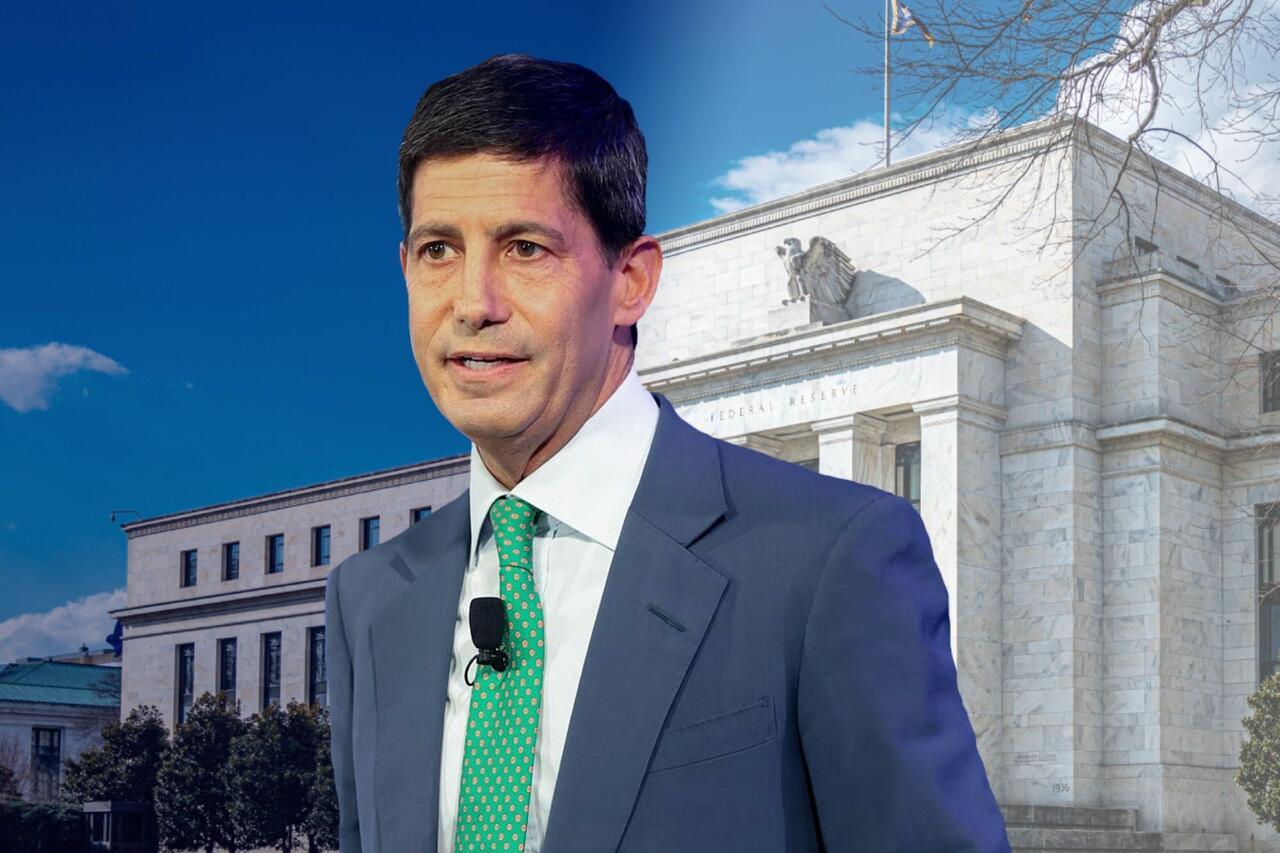
President Donald Trump’s nominee to lead the Federal Reserve, Kevin Warsh, will appear before the Senate Banking Committee on Tuesday at 10AM ET in what is shaping up to be one of the most politically charged confirmation hearings in the central bank’s modern history.

Warsh, a former Fed governor who has spent years criticizing the institution as directionless and in need of “regime change," now has the chance to outline his vision for remaking the world’s most powerful central bank. But he faces a delicate balancing act: signaling loyalty to Trump’s push for lower interest rates while reassuring markets, lawmakers, and global observers that he will safeguard the Fed’s independence and keep inflation in check.
The hearing arrives against a backdrop of extraordinary tension. Trump has repeatedly attacked current Chair Jerome Powell, attempted to fire Fed Governor Lisa Cook (a move now before the Supreme Court), and backed a Justice Department criminal probe into Powell and the Fed over a $2.5 billion headquarters renovation project. Powell has called the investigation politically motivated.
Markets continue to price in meaningful confirmation risk. As of this writing, Polymarket currently assigns roughly 33% odds that Warsh will be confirmed in time to replace Powell when his term expires on May 15.
Yes 33% · No 68%
View full market & trade on Polymarket
ANZ Research expects him to affirm his commitment to the Fed’s independence and resistance to political pressure on rates, while arguing that strong productivity growth - aided by artificial intelligence - and the government’s deregulation agenda are structurally disinflationary forces that could support easier policy over time. Warsh has long described the Fed’s roughly $6.7 trillion balance sheet as “bloated” and views its reduction as central to restoring a sound monetary policy regime.
Warsh, 56, served on the Fed Board of Governors from 2006 to 2011, the youngest person ever appointed to the role at age 35. A Stanford public policy graduate and Harvard Law alum, he previously worked in mergers and acquisitions at Morgan Stanley and as an economic policy adviser in the George W. Bush White House. During the 2008 financial crisis, he acted as the Fed’s key liaison to Wall Street, helping navigate the Bear Stearns and AIG rescues.
After leaving the Fed, Warsh became a vocal critic, arguing the central bank had strayed from its core mandate through over-reliance on complex models, opaque communication, excessive regulation, and a bloated $6.7 trillion balance sheet that distorts markets. He has long called for shrinking that balance sheet to reduce moral hazard and free up resources for the real economy.
His views appeared to evolve in 2025 as Trump’s return loomed and Powell’s term wound down. In July interviews on Fox Business and CNBC, Warsh advocated for rate cuts, citing potential productivity gains from artificial intelligence, deregulation, and housing disinflation. He has argued that aggressive quantitative tightening (QT) could offset the stimulative effect of lower rates, allowing the Fed to ease policy without reigniting inflation.
The Economic Backdrop: Iran War Fuels Inflation Uncertainty
Warsh’s testimony comes at a fraught economic moment - as the US-Israel war on Iran has driven a sharp surge in energy prices, pushing up inflation and prompting the Fed to pause further rate cuts after three reductions in late 2025. The federal funds rate currently stands at 3.5%–3.75% - with officials largely expected to hold steady at their next meeting.
Wholesale prices jumped 4% in the latest month, with energy costs up sharply. Fed officials, including Governors Christopher Waller and others, have stressed a “wait-and-see" approach, noting that a swift resolution to the conflict could reopen the door to cuts later in 2026 - but prolonged disruptions risk embedding higher inflation.
Warsh has previously pitched a multi-pronged case for eventual rate cuts centered on productivity surges and balance-sheet reduction. Analysts say he may argue for lower rates a year out while cautioning against premature easing now.
Political Hurdles Cloud Confirmation Path
Even as the hearing proceeds, Warsh’s path to confirmation remains uncertain. Sen. Thom Tillis (R-N.C.), a key Republican on the Banking Committee, has repeatedly vowed to block any Fed nominee—including Warsh—until the DOJ probe into Powell is fully resolved. Trump has signaled he wants the investigation to continue.
Democrats are united in opposition. Sen. Elizabeth Warren (D-Mass.), the committee’s top Democrat, met with Warsh last week and emerged with “new concerns," citing incomplete financial disclosures. All 11 Democratic members of the panel have called for delaying the hearing until the DOJ investigations end.

Warsh’s financial disclosures, released earlier this month, show joint assets with his wife, Jane Lauder (of the Estée Lauder fortune), totaling at least $130 million - $192 million or more, depending on valuation ranges. He has pledged to divest conflicting holdings if confirmed, but transparency questions persist.
What to Watch Tuesday
According to Bloomberg, lawmakers from both parties are expected to press Warsh on:
- His commitment to Fed independence - how will he respond to Trump pressuring him on rates?
- How he hopes to shrink the balance sheet without disrupting money markets or liquidity.
- Banking regulation amid a broader deregulatory push.
- Greater Fed-Treasury coordination.
- Updates to the Fed’s economic models and public communication.
Experts like former Kansas City Fed President Esther George have welcomed Warsh's ideas but stressed the need for clarity to preserve credibility. European Central Bank President Christine Lagarde recently warned that perceived political interference anywhere undermines global central bank trust.
Investors will scrutinize every word for signals on future policy. A misstep - either appearing too deferential to Trump or too dismissive of inflation risks - could roil bond markets and push long-term yields higher. Deutsche Bank chief U.S. economist Matthew Luzzetti noted that Warsh must thread the needle: outline a credible path to lower rates over time while forcefully defending independence. Luzzetti also points out that Warsh's argument for rate cuts is driven by a belief in disinflationary forces from deregulation and AI.
Although we have not heard from Warsh recently, his comments prior to his nomination indicated support for rate reductions based primarily on a forecast that anticipates strong disinflationary forces from deregulation and AI. While we expect he will maintain this narrative about the economy, recent developments have weakened the case for lower rates – labor-market data have stabilized, PCE inflation has surprised to the upside, and the war in Iran poses further upside risks to inflation. -Matthew Luzzetti, DB
Powell’s term ends May 15. Whether Warsh is in place by then hinges on resolving the Tillis standoff and navigating Senate dynamics. Republicans are growing impatient with the delay, with some quietly urging the administration to drop the probe.
Warsh has described the Fed as needing fundamental reform to better serve its dual mandate of price stability and maximum employment. Tuesday’s hearing will reveal whether senators believe he is the right person to deliver it—or whether the institution’s independence will emerge intact from one of its most turbulent periods. The stakes, as one political scientist put it, could hardly be higher.