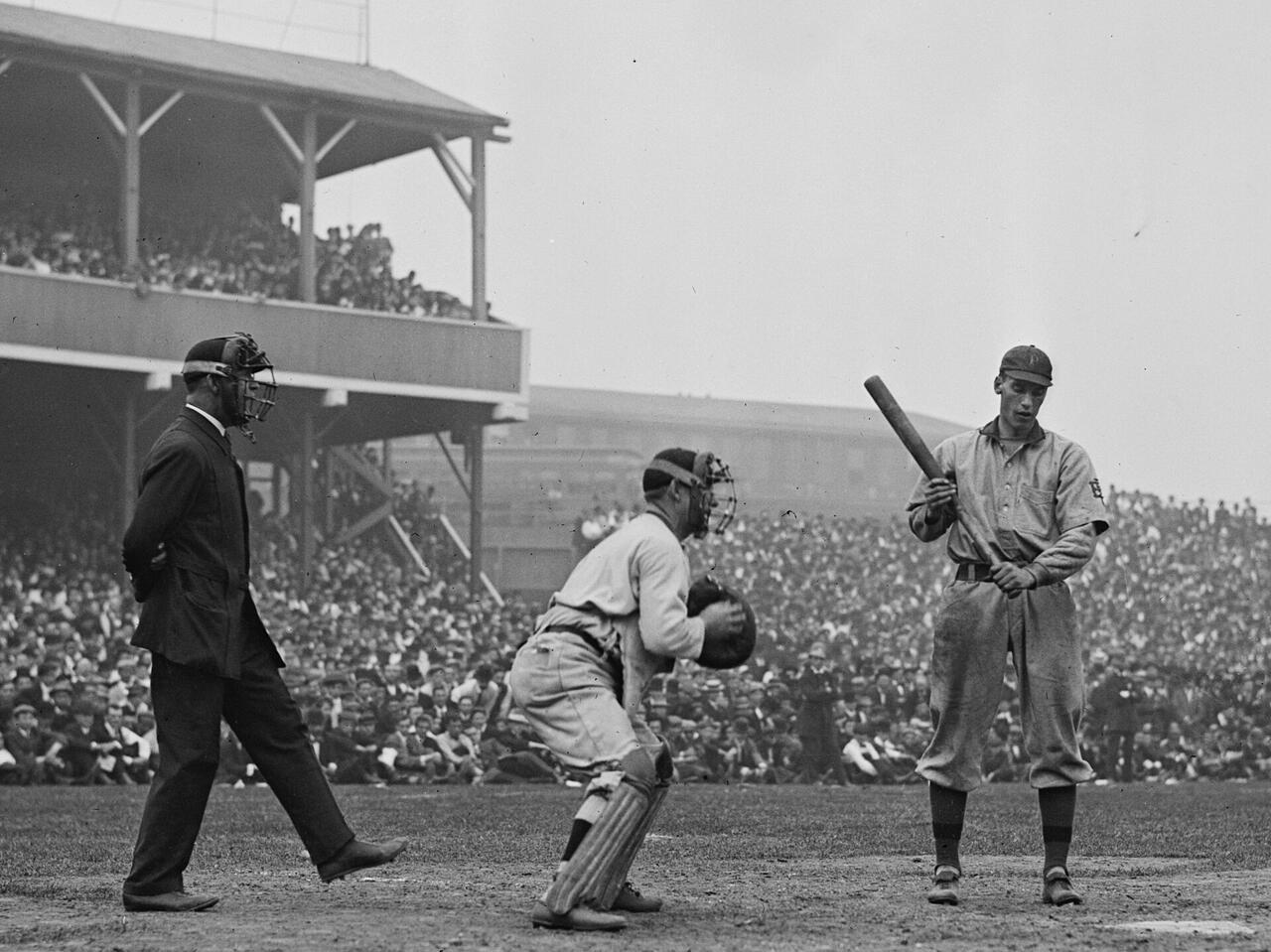
The legendary baseball player and manager Ted Williams once wrote a letter to the Angels outfielder Jay Johnstone on improving his hitting. Among his pieces of advice was that “with two strikes, you simply have to protect the plate.”

Williams’s advice on not striking out came to mind this week when another leak of confidential information rocked the Supreme Court. (The prior leak of the Dobbs decision went unsolved).
For Chief Justice John Roberts, the message is clear: it is a time like this when you have to protect the plate.
Roberts, of course, is famous for his own baseball analogies. In his confirmation, he declared that “judges are like umpires. Umpires don’t make the rules. They apply them…Nobody ever went to a ballgame to see the umpire.”
Yet, justices do make rules not only in new precedent, but in the operation of the court system. Those rules are being broken.

In the same week as the new leak, Justice Sonia Sotomayor attacked her colleague Brett Kavanaugh as essentially an out-of-touch prig who had never even met an hourly wage worker.
It was an unfair insult and a departure from the Court’s long-standing rules of civility.
(Sotomayor later apologized).
Additionally, a forthcoming book by Mollie Hemingway on Justice Samuel Alito contains an embarrassing account of how Justice Elena Kagan allegedly screamed at Justice Stephen Breyer so loudly before the Dobbs opinion that the “wall was shaking.”
(The book suggests that Kagan was upset with Breyer agreeing to spur along the dissents to get out the final opinions in light of rising threats against conservative colleagues after the leak).
For an institution that prides itself on its confidentiality and insularity, the Court is looking increasingly porous and partisan in these leaks.
Worse yet, people are indeed coming to the Court “to see the umpires.”
The most recent leak was published by the New York Times, which was given internal memos from various Supreme Court justices on the use of what is known as the “shadow docket” to issue rulings without oral arguments.
Notably, the leaks occurred after a controversial speech by Justice Ketanji Brown Jackson at Yale Law School in which she denounced the use of the shadow docket by her conservative colleagues to release decisions that were sometimes “utterly irrational.”
The memos reveal the concern of the justices that the Environmental Protection Agency was effectively gaming the system, imposing unlawful regulatory burdens on electric utilities despite a countervailing earlier ruling in Michigan v. EPA.
Chief Justice Roberts noted that the EPA was using the ongoing litigation to force utilities to spend billions of dollars to comply with the new regulations: “In other words the absence of stay allowed the agency to effectively implement an important program we held to be contrary to law.”
The controversy over the use of the shadow docket is immaterial to this story. The most immediate concern for Roberts should be that this is strike two: another leak from within the Court that was clearly designed to wound some of its members.
Unlike the Dobbs leak (which appeared to be an effort to influence the final opinion), this is a leak about a decade-old case. It had a purely malicious purpose to embarrass or disrupt the Court.
The question, again, is the identity of the culprit. There is no reason to assume that the same person was involved in both leaks. Rather, the leaks appear to reflect a deteriorating culture at the Court.
After the Dobbs leak, Chief Justice Roberts launched a fruitless investigation through the federal marshals to find the responsible person. The use of the marshals as the lead investigators (rather than the FBI) was criticized at the time. Roberts may have been sensitive to an executive-branch agency rooting around in the highest court of a sister branch.
The result was the worst possible outcome. The culprit succeeded in both leaking the opinion and evading any accountability.
The fact is that the Court’s culture and institutional identity have always been its greatest protection of confidentiality. In a city that floats on a rolling sea of leaks, the Court was an island of integrity and civility. The “umpires” could call balls and strikes without playing the leak game.
That culture is fast becoming nothing but a relic in the wake of yet another major leak. For the future of the Court and the faith of the public, Roberts has to set his reservations aside and bring in the FBI to find the culprit. Most importantly, he has to guarantee total transparency in allowing the public to see the results wherever they may lead. In other words, with two strikes, Roberts needs to protect the plate.
Jonathan Turley is a law professor and the best-selling author of “Rage and the Republic: The Unfinished Story of the American Revolution