By Philip Marey of Rabobank
Summary
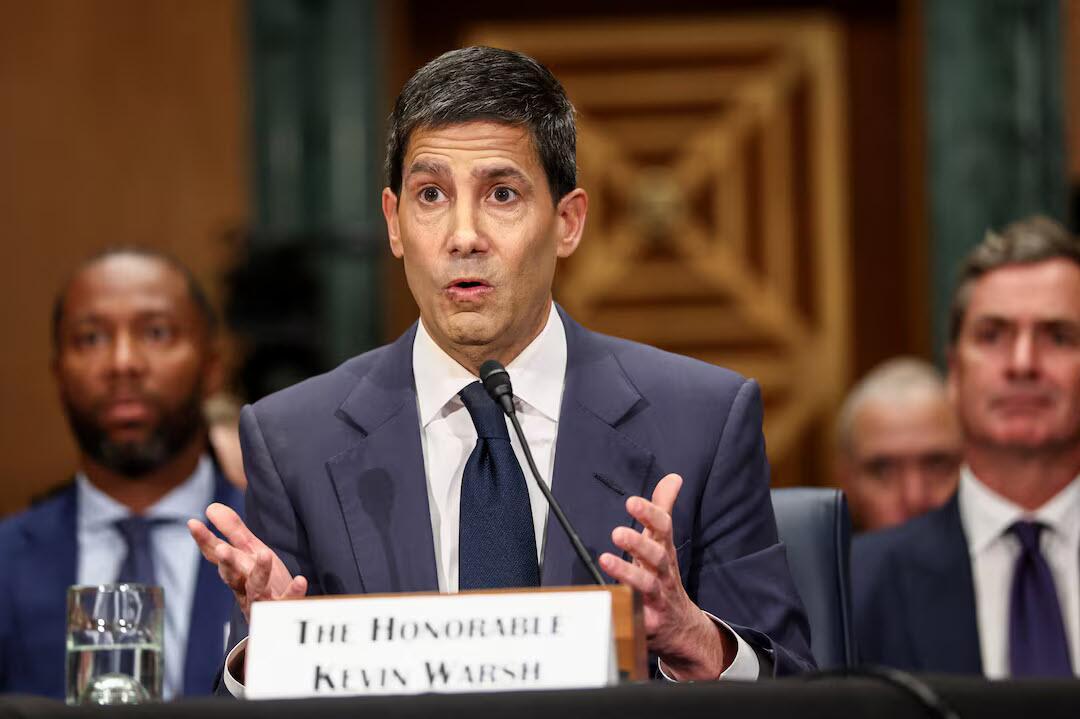
- The confirmation hearing of Fed Chair nominee Kevin Warsh by the Senate Banking Committee was a very partisan affair.
- In his prepared remarks, Warsh stressed that monetary policy independence is essential, but he does not believe that the operational independence of monetary policy is particularly threatened when elected officials state their views on interest rates. Warsh thinks the Fed must stay in its lane and avoid straying into fiscal and social policies.
- Warsh was walking a tightrope between convincing the Senate Banking Committee that he is going to be an independent Fed Chair and staying loyal to President Trump. Meanwhile, there was as much interest in Warsh’s personal balance sheet as in the Fed’s balance sheet.
- Obviously, there were several questions about Fed independence and whether Warsh had promised President Trump to cut rates in order to get the nomination. Of course, he denied.
- Warsh repeatedly said that interest rates rather than the balance sheet should be the dominant tool of monetary policy. He did not have a specific target for the balance sheet in mind, and eased fears of a rapid change.
- Warsh wants a robust reform of the inflation framework and improve the data to assess the underlying inflation trend.
Introduction
First Democratic senator Warren called nominee Warsh president Trump’s sock puppet. Then Republican senator Kennedy tried to settle the issue by asking: “Mr Warsh, are you going to be the president’s human sock puppet?” “Absolutely not,” said Warsh. This was clearly a very partisan confirmation hearing for Kevin Warsh and near the end of the 2.5 hour session one of the more empathetic senators asked him why he would want this job. This was a big change from 20 years ago when Warsh was confirmed as Fed Governor with bipartisan support. Warren gave him a couple of litmus tests of his independence by asking whether Trump lost the election of 2021 and if Warsh could name one aspect of Trump’s policies that he disagreed with. Warsh gave evasive answers and the tone for the hearing was set. Warsh was walking a tightrope between convincing the Senate Banking Committee that he is going to be an independent Fed Chair and staying loyal to President Trump.

Meanwhile, there was as much interest in Warsh’s personal balance sheet as in the Fed’s balance sheet. Warsh said he had made an agreement with relevant authorities to divest his assets before sworn in (or within 90 days of his confirmation), but that answer did not seem satisfactory to several (Democratic) senators. Ironically, Senator Tillis (Rep) – who wants to hold up the confirmation until the case against Powell is dropped – had to come to the rescue by stressing that Warsh was not out of compliance.
Warsh wants the Fed to stay in its lane
Warsh did not read the full text of his prepared remarks that were published a day before the hearing, as Chairman Scott tried to keep the meeting on schedule. In his speech, he stressed that monetary policy independence is essential, but he does not believe that the operational independence of monetary policy is particularly threatened when elected officials – presidents, senators, or member of the House – state their views on interest rates. He said that Fed independence is largely up to the Fed. He highlighted three important implications. First, Congress has tasked the Fed with price stability and that means that low inflation is the Fed’s plot armor (against criticism). Second, Fed independence is at its peak in the operational conduct of monetary policy, but that does not mean that the central bank has the same degree of independence in other areas, such as regulation and supervision. Third, the Fed must stay in its lane and avoid straying into fiscal and social policies. In response to the opening question by Chairman Tim Scott (Rep), Warsh said that he wanted a new inflation framework, that he preferred the interest rate tool over the balance sheet tool, and that he wanted a new communications approach. For a more detailed discussion of the nominee’s ideas, we refer to The Warsh Regime
Rates and independence
Obviously, there were several questions about Fed independence and whether Warsh had promised President Trump to cut rates in order to get the nomination. When Senator Reed (Dem) asked him about Fed independence, Warsh said that presidents (in general, not just Trump) want lower rates, but that independence is up to the Fed. In an answer to Senator Kennedy (Rep), Warsh said that the president never asked him to pre-commit on any interest rate decision. It got really heated when Senator Gallego asked Warsh whether it was his sworn testimony that the President had not asked him to commit to cutting rates. When Warsh confirmed, Gallego (Dem) concluded that either Warsh or Trump was lying, referring to an article in the Wall Street Journal on December 12. In response, Warsh said that these reporters needed better sources and that he took independence very seriously: “the President never asked me and I would never do so.”
There was also a lot of interest in Warsh’s argument that the Fed could cut rates because of AI. Warsh said that he expected the supply effects to outweigh the increase in demand, but he did not really answer the question how fast AI needed to show up for cutting interest rates. Senator Van Hollen (Dem) asked him what would happen if the Fed cut rates to 1% in 2026 as suggested by Trump and thought it implausible that AI could cause a situation where this would be justified. Again Warsh gave an evasive answer.
Fed independence is not just about rate decisions. When Senator Alsobrooks (Dem) asked him a number of questions regarding the court cases of Governor Cook and Chair Powell, Warsh gave evasive answers and managed to briefly mumble “I’ll defend Fed independence” somewhere in between.
Balance sheet reduction
Warsh repeatedly said that interest rates rather than the balance sheet should be the dominant tool of monetary policy, because the distributional effects of the latter favored the rich, while the more pervasive effects of the former reached everybody. He did not have a specific target for the balance sheet in mind, but he did say the Fed should not be holding longer-term assets as if it’s a fiscal authority. In response to Senator Kim’s concerns about fears of a rapid change, Warsh said it should be a public discussion and that any regime change should be deliberate and well-described. He wants to work with the Treasury Secretary to see how the Fed can reduce the balance sheet and get out of fiscal policy.
Communication and inflation framework
Warsh indicated that while at present most FOMC decisions are taken unanimously, he liked messier meetings with “good family fights” and that he was not for pre-deciding meetings. Warsh said there is nothing wrong with dissents. He said that one of his lessons was that there is a lot of groupthink in the economics profession , so openmindedness is important. Warsh said that too many Fed officials give forward guidance and we need central bankers that are humble, nimble, and open minded.
Warsh stressed that the Fed has to deliver on price stability and full employment so that politicians stay out. He gave his own definition of price stability as a change in prices that nobody talks about. He also prefers trimmed averages as measures of inflation. However, Warsh said that we need new data to assess what’s the real underlying inflation rate and that would be one of his first reforms: a data project. Warsh lambasted the 2020 change in the Fed’s inflation framework – the change to Flexible Average Inflation Targeting – that ‘’asked for a little more inflation and got a lot more and we’re still living with it.” Instead, Warsh wants a robust reform of the inflation framework. He said that the cumulative increase in prices in recent years is a legacy of past policy error.
What happens next?
On Wednesday, the Senate Banking Committee members have an opportunity to pose additional written questions to the nominee. On Thursday, Warsh is supposed to answer these questions. The crucial vote is Republican Senator Thom Tillis, who wants the DOJ to drop the inquiry into current Fed Chair Jerome Powell before advancing the nomination to the Senate floor. An offramp seems possible because Tillis said he would agree with replacing the DOJ inquiry by a congressional inquiry. However, so far Trump has dismissed this option. If this standoff continues, it may be difficult to get Warsh confirmed by May 15, the end of Powell’s term as Chair. In this case, Powell wants to stay on as Chair pro tempore, but this is disputed by the Trump administration. So we could be heading for some verbal fireworks in DC in the coming weeks.