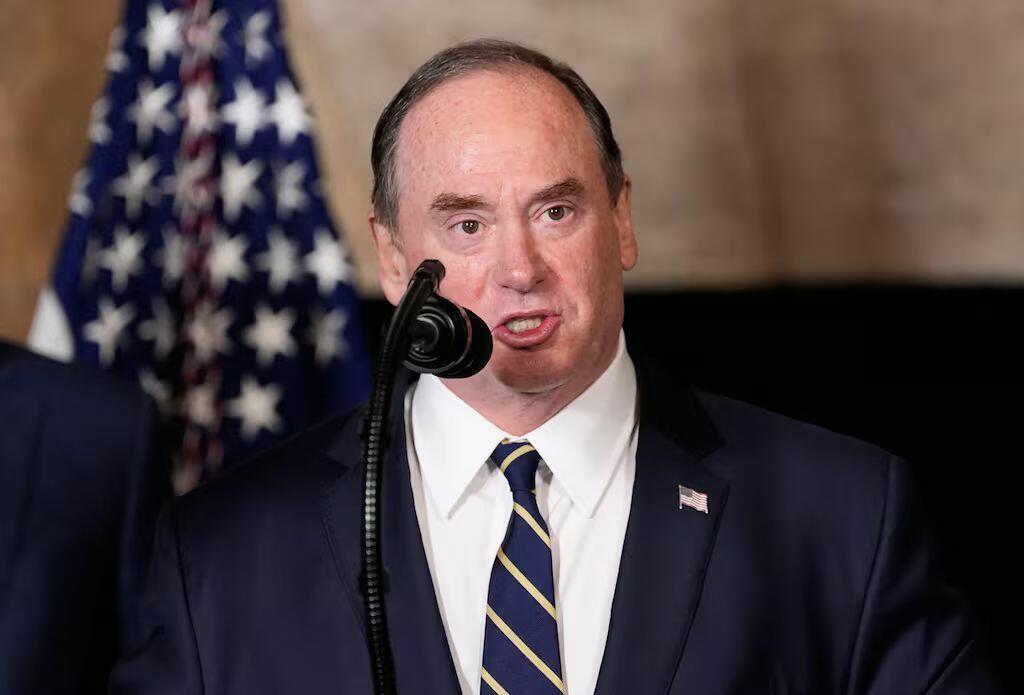
In a terse, one-paragraph statement released this afternoon, the Pentagon announced the immediate departure of Secretary of the Navy John C. Phelan, effective immediately.

Undersecretary of the Navy Hung Cao has been elevated to Acting Secretary of the Navy. The announcement, issued by Chief Pentagon Spokesman Sean Parnell (Assistant to the Secretary of War for Public Affairs), offered no explanation for the move and simply thanked Phelan for his service “on behalf of Secretary of War Pete Hegseth and the Deputy.”
The timing of the firing could hardly be more dramatic. The United States remains engaged in active military operations against Iran following the launch of Operation Epic Fury on February 28 - a joint U.S.-Israel campaign targeting Iranian missile stockpiles, naval assets, and defense infrastructure. Although a ceasefire took effect around April 8, tensions remain extremely high. The U.S. Navy is currently enforcing a naval blockade of Iranian ports in and near the Strait of Hormuz, announced in mid-April after diplomatic talks collapsed. Recent incidents have included the seizure of Iranian-flagged vessels attempting to run the blockade, Iranian attacks on commercial shipping, and ongoing enforcement actions that continue to roil global oil markets and international shipping lanes.
Phelan, a Palm Beach-based private equity investor, art collector, and major Trump donor who had poured millions into supporting the president, had no prior military or Navy experience when he was nominated in late 2024. Despite criticism over his lack of relevant background and potential conflicts of interest stemming from investments in defense contractors such as Dell and Palantir, he was confirmed by the Senate. During his roughly thirteen-month tenure (March 2025–April 22, 2026), Phelan focused heavily on bureaucratic efficiency: he axed Biden-era climate and DEI contracts and grants, reportedly saving approximately $300 million. He also pushed aggressive initiatives to accelerate shipbuilding, increase lethality across the fleet, and deepen partnerships with private-sector technology firms like Palantir.
Just yesterday, Phelan had delivered remarks at the Navy’s annual conference. In February, reports surfaced that he had flown aboard Jeffrey Epstein’s plane in 2006—well before Epstein’s first arrest. Phelan maintained that he was invited by someone else, had no further contact with Epstein, and addressed the matter publicly at the time.
Stepping into the role is Hung Cao, a Navy Captain with more than 25 years of service.

A Naval Academy graduate and decorated combat veteran, Cao’s record includes extensive experience in explosive ordnance disposal (EOD), diving, special operations, and surface warfare. He fled Vietnam as a child refugee from communism, later balancing Navy budgets at the Pentagon and deploying multiple times. Cao ran for U.S. Senate in Virginia with President Trump’s endorsement and was confirmed as Under Secretary of the Navy in October 2025. Supporters have hailed him as a “badass” warrior with genuine operational credibility—the exact opposite profile of the donor-turned-political-appointee he is replacing.
Multiple outlets are already describing Phelan’s removal as a firing orchestrated by Secretary of War Pete Hegseth. The move fits a broader pattern of rapid turnover at the top of the defense establishment under the current administration, driven by demands for loyalty and warfighting readiness. Earlier this year, the Army’s top general was also removed.
Meanwhile, Democrats are pouncing. Sen. Lisa Blunt Rochester (D-DE), framed the sudden change as evidence that things are not going well inside the administration.
As of this writing, no public explanation has emerged from the Pentagon or the White House.
The Navy’s operational chain of command - Chief of Naval Operations, fleet commanders, and forward-deployed forces - remains unchanged and fully in control. Still, the abrupt leadership transition at the top of the Department of the Navy (now operating under the rebranded Department of War) during active combat operations is historic in its speed and opacity.