For fifteen years from the late 1950s to the early 1970s, it was possible to hop on to a bus in London and travel all the way to Calcutta, India. The journey took fifty days and went through such breathtaking destinations such as the the Caspian Sea coast, the Rhine Valley, the Khyber Pass and the Kabul Gorge.
The first London to Calcutta bus service was “The Indiaman” run by Oswald-Joseph Garrow-Fisher. The bus itself was a refurbished AEC Regal III model, that already had 100,000 miles on its odometer when it left London on April 15, 1957, with twenty passengers on board. It arrived in Calcutta on June 5. After a brief stay in Calcutta, the same bus started the return journey to London, successfully concluding the 20,300-mile round trip (about 32,000 km) on August 2, 1957. For the forward journey, Garrow-Fisher charged a fare of £85 and £65 for the return. Reportedly, only seven of the original twenty passengers (two women and five men) were brave enough to endure the journey back to London.
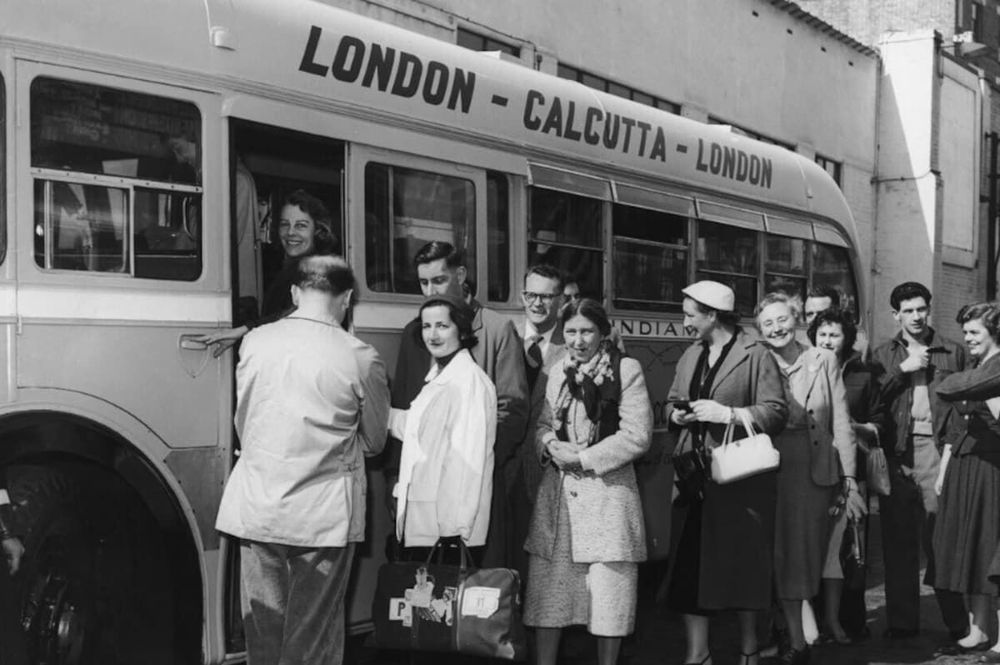
The bus travelled through France, Italy, West Germany, Austria, Yugoslavia, Bulgaria, Turkey, Iran, Afghanistan, Pakistan before entering North Western India. After entering India, it travelled through New Delhi, Agra, Allahabad and Banaras, eventually reaching Calcutta. It made long hauls in Paris, Venice, Istanbul, Tehran, and Lahore. During the trip, the passengers stayed overnight in hotels, and in some cases had to camp outside when no other accommodation was available.
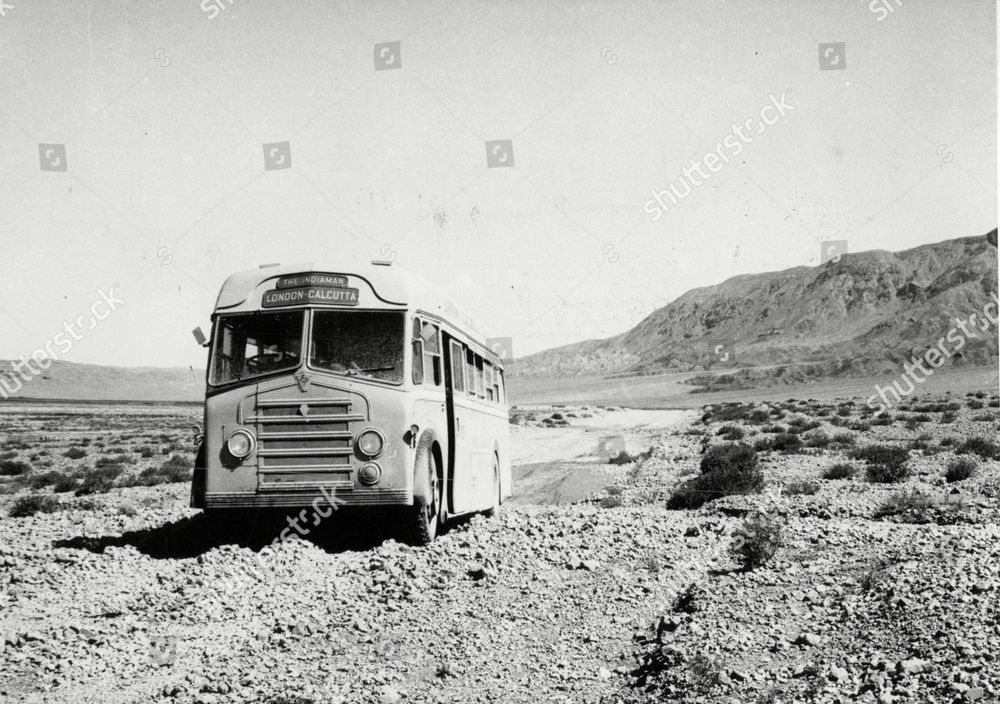
In The New York Times report, Garrow-Fisher recalled the precarious hairpin-bends along the road passing over the high cliffs near Mount Ararat at the Turkey-Soviet Union border, but also noted that even the high cliffs were not as alarming as the narrow roads with soft shoulders and wandering cyclists in India. In Iran, wooden planks had to be placed under the wheels to prevent the bus from sinking into the desert sands. Sandstorms and torrential rains, dust and heat made progress nightmarish. On the return trip, they found the Pakistan-Iranian border was closed due to an outbreak of Asian influenza. So Mr. Garrow-Fisher diverted the bus from Lahore, beyond which the border was closed, to the city of Karachi from where he intended to take a ship to Iran. Upon reaching the port they learned the land border had reopened. So he turned the bus around and drove back the 630 miles to Lahore, then westward again. The diversion and other obstructions delayed their arrival in London by 16 days, prompting a rumor that the passengers had been murdered by bandits in Iran. The British Embassy in Teheran were so relieved to find the passengers sound and healthy, they organized a cocktail party for the group.

Mr Oswald Garrow Fisher, driver and organiser of the trip.
One of the passengers, Peter Moss, 22, did not return to London but continued his journey eastwards, by sea, to Malaya. He wrote a diary which he later turned into a book called ‘The Indiaman – When the Going was Good by Land and Sea’ which is a colourful description of his once-in-a-lifetime bus journey.
The Indiaman made a total of four round trips before the bus was retired.
Garrow-Fisher’s successful venture spawned many copy-cats. At one point, as many as 32 operators were plying the London to India route using vehicles that varied from double decker buses to converted fire engines. Some of the journeys terminated in Kathmandu, some in Delhi, and others in Mumbai. One even went as far as Sydney. The last leg of the journey from India to Sydney was made on ship.
This latter trip was organized by Albert Travel, a venture started by British travel agent and Australian resident Andy Stewart, and operated between 1968 and 1975. Stewart bought a dilapidated Albion Motors CS Venturer double-decker bus from the New South Wales Department of Government Transport, after negotiating the asking price down from AU$1000 to AU$400. The bus could barely manage 32 miles per hour and had a large dent in the rear. Stewart completely refurbished the interiors. He fitted it out with bunk beds to suit 14 passengers, extra fuel tanks and drinking water supply. There was also heating in the lower deck, a radio and cassette player, a reading and dining saloon and a kitchen with a gas cooker and sink. He named the bus Albert.
On Albert’s first journey, the bus drove 13 passengers from Sydney to London —a distance of 16,000 miles. The trip was so successful that Albert went on to complete a further 14 Sydney-to-London round trips until 1976 when the passage through Iran was blocked due to an unstable political climate. In 1979, following the Soviet–Afghan War and the Iranian Revolution, overland routes across Asia became untenable and all London to India bus services were terminated.
Now more than forty years later, an India-based travel operator Adventures Overland announced a bus service from New Delhi to London and back, covering 20,000 km and travelling through 18 countries in 70 days. The service was supposed to start in 2021, but got delayed, probably due to the Covid pandemic. The first bus is expected to leave in April next year.


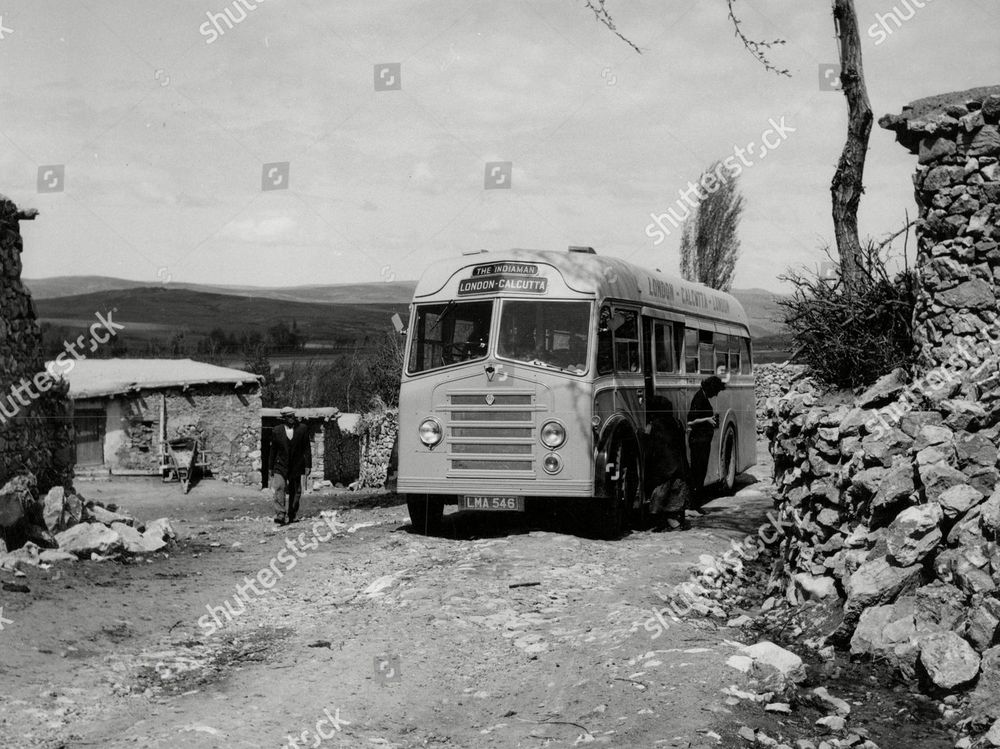
The bus ‘Indiaman’ passes through Turkey during its trip from London to Calcutta, 1957.

The bus near Tabriz in Persia in flood waters.

In Iran, the bus full of 20 British passengers, faces a washed out bridge under repair. The stream is still passable but the only way across is to drive through it.


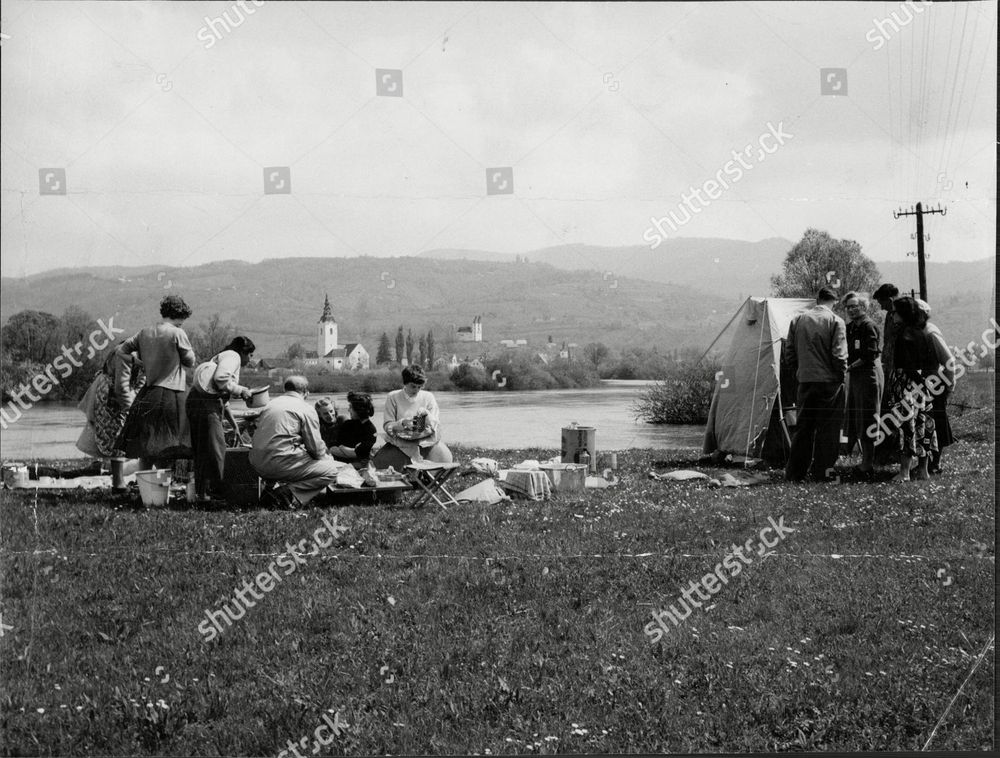
Passengers stop for a picnic by the river in Yugoslavia during their trip.

A roadworker helps with his pick-axe after the bus wheels were bogged down in mud in Persia.

Passengers rest during their trip in Yugoslavia.

The bus stops for water in Yugoslavia.

The Indiaman drew a crowd in Sofia, Bulgaria.

The bus passes an elephant in Amritsar, India.
