
After Netscape, the speed of software sped up beyond what anyone could have imagined. Thanks to a documentary crew and a ghost writer, we have a full view of the whole thing.
Five minutes to launch.
Jamie Zawinski is in the car, but he’s late. Not that big of a deal usually, he was always late. But Zawinski was supposed to be in his chair in five minutes. Instead he was in the passenger seat of a car, still a few minutes from the office.
Three minutes to launch.
The Netscape PR department gathers around a conference call to the media announcing the imminent release of Netscape’s code to the public. They stress the significance of the launch, one of the largest open source projects of its kind. The goal was simple. Use the power of the open source community to take on their competition, notably Microsoft.
Zawinski jumps out of the car and heads into the office. His long trenchcoat wafts behind him. His hair is blue, and half uncut, which Netscape co-founder Jim Clark would later mention gave him the distinction of “having both the longest and shortest hair at the company.” He walks briskly. He doesn’t run though.
One minute to launch.
A crowd has gathered in Zawinski’s cubicle before he even arrives. He throws his stuff down, sits at his terminal, and gets to work. After typing a few commands, everybody pauses for a second. “Wait, this is bad,” he says suddenly. For a moment, panic hangs in the air. But he recalibrates and types a bit more. Just a small problem.
A minute later, and it is done. At 10 AM on March 31, 1998, Netscape officially goes open source. The Mozilla project had launched.
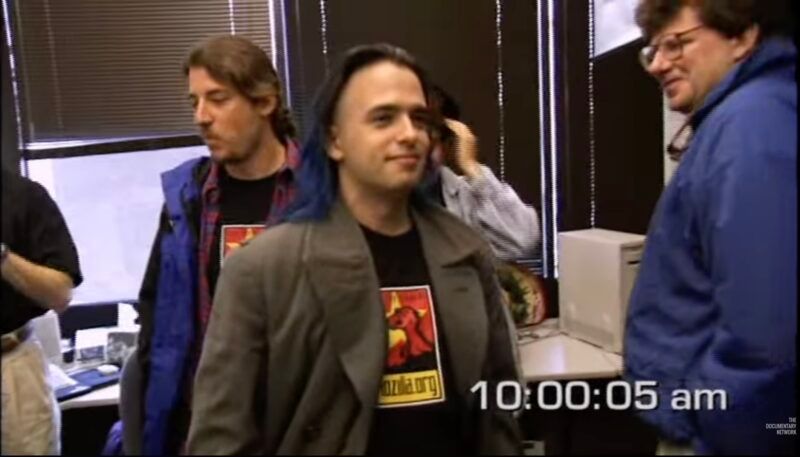
The decision to make Netscape’s browser open source had come only a few months earlier. As Microsoft starting closing in on Netscape’s market share, the company knew that it had to make some changes. Releasing the source code of their browser, they hoped, would give them an edge and let them innovate quickly with the help of other developers around the world while they focused on the more financially promising enterprise wing of the market. But doing so would include a massive rewrite of millions of line of code, and the time of over a dozen engineers working near round the clock on it.
You can watch all of this yourself, thanks to the documentary Project Code Rush. The race to release the code at the last minute comes in at about the twenty-five minute mark. The film’s creator, David Winton, already had a relationship with many people inside of the Netscape thanks to some promotional videos he had created with them. He recalls them feeling like they had “nothing to lose.” So they let Winton and his crew tag along with their cameras for just over a year, in the midst of turbulent change and a complete remaking of the compnay.
The film begins shortly after the initial announcement that Netscape would be going open source. It follows the key team of engineers that would be responsible for preparing the code for a release to the public, a massive effort that required major rewrites and refactoring of the underlying codebase. But working around the clock for years had taken its toll, and the people interviewed for the film were more than willing to be open about it. The film crew was there to capture personalities clashing, engineers sleeping in their offices, desperate races against the clock, and eventually, massive layoffs and a subsequent acquisition by AOL.
And still, many of the people that worked on the project were idealists, who had gotten to work on the web because they believed in its ability to democratize and spread information. The open source release felt like the realization of the initial promise of the web, a culmination of all of the work that they had done so far. It was the beginning of something, the beginning of what would later become Mozilla Firefox. But it’s also the end of something that was started five years earlier.
Just as the film crew of Project Code Rush was wrapping up filming, a new book came out from Netscape co-founder James Clark. It was called Netscape Time, an apt title given its focus on speed. Clark, along with his ghost writer Owen Edwards, devotes a significant portion of the book describing the pace that the web enabled, which he believed was largely because of how the web revolutionized software distribution.
For the children of the Internet, taking a product to market, or going to get a product, were virtual acts hence virtually effortless. Netscape Time was a term we came up with to apply to the speed at which we developed products and, by extension, the relentlessness of the work involved. But the effortlessness of web use is also an aspect of Netscape time, when a consumer can research a product, find the best price, and click to buy, all in the time it used to take to get the car out of the garage.”
Thanks to its ubiquity, software could be freely distributed via downloads anyone could access. Software no longer needed formal releases. The Netscape team took full advantage, sometimes releasing multiple test versions of its browser in a single day. And through it all, they were in constant conversation with their users, gathering feedback. It was this pace and this distribution that would make open-sourcing the browser a possibility years later.
Netscape Time begins on the day of Netscape’s IPO, a day when the technology world, and the web changed. It massively outperformed even its inflated initial offering, and Clark makes sure to highlight all the people at the company that became millionaires that day. At first, this seems like a ruthlessly capitalist way to open the book, and it is certainly some of that. But as you read on you find that it amounts to something more like pride. Many of the people that worked at Netscape bought into the dream of a better, more accessible web. The IPO was their reward. Clark brings that into focus.
Clark then flashes back, and uses the remainder of the book to talk about the company’s history and founding. He talks about his first conversations with Marc Andreessen, and how they eventually turned to an idea for a Mosaic killer. He details the coup that would result in many NCSA Mosaic developers coming over to the company.
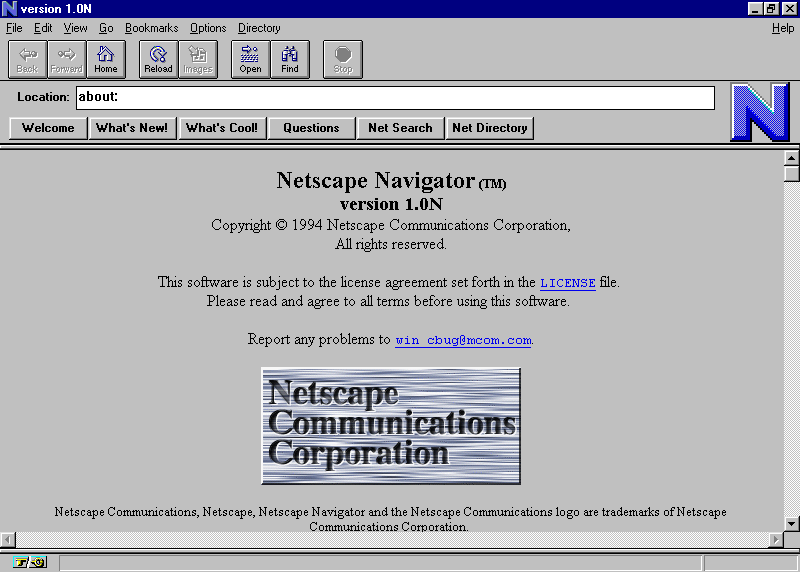
And he documents the way in which Netscape embraced a new conception of what it meant to ship software. With competition closing in from every angle, and some of the best engineers in the world together in the same place, Netscape iterated and developed its browser versions with precision and speed that was previously unheard of, even in the information age. In Clark’s telling, somewhat biased but still largely accurate, Netscape remade what was possible on the web and brought into its next stage of maturity.
The book ends where it began, with the decision to take Netscape public. The first domino in what would eventually be known as the dot-com era.
When Project Code Rush picks up the story three years later, things look a bit different. As the film’s title implies, the speed of Netscape Time had become twisted and rushed. What was once a pace that facilitated free distribution of software to millions of people had become overwrought and unmaintainable. Everything felt like a frenzy, and last minute. When it came time to launch something, you just had to pray that the developer pushing the button didn’t hit too much traffic on the way in, and got to his chair on time.
Jim Roskind describes the feeling. “One way to learn to run a marathon is put a person 26 miles out into the desert and say, you know, there’s a bomb on your back that’s gonna go off in a certain length of time if you don’t get into the town,” he says in the documentary, reaching for a metaphor about the Netscape open source launch, “well, that’ll motivate you to get in, but there’s a certain chance that you’ll be blown up.”
Much of the open web spirit that had initially propelled the company remained intact. The film spends a lot of time interviewing Netscape’s engineers. And most, if not all, had a deep belief in what they were doing. They had all come to the web in different ways, but they saw the way that it was changing the world and had to be a part of it. They wanted to help information be more free, to enable people to connect from all around the world. In fact, the decision to open source the browser felt like an incredible win for the open web, and a recrimination of corporate interests and capitalistic competition that had started to creep in.
They were also beset by impossible deadlines, and many sleepless nights, or nights that ended on a couch in the office. Personalities clashed as people depended on one another for work that wasn’t getting done. With a looming deadline and the eyes of the software world on them, Netscape Time felt more like a pressure cooker at times.
It’s a dichotomy that the film spends a lot of time on. For instance, Michael Toy is a regular feature of Project Code Rush. Clark actually spends some time talking about Toy in his book as well. Before Netscape, Toy had worked at SGI, the company Clark had founded previously. Clark describes Toy as eager, smart, and hungry for the next challenge.
But the Michael Toy of Project Code Rush is very different. Overworked and on the verge of burnout, Toy is the product manager for the Mozilla project. He is constantly at odds with engineers on his team as he tries, and eventually does, land the project in on time. By the end of the documentary he is seen in retirement, spending time with his family and reflecting on the time he had missed with them. Thankful for the opportunity but wistful for what could have been.
Netscape time is itself a bit of a contradiction. It enables incredible things. It’s a transformation that made the web possible. But it set a pace that has proven impossible to keep up with, and left little time for reflection and introspe ction. For better or for worse, Netscape time is simply just time now.