Pointe shoes have looked and functioned about the same since the early 20th century: typically satin-covered, with fortified insoles and boxes made from fabric, paper, and paste. Few designs have strayed too far from this basic look and structure, despite huge advances in technology and sports medicine. Why has the pointe shoe been so resistant to change?
The process of designing a new shoe and thoroughly integrating it into the market is complex and costly. Pointe shoe manufacturing—which requires a delicate balance of science and aesthetics—runs the tortoise’s race. And ballet is an art form bound by tradition, with limited financial resources to support forward-thinking change.
But that hasn’t stopped artists and artisans from trying. And recently, some manufacturers have made waves with nontraditional designs that incorporate very 21st-century technologies.
Thinking Outside the Box
How have pointe shoes evolved over the past few decades? Most changes have involved small adjustments—tweaks to paste recipes, or to box or platform shapes to accommodate different types of feet. But since the 1990s, a few players have ventured into less-traditional territory.
Gaynor Minden was the first shoe on the market to innovate with synthetic ingredients, introducing its polymer shanks and boxes in 1993. Brands including Bloch, F.R. Duval, and Nikolay have since created hybrid shoes combining traditional and alternative materials, and Sansha introduced interchangeable shanks in 2006, a concept Só Dança later adopted. Beloved science educator William “Bill” Nye even patented his own model in 2005 after meeting dancers who’d sustained pointe-related injuries. Manufacturers have often cited injury prevention, as well as increased longevity, as upsides to their synthetic models.
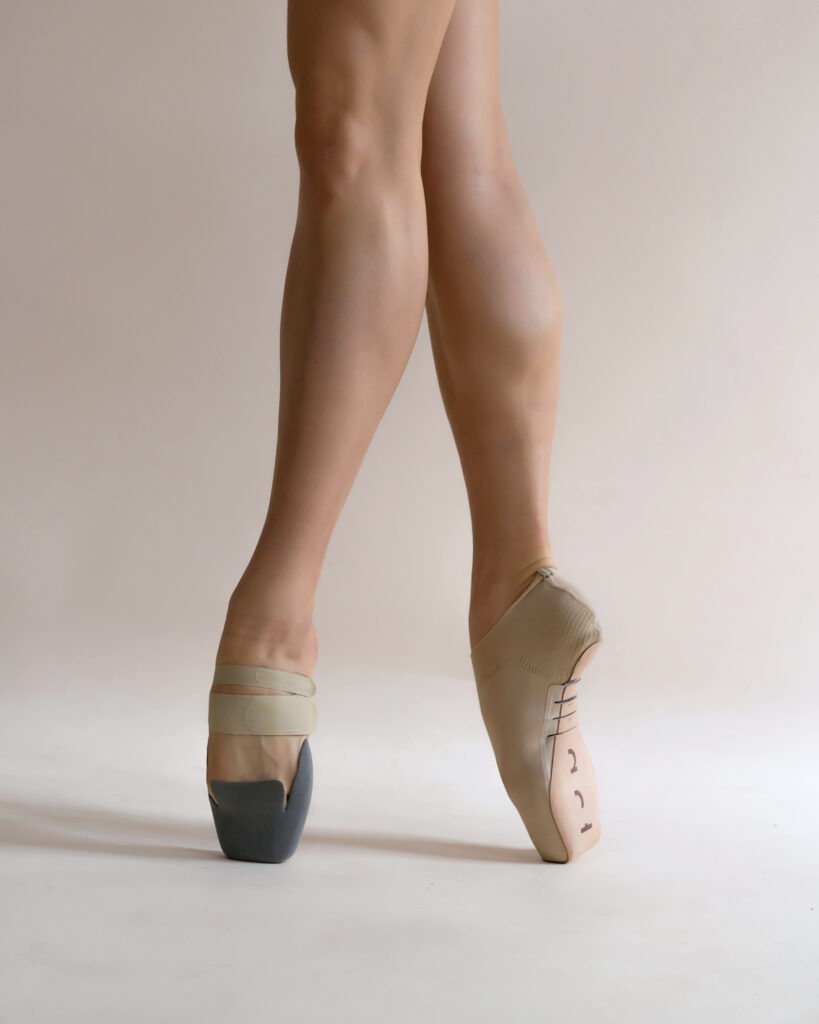
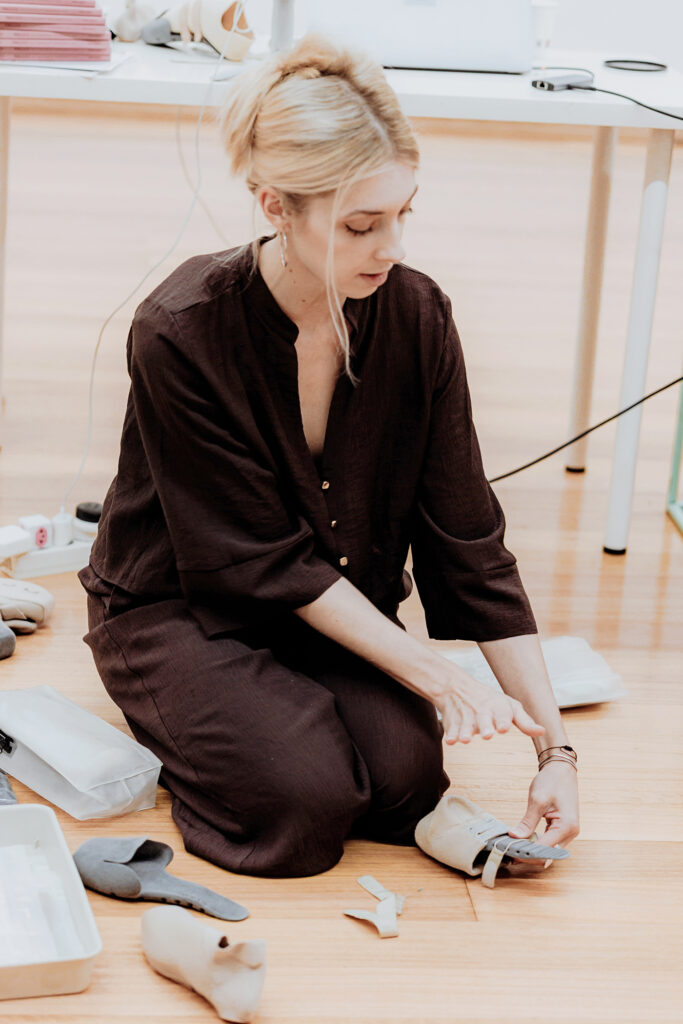
Recently, some manufacturers have begun to use new technologies to even more radically reimagine the pointe shoe. In 2023, the German company act’ble released a 3-D-printed and knit shoe, act’Pointe. The shoe features a scored sole made from a rubber-like elastomer and a compressive “skin” that covers the entire foot. Sophia Lindner, act’ble’s founder, explains that the aim is to meet dancers’ needs by using functional materials that are standard in other athletics. “For a very long time, we didn’t ask how a shoe might look if it were constructed from a blank page, with the knowledge and technology of sports and medicine we have today,” she says. “Dancers are taught to make everything look a certain way. There has been innovation in ballet, but always in a small angle, and in a very rigid system.”
Look the Part
No matter how comfortable or functional, unconventional shoe designs tend to be a hard sell in the ballet community—often because they look different, featuring nontraditional materials or shapes. Expert fitter Mary Carpenter emphasizes the importance of aesthetics: “In ballet, it has to be beautiful.” That’s why, she says, hybrid models tend to have more success in the market than fully synthetic shoes. Lindner says that traditional aesthetics has been one of act’Pointes’ biggest hurdles.
Expert fitter Riley Thomas Weber adds that many people believe synthetic shanks limit control and “pop” dancers on pointe. He explains that that’s often because of fitting errors; most dancers need softer alternative shanks than expected. “If it wasn’t for those errors, and the taboo-ness, I think a lot more people would be wearing them,” he says.
Tough Crowd
Sometimes resistance to shoe innovation is dancer-driven. Pacific Northwest Ballet production stage manager Sandy Barrack reports that none of the company’s dancers wear shoes with synthetic material, even though PNB has no policy prohibiting them. She says that some past company dancers wore Gaynor Mindens as students, but then switched to traditional shoes when they turned pro. “It was almost like they felt like, ‘If I’m going to be a professional ballerina, I have to wear a Freed or a Freed-like shoe,’ ” she says. Plus, she adds, company dancers often become attached to their preferred shoes. If they aren’t exposed to alternative options as young dancers, chances are they won’t pursue them as professionals.
Much of the time, however, hesitance about new pointe shoe styles trickles down from the top. Directors or educators often encourage—or mandate—their own preferences, sometimes mistrusting technology they’ve not tried themselves. “Resistance to change,” Weber says, “usually comes from the person at the front of the room.” Lindner has heard from several dancers who are interested in trying act’Pointe but fear their teacher or director would disapprove. “There’s always the gatekeepers,” she says. “But I would ask them if preserving tradition is more important than preserving the dancer.”
Money, Money, Money
The other main obstacle to shoe innovation is finances. It costs thousands of dollars to manufacture a new shoe in just one size, not including the price of prototyping, materials, marketing, or distribution. And dance retail is a relatively small industry, making it less willing and able to take risks on new ideas. “Unlike Nike, we can’t just trash a line that doesn’t work,” Carpenter says. She believes the combination of ballet’s change-resistant culture and resource scarcity sets it behind not just in pointe shoe evolution but, more broadly, in sports-medicine development. “If there were bigger budgets involved and it had more public prestige, things may be different,” she says.
Even when a new shoe hits the market, retail stores often can’t risk stocking a new model. “Most people buy through retailers,” says Weber. “And a retailer can only bring in what they know is going to sell.” Without certain shoes in-store, dancers may not know they exist. That perpetuates a cycle of supply and demand, says Weber, because manufacturers also need to meet their bottom lines.
Both Weber and Carpenter say that while developing new designs, brands need to prioritize feedback (especially constructive criticism) from a variety of artists. While Carpenter believes social media and recent pop-culture developments are helping to improve general education and bolster ballet’s place in the public eye, there’s still a long way to go. “In the grand scheme,” she says, “there’s potential. I think we’re muddling through.”
Inclusive Pointe Shoe Shades: Where Are They Now?
In 2020, as the Black Lives Matter movement pushed conversations about inclusivity into the spotlight, dancers and balletomanes called on shoe manufacturers to offer pointe shoes in a more diverse range of skin tones. Some brands, at least initially, answered that call. But in 2026—with tariffs squeezing the global market and diversity, equity, and inclusion initiatives dwindling—it’s worth asking: How real has progress actually been?
Today, inclusive pointe shoe shades are often harder to find than they were a few years ago. “It seems that some brands jumped on that as a marketing ploy, but then they realized how expensive it is to mass-produce shoes in different shades,” says expert fitter Riley Thomas Weber. The crux of the issue is supply and demand. Retailers have to spend thousands to stock new shoes in enough sizes, and Black and brown artists are still a minority in the art form. “With fewer dancers of color to begin with, there are fewer dancers to buy these shoes,” says Weber. “So fewer are stocked in-store.” Sandy Barrack, Pacific Northwest Ballet’s production stage manager, believes that the solution lies in consistent, committed efforts to celebrate dancers of color and make ballet more accessible. “The more that we embrace a more diverse community, the more kids will be in schools wanting these shoes,” she says.
Of course, the value of producing an inclusive range of shades goes far beyond finances. Isabela Coracy, a leading dancer with Ballet Black, understands the fiscal challenges manufacturers face. “But it would be a good change if production [of diverse shades] could be as normal as it is with pink shoes,” she says. Going forward, she hopes to see not only pointe shoes in a wider range of shades but also ribbons and elastic, which typically come in several variations of elasticity and width in pink shades, but only a few in bronze and brown. Barrack says a small startup, pointeshoeribbons.com, attempted to fill the gap—but the company recently folded.
Coracy emphasizes that diverse options cannot just be a trend. “I think of all the dancers who didn’t become professionals because they did not feel represented,” she says. “We have so many leotards. Why not pointe shoes?”