
A dependent territory of Norway, Bouvet Island in the South Atlantic Ocean is the world's most remote island. Here is its fascinating story.
When people think of Norway’s most remote regions, they might picture the rugged fjords of the Arctic north or the isolated communities of the Svalbard archipelago.
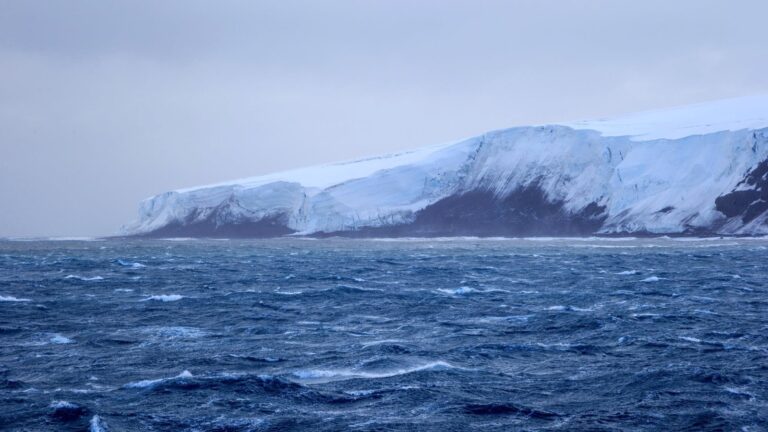
Yet, Norway’s most distant possession lies far from the mainland, in one of the most extreme environments on Earth. Bouvet Island is an obscure, ice-covered, inactive volcano thousands of miles away in the South Atlantic Ocean.
It also holds the title of the most isolated island in the world, with the nearest landmass, Queen Maud Land in Antarctica, more than 1,700 kilometres away.
Human visits are extremely rare, limited to the occasional scientific expedition, but remarkably, life still exists here. Penguins, Antarctic seabirds, and seals are among the resilient species that call Bouvet home.
You probably have many questions about this unique place. So, let's kick things off with some quick facts.
Quick facts about Bouvet Island
- Location: South Atlantic Ocean
- Size: 49 square km or 19 square miles
- Discovery: Frenchman Jean-Baptiste Charles Bouvet de Lozier in 1739
- Status: Norwegian protected nature reserve
- Land: An inactive volcano, 93% of the island is covered by a glacier
Where is Bouvet Island?
While often considered together with Antarctica, Bouvet Island is actually more than 1,700 kilometres from the northern tip of Queen Maud Land in Antarctica. Yet that is the closest land to Bouvet.
Despite this distance, it shares many of the region’s harsh environmental conditions. The island experiences near-constant cloud cover, frequent storms, and icy temperatures that rarely rise above freezing.
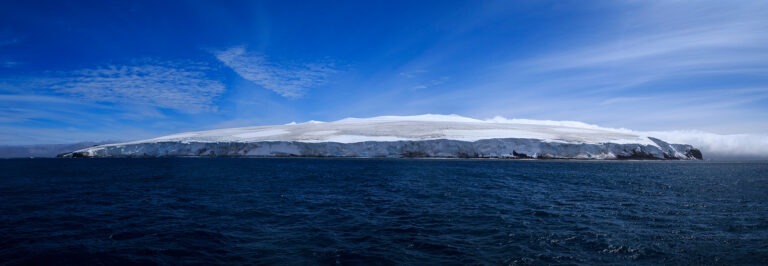
Unlike some other remote islands, Bouvet is entirely inhospitable to human settlement. Most of its surface is covered by thick ice, leaving little to no space for agriculture or infrastructure.
The rugged cliffs and lack of natural harbours make landing extremely difficult, even for experienced explorers. Bouvet’s extreme isolation and unwelcoming landscape make it one of the least visited places on Earth.
However, the island has drawn scientific interest due to its unique geology, wildlife, and unexplored terrain.
History of Bouvet Island
Bouvet Island was first sighted on January 1, 1739, by French naval officer Jean-Baptiste Charles Bouvet de Lozier. However, due to errors in navigation and poor weather conditions, the island was not accurately mapped, and it remained lost to explorers for decades.
The next recorded sighting did not occur until 1808, when British whalers rediscovered the island. For much of the 19th century, Bouvet Island remained largely uncharted and unclaimed.
It wasn’t until the early 20th century that Norway, with its rich history of polar exploration, took an interest in the territory.
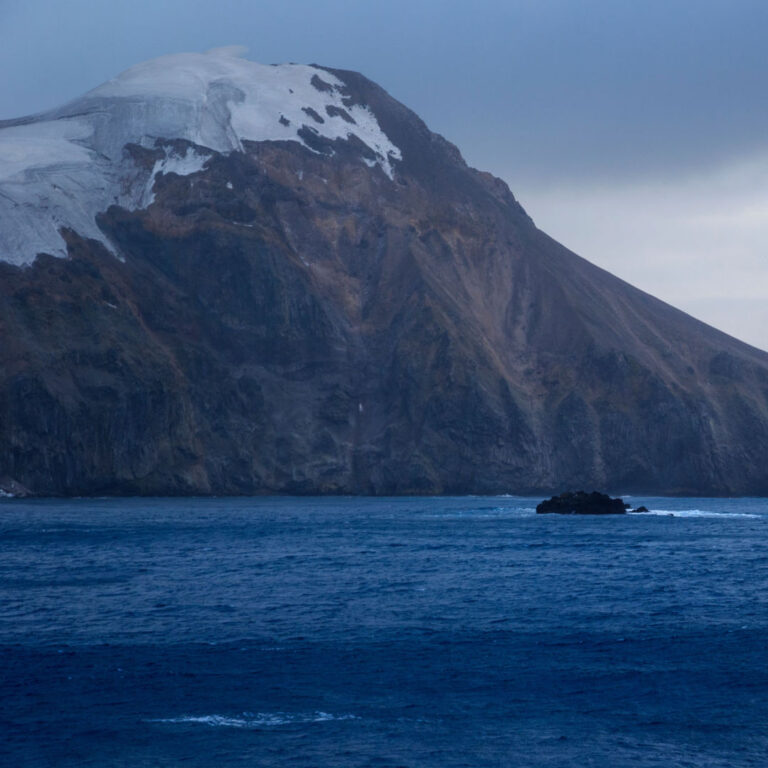
Norwegian whaling pioneer Lars Christensen led the Norvegia expedition in 1927, successfully landing on Bouvet and formally claiming it for Norway. Although Britain had previously laid claim to the island, they relinquished their rights in 1930, and Bouvet officially became a Norwegian dependency.
Norway later declared Bouvet a nature reserve in 1971, further restricting human activity to scientific research and environmental monitoring.
Today, there is virtually no sign of human activity at Bouvet, with the exception of a single weather station located at Nyrøysa. Created by a rockslide in the 1950s, this is the most common landing point on the island.
The Mystery of the Abandoned Lifeboat
One of the most intriguing stories about Bouvet Island involves a mysterious lifeboat discovered in 1964. A South African expedition landed on Bouvet and found a partially buried lifeboat with oars and supplies nearby.
However, there were no signs of recent human activity, and no records of any missing vessels in the region. To this day, the origins of the lifeboat remain unknown, fueling speculation and mystery around this already enigmatic island.
Wildlife of Bouvet Island
Despite its extreme climate and isolation, Bouvet Island supports a surprising amount of wildlife. The island’s steep cliffs, ice fields, and rocky outcrops provide nesting grounds for a variety of seabirds.
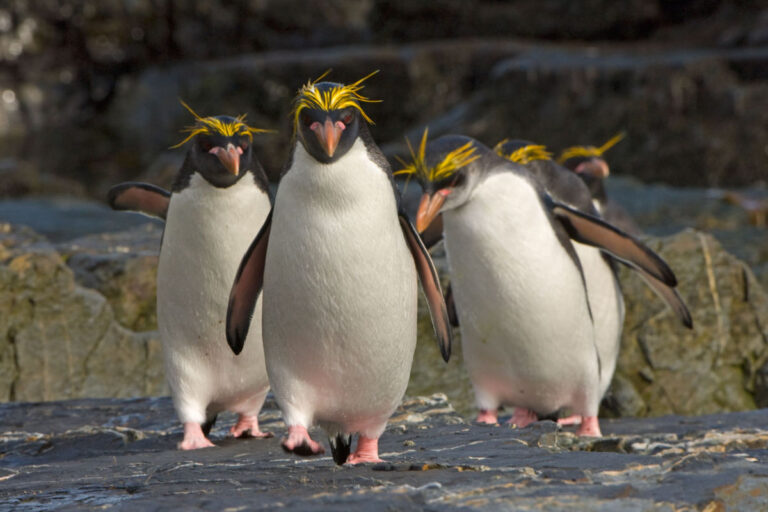
Among the most notable inhabitants are:
- Macaroni Penguins – The most populous penguin species on the island, with tens of thousands of breeding pairs.
- Chinstrap Penguins – Another common species that thrives in the icy conditions.
- Adélie Penguins – Occasionally spotted among the other penguin populations.
- Southern Fulmar – One of the many seabirds that nest on Bouvet.
- Albatrosses – Non-breeding birds that are frequently seen soaring over the island.
- Seals – Southern elephant seals and Antarctic fur seals are regularly found on the island’s shores.
The abundance of marine life around Bouvet makes it an important breeding and resting site for these animals, despite its unforgiving conditions.
Scientific Significance of Bouvet Island
Although Bouvet Island is virtually uninhabitable, it plays a valuable role in scientific research. Since 1977, Norway has operated an automated weather station on the island, monitoring climate patterns in the South Atlantic.
The island's isolated ecosystem also provides a unique opportunity to study marine biodiversity and how life adapts to extreme environments.
Researchers who visit Bouvet often study its glaciers, volcanic formations, and surrounding waters to understand global climate change and oceanic currents.
How to Get to Bouvet Island
Interested in visiting? For most people, the answer is simple: you can’t. Bouvet is one of the most inaccessible places on Earth, and regular travel there is nearly impossible. The island lacks any infrastructure, making traditional tourism unfeasible.
However, there are rare exceptions. Occasionally, adventure cruises and scientific expeditions include Bouvet in their itineraries, typically as part of a broader exploration of Antarctica and the remote islands of the South Atlantic.
Even on these trips, landings are never guaranteed, as they depend entirely on weather and sea conditions.
Bouvet Island in Popular Culture
Due to its extreme isolation and mystery, Bouvet Island has captured the imagination of writers and filmmakers.
One of the most notable pop culture references is the 2004 sci-fi film Alien vs. Predator, which depicted Bouvet as the location of a secret underground pyramid.
While entirely fictional, this portrayal added an element of intrigue to Bouvet’s reputation as one of the most remote and mysterious places on Earth.
Bouvet's extreme isolation, harsh climate, and virtually untouched environment make it a place of wonder and scientific importance. As a protected Norwegian territory, it remains one of the least visited and most mysterious locations on the planet.