The Japanese government has unveiled plans to create a domestically developed artificial intelligence model and put roughly 10 million AI-equipped robots into operation across 18 sectors by 2040 - building on a 14-year growth strategy announced last month, which targets ¥370 trillion ($2.3 trillion) in combined public and private investment across 17 priority areas, including physical AI, semiconductors, quantum technology, and nuclear fusion.

The initiative will receive up to 1 trillion yen (approximately $6.1 billion) in government funding over the next five years. Crucially, the funding is tied to annual milestone reviews - making the trillion-yen figure a ceiling rather than a guarantee, with Tokyo retaining the ability to pull back if early targets are missed.
The AI model will be developed by Noetra, a consortium formally commissioned by Japan's Ministry of Economy, Trade and Industry (METI) and its innovation agency NEDO. Noetra is majority-owned by SoftBank, NEC, Sony Group, and Honda, with Fujitsu and Rakuten reportedly weighing whether to join. The consortium is also working alongside AIST, Japan's national research laboratory. Noetra's investor base is expected to grow to 44 participating companies spanning automotive, electronics, manufacturing, finance, and logistics. The technical goal is a multimodal foundation model capable of processing language, images, video, and sensor data simultaneously - giving robots the ability to interpret a physical environment and act within it, rather than simply executing pre-programmed instructions.
The effort reflects a broader global push by countries to build "sovereign AI" capabilities and reduce reliance on dominant U.S. and Chinese technologies.
A key focus of the strategy is physical AI - the application of artificial intelligence in real-world environments rather than just on screens. This includes self-driving vehicles, factory automation, and humanoid robots designed for practical tasks.
On Tuesday, the government released an updated national AI robotics strategy. Industry Minister Ryosei Akazawa said the plan aims to "vigorously promote social implementation across a total of 18 fields," including newly added sectors such as restaurants, food manufacturing, and medicine.
"We will build and grow data infrastructure for physical AI and robots that capitalize on Japan's strengths," Akazawa told reporters.
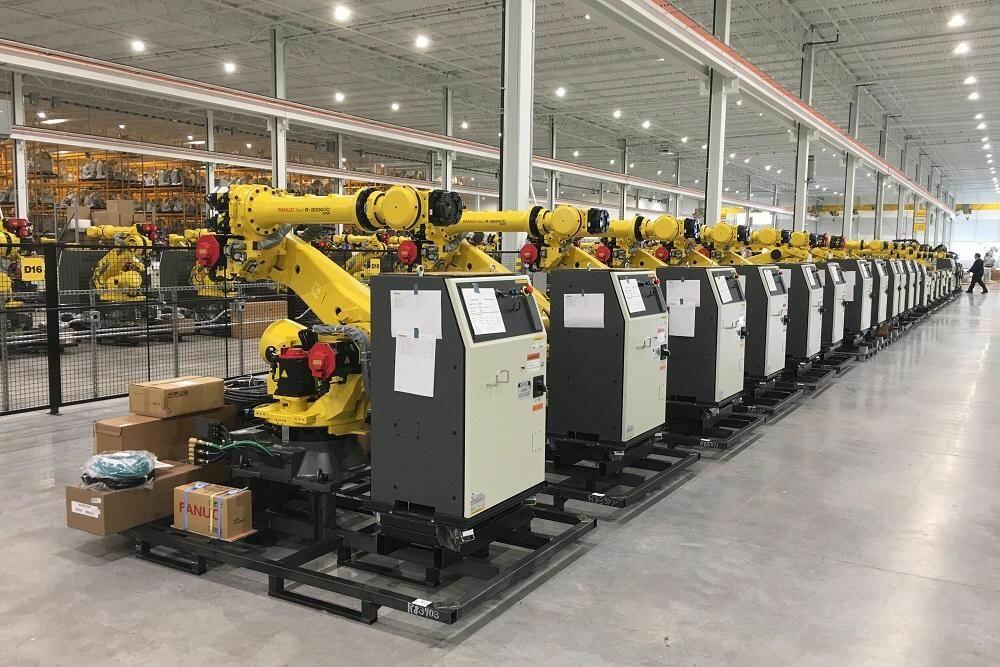
Those strengths are considerable. Japan is home to some of the world's leading industrial robotics manufacturers - including FANUC, Yaskawa Electric, and Kawasaki Heavy Industries - and produces roughly half of all industrial robots globally by volume, according to the International Federation of Robotics. The country already deploys more robots per manufacturing worker than any other nation, making it the natural proving ground for physical AI at industrial scale.
The push comes as Japan grapples with a rapidly aging and shrinking population. More than 29% of the Japanese population is now aged 65 or older - the highest proportion of any country in the world - and the working-age population has been in decline since 1995. Policymakers see advanced robotics as a critical tool to fill widening labor gaps across industries rather than a supplement to an adequate workforce.
Can they make it happen?