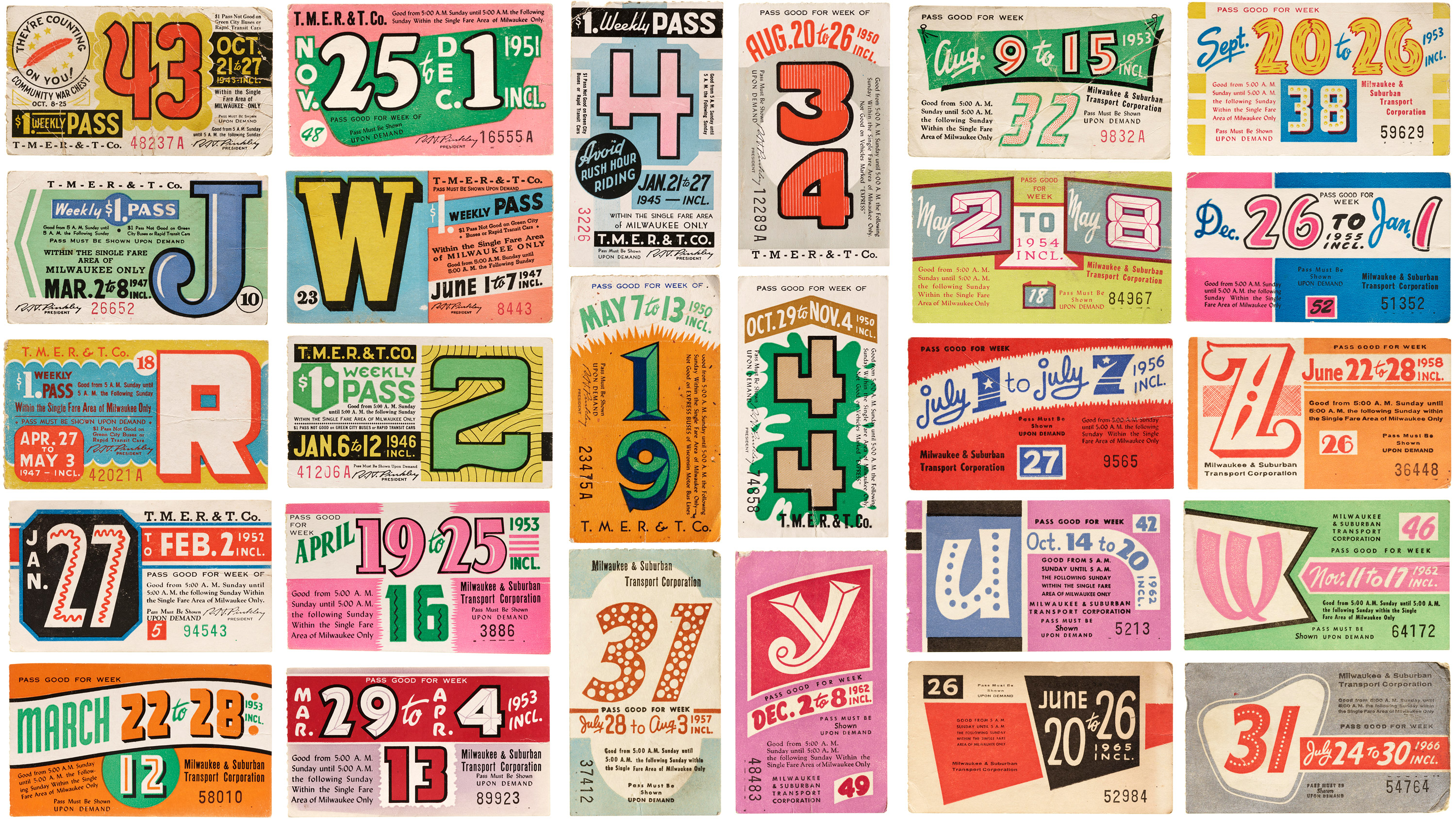
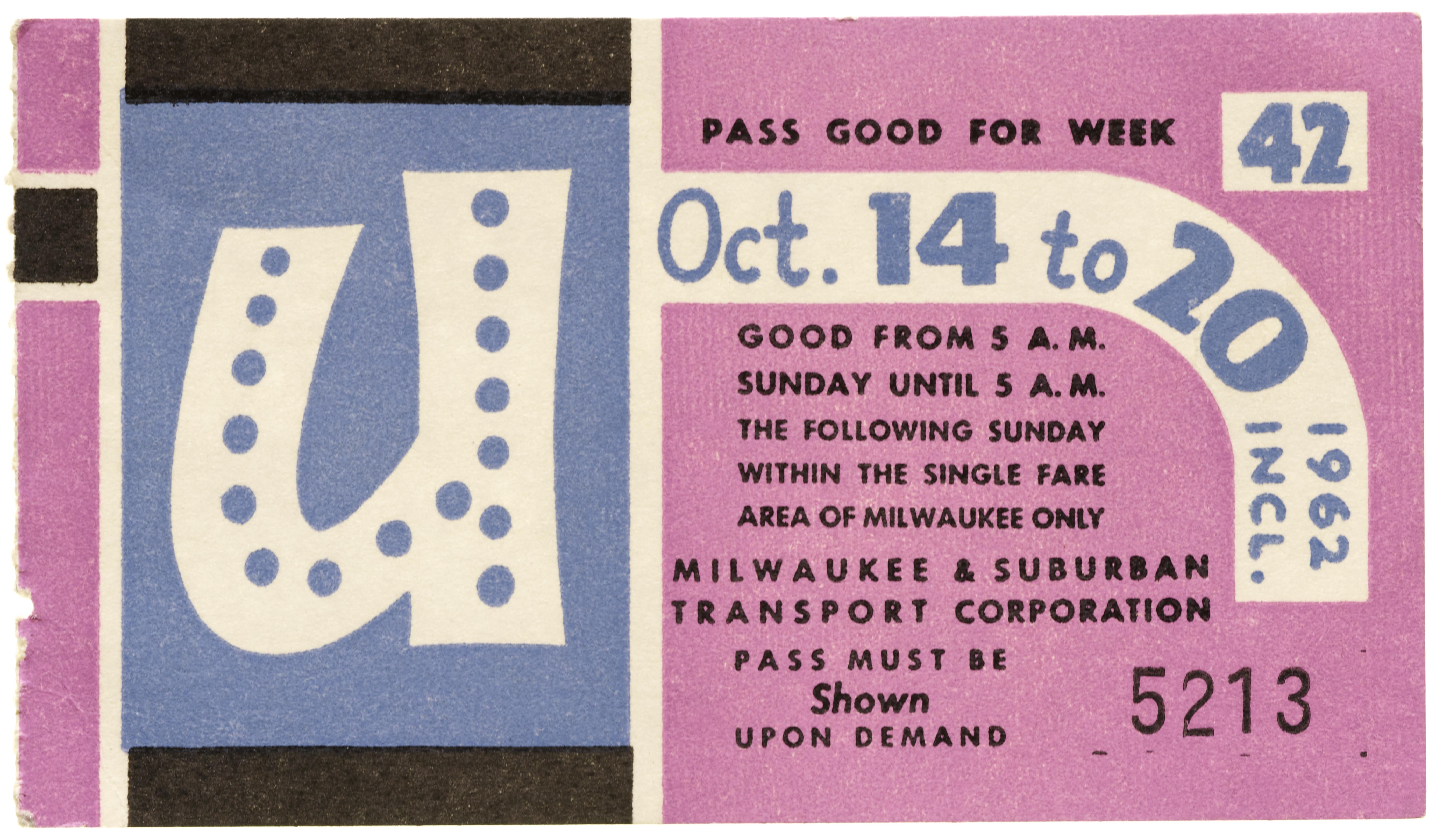
In the 1930s–60s, Milwaukee Electric Railway & Light Company offered trolley and bus riders a weekly burst of color and hand lettering. About 300 of these tickets are now in our collection.
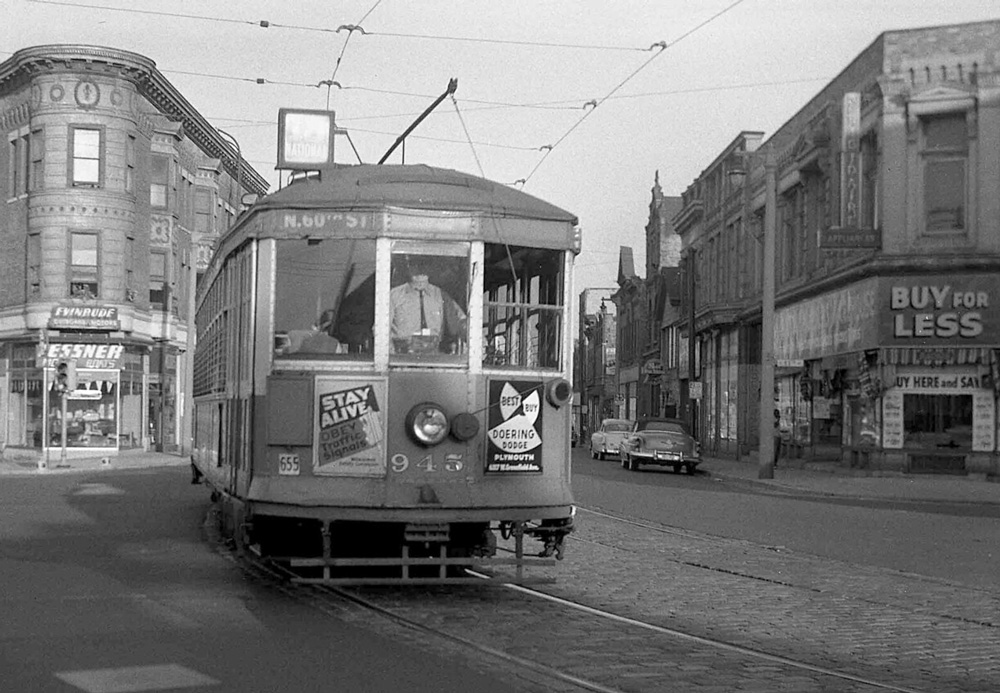
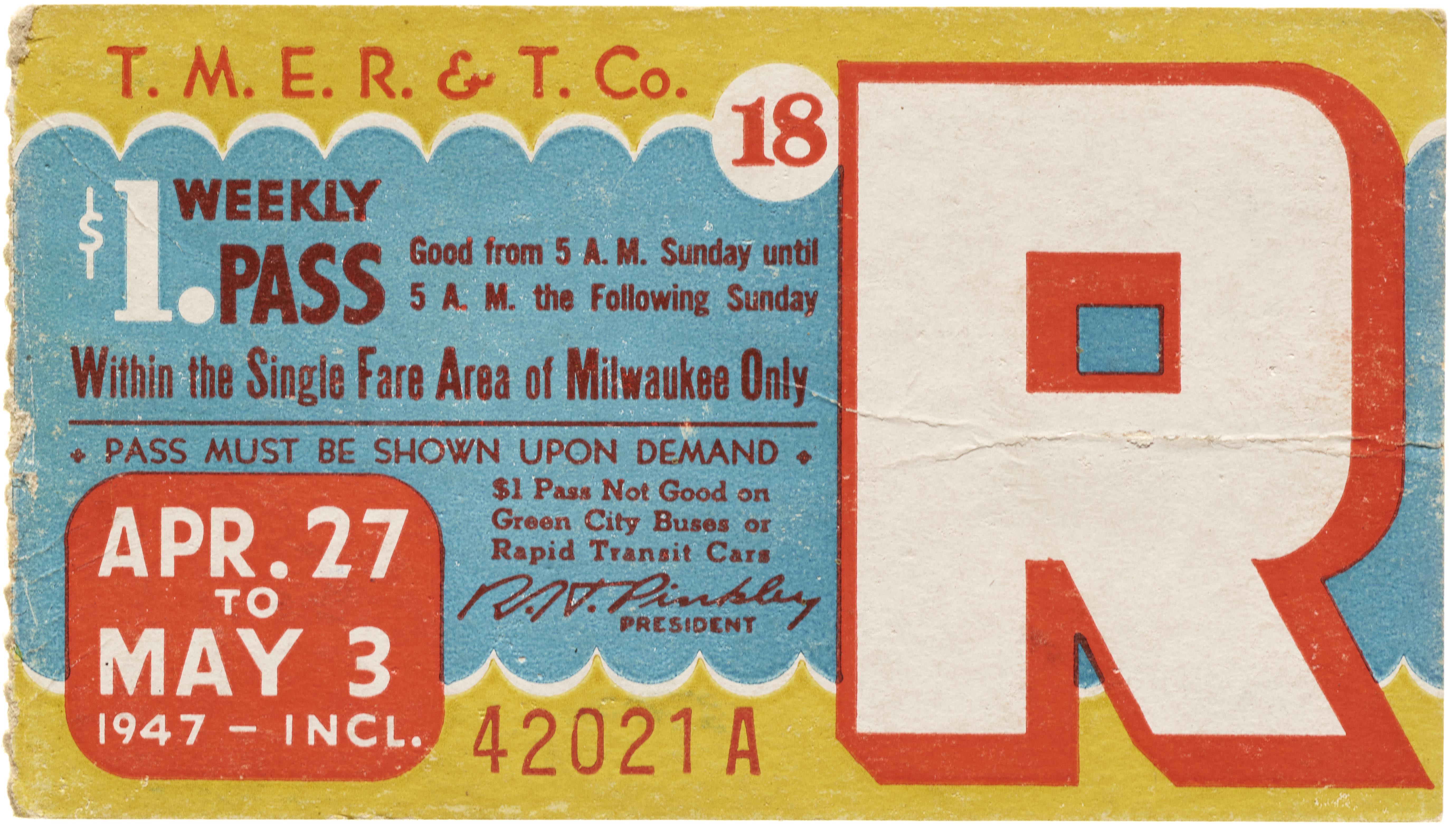
Milwaukee claims to be the inventor of the weekly transit pass, and for several decades they could also boast to have some of the most beautiful ones. On August 18, 1919, Milwaukee Electric Railway & Light Company (TMER&L) launched a weekly pass experiment for its extensive streetcar service. It was an overnight success and went into full operation in 1921. The design of the passes was utilitarian and banal until the 1930s when they brought the production in-house and added color, public-service announcements, information about local events, and illustrated depictions of civic history.
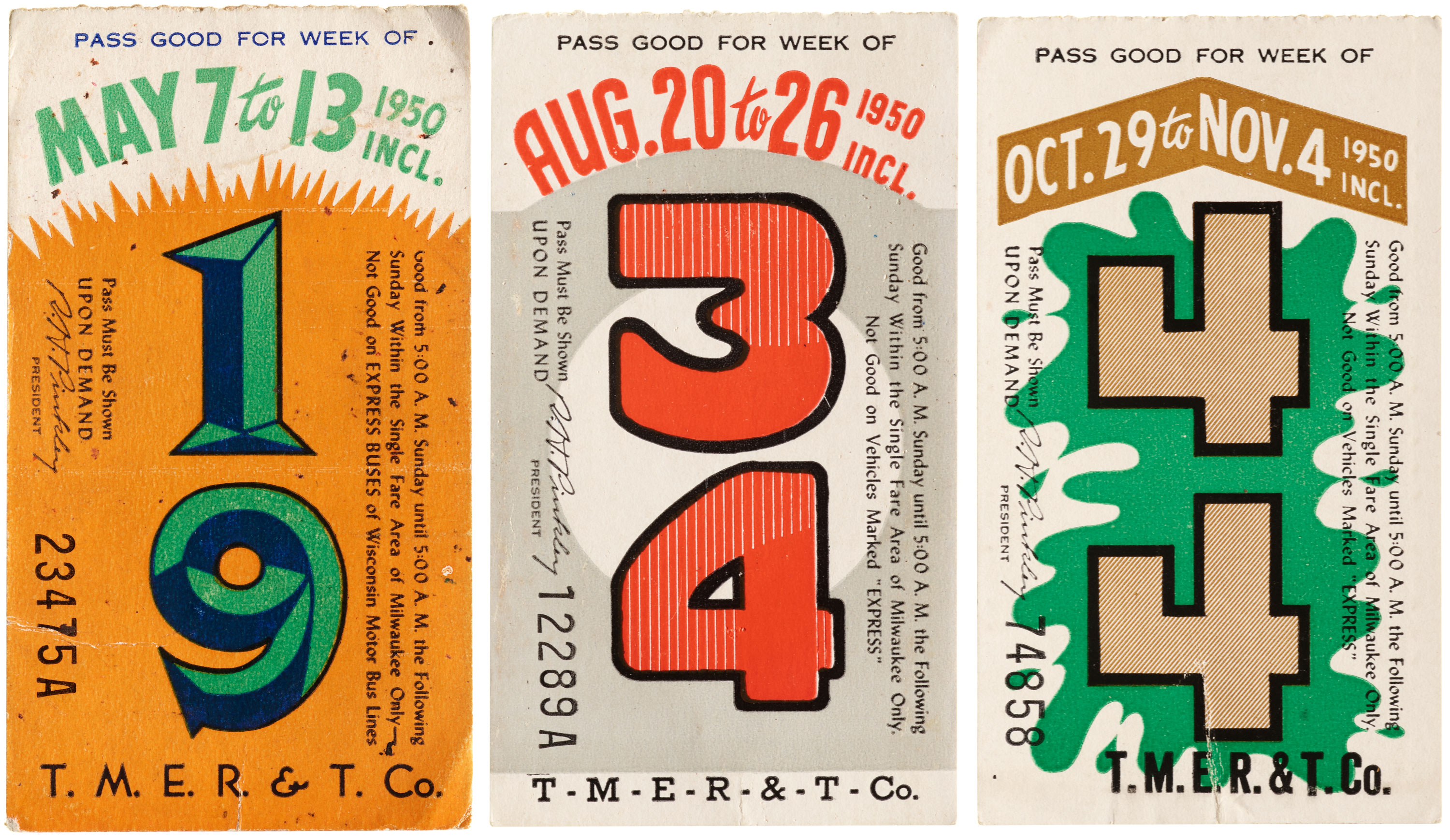
For design and letterform lovers, the passes issued between 1937 and 1972 stand out as particularly colorful and cohesive. They follow a fairly consistent design program of large hand-drawn numbers for the week of the year, lettering for the valid range of dates, and small-print information set in type, all functionally decorated with jaunty banners, frames, and rules. Thanks in part to a donation from type designer Tobias Frere-Jones, the Archive now holds about 300 tickets between 1932 and 1969.
1930s–40s
The beauty of the passes must have been a source of pride for both the transit operators and their users, because the designs continued to be produced by hand, on art board for printing plates, until 1992 with the adoption of the Mac and desktop publishing. This rigorous and enduring output of original artwork is unusual for a U.S. municipality, and the tradition survived multiple transitions between corporate ownership and government agencies.
“The Milwaukee Electric Railway & Light Co. (T.M.E.R.& L.Co.) and, after 1939, The Milwaukee Electric Railway & Transport Co. (T.M.E.R.& T.Co.) had its own print shop, where they would design and print these passes,” said John Giove, President and CEO of the Milwaukee Transit Archives & Museum. “This continued after 1975 when the Milwaukee County Transit System (MCTS) took over from the privately-run Transport Company.”
1950s
Giove’s museum holds a large collection of logs, drawings, and artist’s proofs from the 1980s and ’90s when a photoengraver named Klaus Birkhain was responsible for the artwork. Unfortunately, little history is recorded about the passes of the 1930s–60s, including who designed them. We welcome insight from local historians and transit collectors who can help us attribute these pocket-size gems of civic design!
1960s
These days, entering a subway or boarding a bus is as mundane as tapping a phone or plastic card with a design that rarely changes. Perhaps there is still room in a digital world for regularly updated passes with original artwork, even if it’s displayed on a screen. After two years of plummeting ridership due to the pandemic, cities are looking for ways to make transit more appealing, and adding some visual joy could be part of that equation.
Beyond transit, Milwaukee’s passes can serve as inspiration for anyone working with letters, numbers, and color, particularly on products issued as a series, or anytime there’s a desire to bring dynamism to the day-to-day.
— Stephen Coles, Associate Curator and Editorial Director
See more in the Online Archive