When Microprose greenlit Sid Meier's Pirates! in 1986, the company—which Meier founded along with Bill Stealey back in 1982—was mostly known for vehicle sims (Gunship, Spitfire Ace, F-15 Strike Eagle) and dry strategic wargames like Crusade in Europe.
Pirates was something different. It's hard to pin it down to a genre even today, but it certainly wasn't like previous Meier titles—even though it's the first game to be called Sid Meier's Something or Other. At the time the game came out in 1987, it was generally called an "action adventure" game; this is somewhat hard to square with the way most people today would understand the genre. It has basically nothing in common with contemporaries like Castlevania, Metroid, or The Legend of Zelda.
There's no platforming of any kind; controlling the player character directly and individually is restricted to brief sword-fighting sequences. Those have controls and mechanics that are totally unlike any other game combat I've seen. It tries to create the feeling of an Errol Flynn fencing duel with an elaborate control scheme that's more like a mutant version of a fighting game; you can thrust (which is fast) or slash (which does more damage), or parry; you can also either aim low, or high, or down the middle.
Those motions are mapped to the eight-direction joystick commonly used for games on the Commodore 64 and other eighties computers—or, if you don't have one of those, they're mapped to the keyboard numpad. Some ports of the game let you do it with the mouse, or with awkward combinations of mouse clicks and keyboard input.
This description makes the swordfighting in Pirates sound terrible and indeed it is hard to defend; the 2004 remake substantially simplified it, but that simplification only peels away its skin to reveal a strange quasi-rhythm game buried underneath. It still feels in no way like a concession to "standard" combat design.
But what you have to understand about playing this game—whether the original 1987 version, the many 1988 ports, the beautiful 1993 remaster Pirates! Gold with its 256-color graphics, or the modernized 2004 remake—is that if you encounter it at an early age it will open a rift in your brain. When I asked Nic Tringali (designer of The Banished Vault and Amberspire) about it, they put it perfectly: "Pirates! feels unstuck in genre, not quite an open-world game or a role-playing game, not only economic strategy or resource management. It has a goal for a clear thematic position for the player to inhabit and uses the systems and friction to reach that. The peculiarities of its design are unique and inseparable—the wind always blowing east comes to mind, and dueling a rival captain immediately winning a sea battle—and are not solely driven by video game genre expectations, or pre-packaged ideas redressed in a pirate theme."
Meier was working in an era where genre and mechanics were still unsettled, undefined things. In his 2020 memoir—would you believe it's called Sid Meier's Memoir!—Meier pointed out that "The good news was there were very few preconceived notions back then about what a game was supposed to be. The bad news was there were no tried-and-true conventions, either." All of Pirates is like this; a bunch of first-principles attempts at extricating game mechanics from all the half-remembered pirate tropes rattling inside Meier's brain.
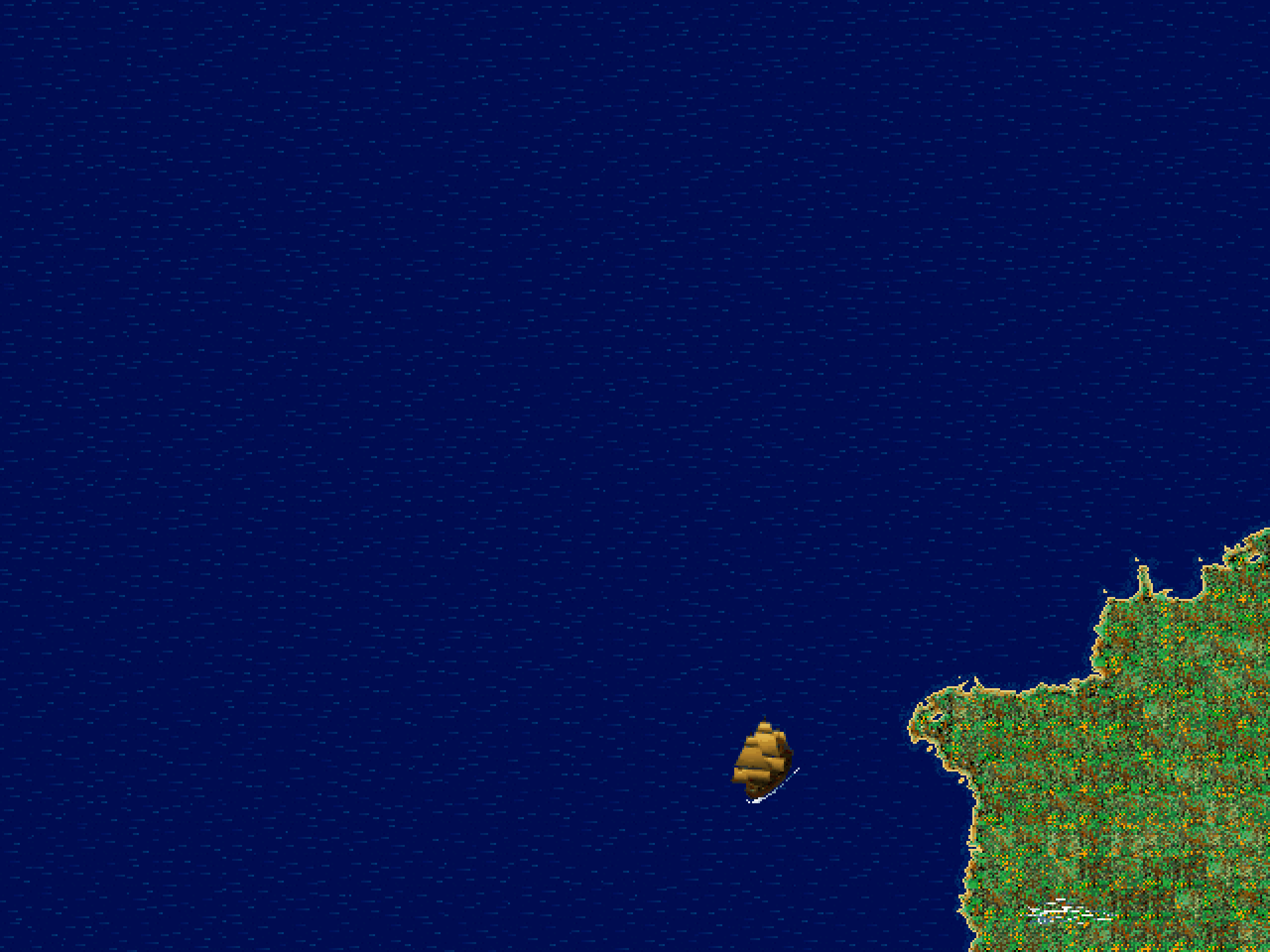
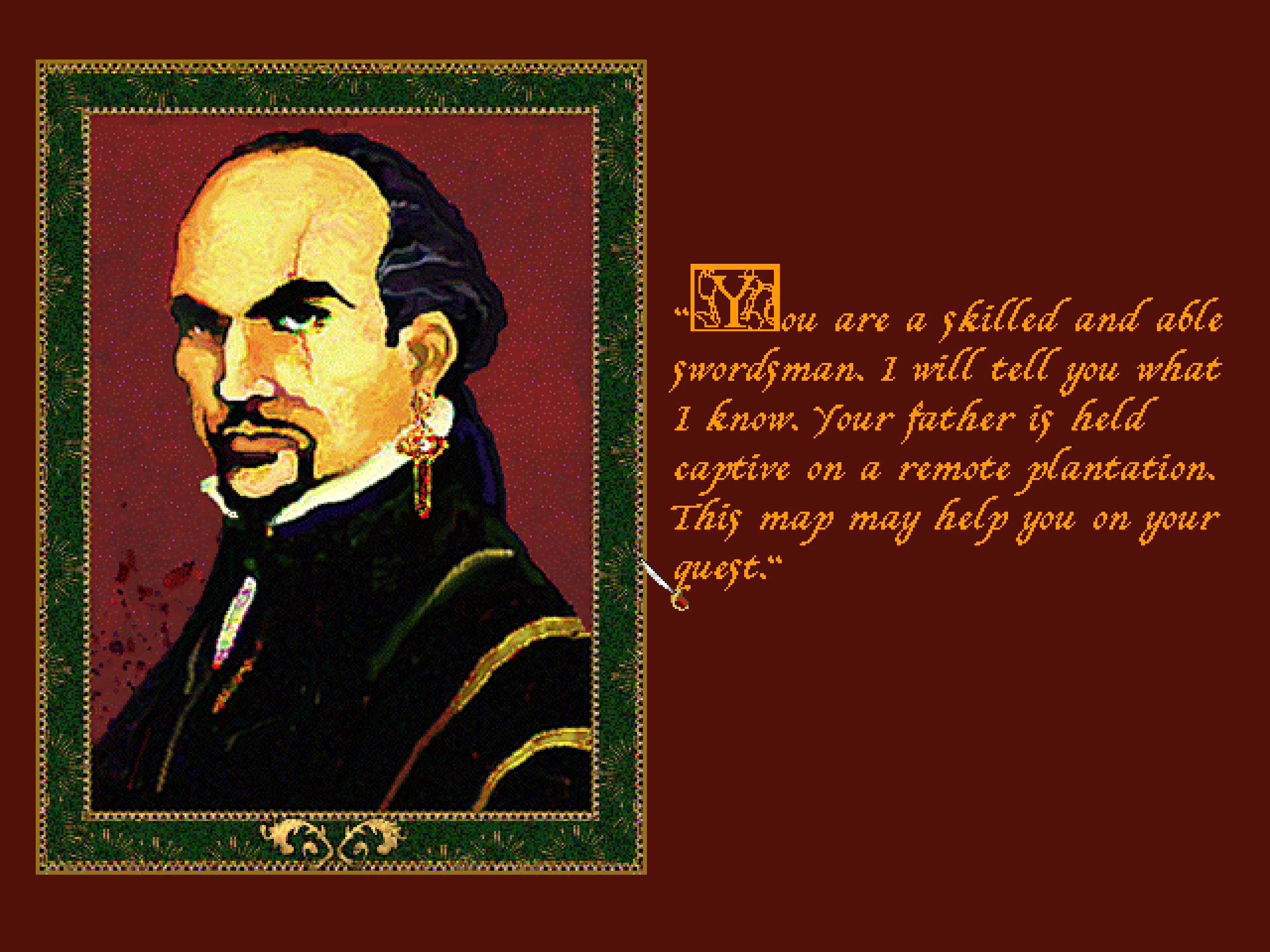
The resulting game takes all these romanticized ideas pointing towards a genre—Treasure Island, Errol Flynn movies, Peter Pan, the centuries-old distillation of the Black Legend into anglophone culture—and treats them not as story beats to play out or as window dressing, but as the grounding rules of a clockwork world that you can poke and prod at. The game models the way silver travels on mule trains all the way from Potosí to be loaded up on ships in Panama, and from there along the ports of Gran Colombia until the Treasure Fleet, heavy with the blood of the Americas, leaves for Spain. The game models the way that a pirate's harsh life wears you down over time, each merchant ship captain or colonial guard that you fight seeming that little bit faster until you have to admit that your sword arm just isn't what it used to be. The game seeds the Caribbean with an elaborate, randomized quest to find your long-lost family, chasing down a laundry list of villainous aristocrats to rescue relative after relative from indentured servitude on obscure plantations.
To modern design sensibilities, I think there's a risk one might look at Pirates and see a bunch of minigames in a trenchcoat. In reality, what that game is expressing is a way of thinking about games that we've tamped down over the years as the medium has built up its own library of conventions, tropes, and recycled ideas.
Pirates is hewn from its underlying themes in a very raw way, but so are many other games of this era. Cinemaware, a now largely forgotten studio, made a whole very successful business out of this style of design. Their 1989 title, It Came from the Desert, gleefully jumps around in presentation and perspective—one moment a rudimentary first-person shooting gallery, the next a top-down shmup, all wrapped up in a visual novel wearing the skin of a strategy game. The original Dune video game—not Dune II, the origin point of real-time strategy as we know it—was essentially an attempt at capturing the whole scope of the 1984 David Lynch movie, oscillating between a strategy game about spice extraction and a visual novel-like adaptation of the movie's plot.
Pirates was immensely successful in its own time, and this exact style of design thinking was then adapted to Microprose's follow-ups—classics like Covert Action and Sword of the Samurai. Pirates essentially changed the studio's whole identity, something that was incredibly hard to do even in those days.
And yet, this entire era of video games feels like a hole that has been carved out of the collective memory of the medium. It is, in truth, a reflection of how niche the computer game market really was in those days; for every Amiga 500 sold, Nintendo sold 23 NESs and 45 Game Boys. The era of IBM PC consolidation and true mass adoption of PC gaming was a few years away in the late 1980s; and by the time the remade DOS version of Pirates arrived in 1993, it was competing with platform-defining games like Wolfenstein 3D. This 1982-1990 era of PC gaming is, really, better known through dubious CDs packed in with magazines, discount-bin collections put out by failing publishers, and abandonware sites.
By signing up—again, it costs nothing!—you can read the rest of "The Lost Treasure of Sid Meier's Pirates!," and receive free newsletters and emailed articles from Remap!
Sign up now Already have an account? Sign in