
America’s subprime auto market has become a fascinating example of how financial engineering can remain remarkably healthy even while the consumer sitting underneath it is getting progressively sicker, according to Bloomberg.
Bloomberg recently dug through nearly 3 million auto loans originated by Exeter Finance, Santander, Carvana and GM Financial and subsequently stuffed into publicly traded asset backed securities between 2021 and 2023. What emerges from the data is a system built with enough interest, fees and collateral protection that borrowers can fall behind, restructure their loans and eventually lose their cars without necessarily interrupting the stream of cash moving toward lenders and bondholders.
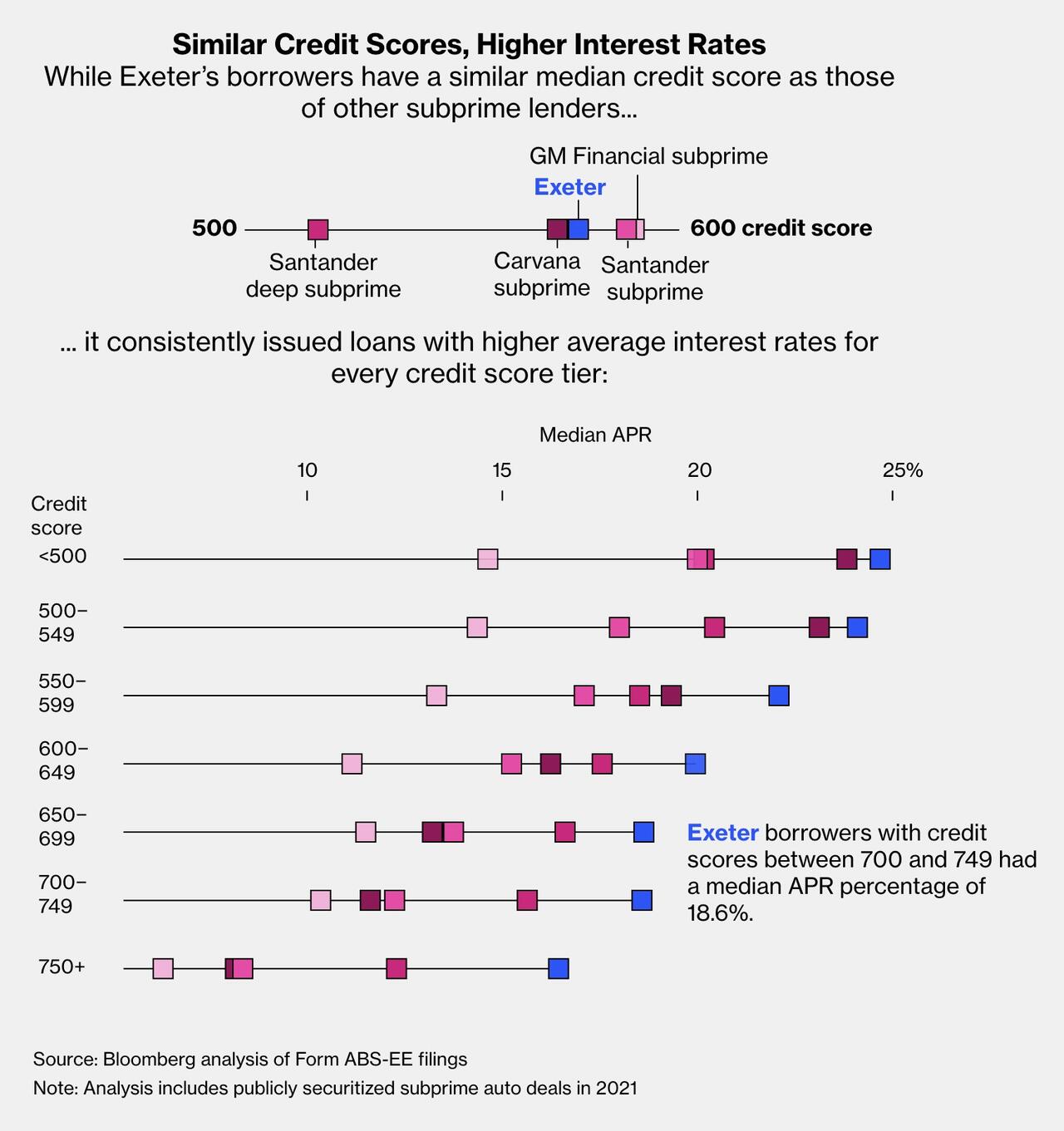
The math helps explain why. Subprime borrowers in these pools paid interest rates averaging roughly 18%, while the securities created from those loans were issued at rates reaching about 6.7%. That enormous gap provides room to absorb defaults, pay expenses and still leave money behind for lenders. On top of that, lenders servicing the loans collect fees month after month, regardless of whether the borrower is comfortably current or barely hanging on.
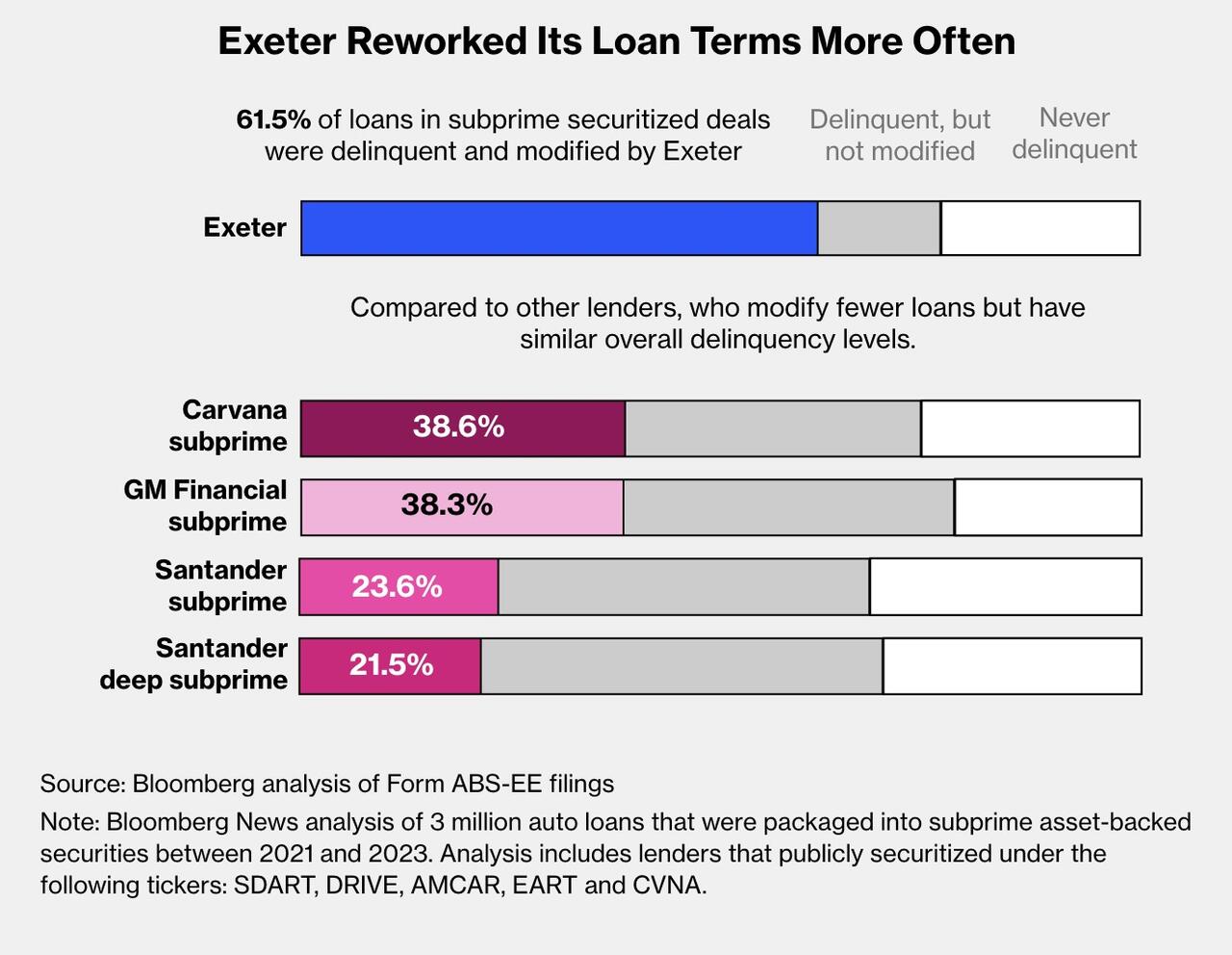
This is where the incentives become interesting. Exeter was particularly aggressive about keeping troubled loans alive. Bloomberg found that it modified nearly two thirds of the loans in its securitized pools, frequently moving missed payments further down the road by extending the life of the loan. Nearly a quarter were modified at least four times. Santander generally followed the opposite playbook, modifying far fewer loans and moving more quickly to repossess and sell the underlying vehicles.
For borrowers, however, postponing the reckoning often did little more than make it more expensive. One Virginia borrower financed a Chevrolet Silverado for roughly $32,000 at 21.5%. After five modifications and more than $10,500 in payments, the truck was repossessed and the borrower had reduced the principal by less than $50. Roughly one quarter of modified loans Bloomberg examined eventually ended in repossession anyway, while another 15% slipped back into delinquency. Among Exeter borrowers specifically, almost one out of every three modified loans still ended with the vehicle being repossessed.
Jamie Talley’s experience puts a human face on the numbers. She borrowed $12,000 from Exeter at nearly 20% to buy a used Chevrolet Sonic, then fell behind. Exeter modified the loan four times and eventually pushed the repayment schedule out nine months. “They said they can push the loan back and you will be back current,” Talley recalled. But being technically current did not solve the underlying problem. Her car broke down, she borrowed more money for repairs and fell behind again. “They almost keep badgering you until you do it,” she said of the extensions.
Bloomberg writes that Talley’s loan was eventually swept into a $1.2 billion Exeter securitization containing more than 53,000 auto loans. Four years and nearly $13,000 in payments later, she still owed $9,230 on a car that had been worth only $8,500 when she bought it.
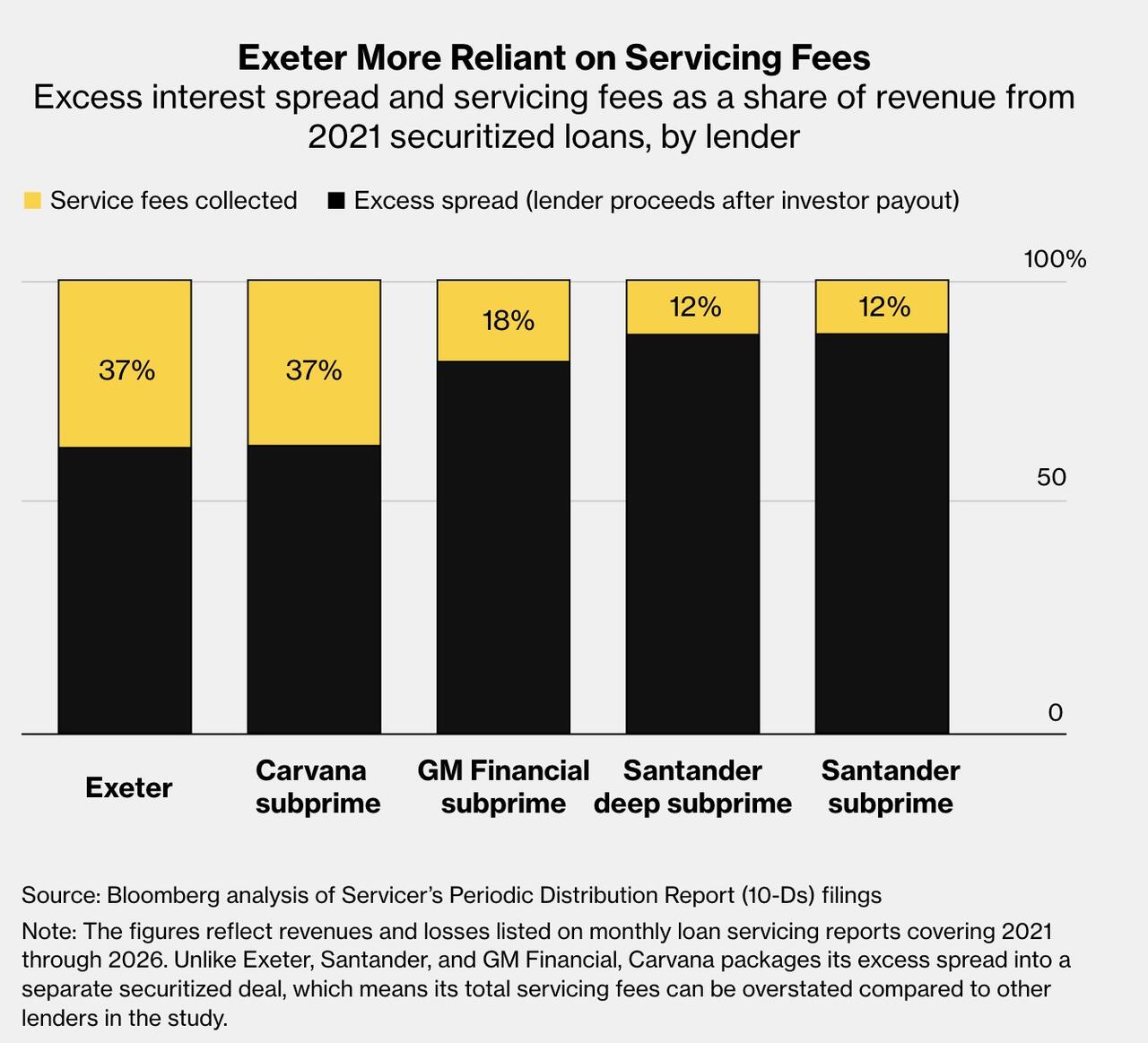
That is the remarkable part of this machine. The consumer can be financially exhausted while the security built on top of the consumer continues functioning. High interest rates provide a cushion against losses, servicing fees generate additional revenue, repossessed cars retain resale value and extensions can keep payments flowing through the securitization longer. Together, those protections have allowed subprime auto ABS to remain surprisingly durable even as the borrowers underneath them deteriorate.
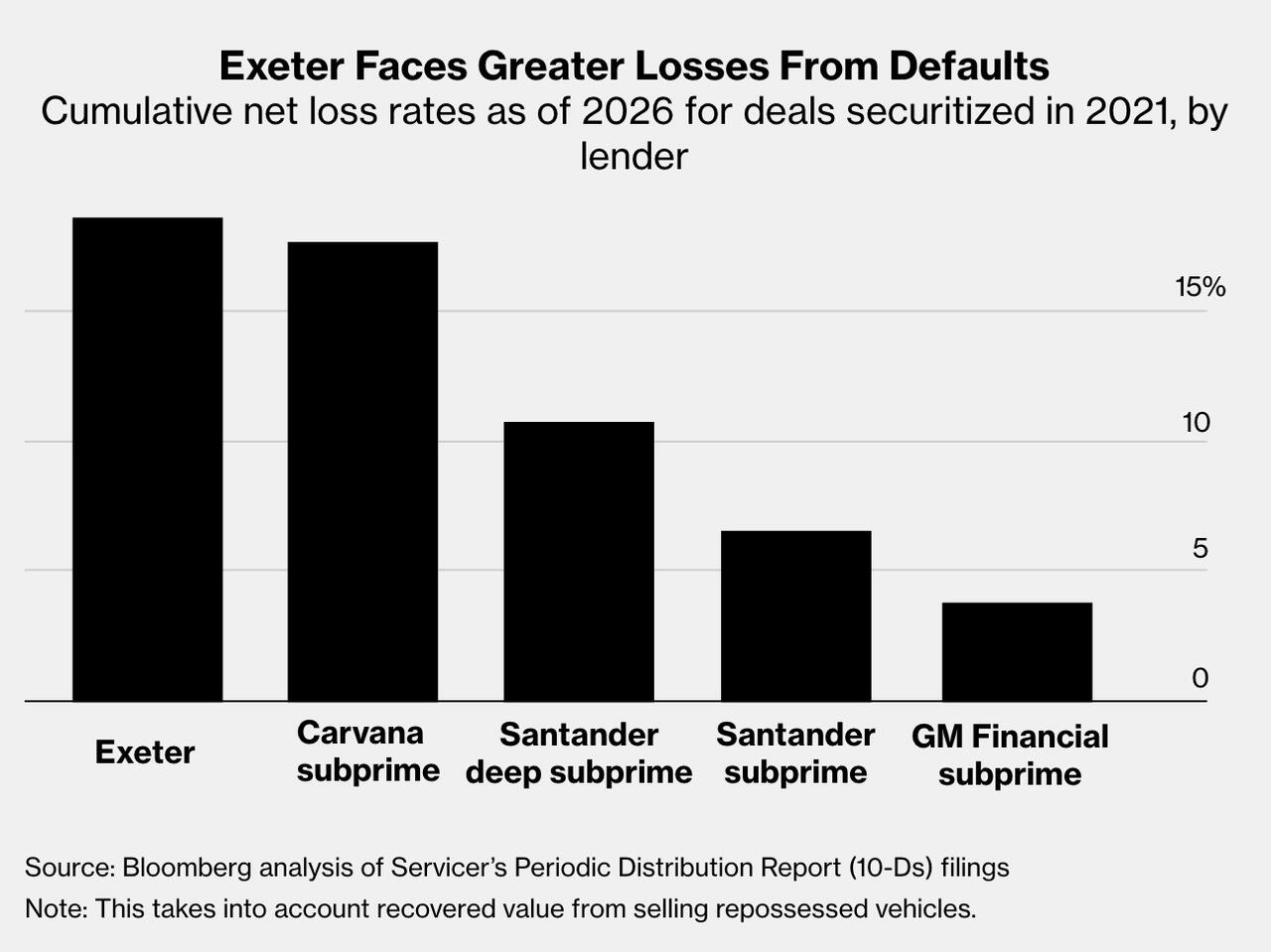
And that deterioration is becoming harder to ignore. The share of borrowers in securitized subprime auto deals who were at least 60 days delinquent reached 8% in July, the highest level since 2018. S&P has also raised projected losses on certain Exeter securitizations issued in 2022 to as much as 31%, pointing to elevated delinquencies and extensions. Yet the securities themselves have largely continued to hold together.
That divergence is what makes this worth watching. Loan modifications can change the accounting timeline, but they cannot manufacture household income. Moving missed payments to the end of a loan does not suddenly make the borrower capable of affording the car, and while the debt gets pushed further into the future, the collateral underneath it continues getting older.
Even Talley understood the impossible tradeoff. Losing the car earlier might have saved her thousands of dollars, but she also needed it to work and transport her children. “They got us between a rock and a hard place,” she said.
For the moment, the subprime auto securitization machine continues humming despite worsening consumer stress. The deterioration is already visible at the bottom of the structure, among the people actually making the payments. The question now is how far that pressure can travel upward before the financial machinery built on top of them finally begins to feel it.