
Democrats entered this year's midterms aiming to flip Senate seats in Maine, North Carolina, Alaska, and Ohio, and hold Georgia and Michigan.

With the national mood really riding against the GOP, they see opportunities in Texas and Iowa as well. But things appear to be changing. That Democrats plan to flip the Senate assumed they wouldn't lose any seats they currently hold. Michigan is potentially winnable for the GOP after Democrats in the state nominated Abdul El-Sayed, but now another reliably blue state has landed on the defensive side of the ledger, forcing Democrats to defend a seat in a blue state they have held for nearly two decades.
Republican Michele Tafoya trails Democratic Lt. Gov. Peggy Flanagan by less than 2 points in the RealClearPolitics polling average of Minnesota's U.S. Senate race, a gap that sits inside the margin of error. If the environment were as poisonous for Republicans as it is believed to be, this election wouldn't be on anyone's radar. Instead, it has become a true contest, and that raises a question the party would rather avoid: how many of its offensive gains survive if one of its safest seats slips away in November?
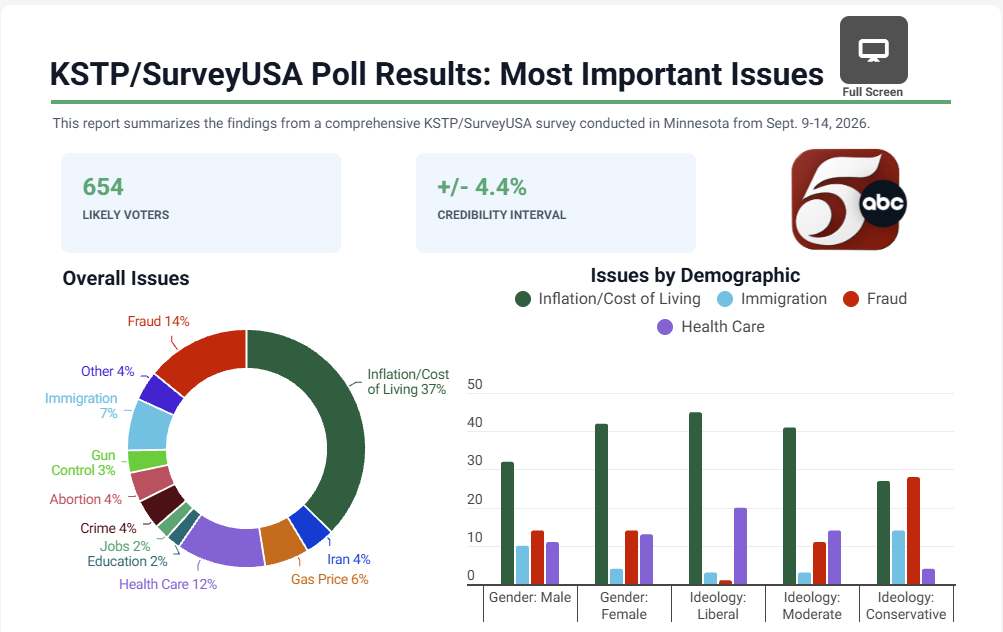
The competitive nature of this election is most certainly due in part to unique circumstances in the state. A KSTP poll taken last month found that 14% of Minnesota voters named fraud as their most important issue, behind inflation and cost of living at 37% and ahead of health care at 12%.
Federal prosecutors estimate that at least $9 billion billed to 14 state-run Medicaid programs since 2018 may be fraudulent, a figure Walz disputes, on top of separate schemes in which sham nonprofits billed the state for child care, school lunches and other services. According to a House Oversight report, the state's Democratic leaders knew about the fraud and failed to act.
Most of those charged are of Somali descent, and the House report found state officials ignored the fraud to avoid accusations of racism. Gov. Tim Walz's net approval has since collapsed from +19 in June 2025 to -14 in August 2026. The damage has spread to Attorney General Keith Ellison, Sen. Amy Klobuchar and the Democratic legislature. Pollsters have yet to publish separate numbers for Flanagan, though a politician who has stood one step behind Walz since 2019 has little room to distance herself from the scandal. Tafoya has built her campaign on that exact point.
The fraud issue is moving more than one race. Klobuchar entered the governor's contest in late January with a double-digit lead. The most recent co/efficient survey has her up by 2.
MPR News described the Senate contest as quiet, since the outside money pouring into Texas and Maine has yet to show up in Minnesota. That quiet works in Tafoya's favor. She is running a state-level argument about state-level failure, and national Democrats have given her the space to make it without interference.
If control of the Senate comes down to a single seat in November, Democrats may discover that the race they never thought they would have to defend was the one that mattered, and that their handling of one of the largest benefits scandals in American history might save the GOP from losing the Senate.