
Authored by Andrew Korybko via Substack,
The new "cordon sanitaire" that Trump 2.0 assembled around Russia, the difficulty in maintaining its Sino-Indo balancing act, and the broken feedback loops that afflict its Foreign Ministry are the main strategic risks that must be urgently addressed in order to most effectively ensure Russia's future.
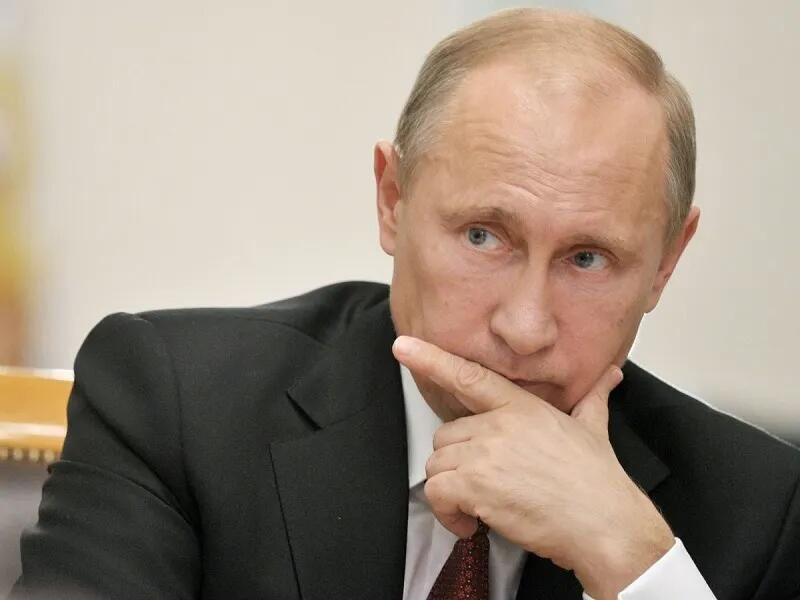
Putin wisely advised Russians during his keynote speech at the Valdai Club's latest annual meeting that "we certainly need a roadmap for our movement into the future. What we need is not wishful thinking, an abstract and speculative construct or an unrealistic visualisation of our wishes, but a realistic assessment of risks, capabilities and essential objectives." His clarion call inspired the present piece that'll enumerate Russia's top three strategic challenges and propose pragmatic ways to address them.
The "cordon sanitaire" that Trump 2.0 assembled around Russia poses its primary threat. It encircles Russia in the Arctic-Baltic through the Swedish-led Viking Bloc, Central Europe via the competitive interplay between Poland and Germany, the South Caucasus and Central Asia through what can be described as Turkiye's Neo-Ottoman ambitions, and AUKUS+ core Japan in Northeast Asia. The preceding hyperlinked analyses embedded in this paragraph describe each of these threats in more detail.
The ones along the western flank could be mitigated through the creation of a US-backed Polish-led Intermarium paired with arms control deals that would altogether reduce the risks associated with a German-dominated militarized EU. This could be facilitated by a resource-centric strategic partnership with the US. Mitigating threats along the southern flank requires a deal with Azerbaijan for demilitarizing TRIPP while the ones along the eastern flank can be mitigated through a deal with Japan over the Kurils.
The next strategic challenge to Russia is to prevent any significant disruption to its Sino-Indo balancing act. Even perceived Russian dependence on China could spook India into pivoting to the US due to the fear that China might weaponize this dependence to get Russia to cut off arms and spares to India in order to coerce India into unilateral concessions to China and its Pakistani ally in their territorial disputes. This dark scenario can be averted by bestowing military and trade privileges upon India.
That could take the form of jointly producing more state-of-the-art military technology and giving Indian products preferential access to the Russian market. If the dark scenario touched upon above isn't averted, then India's potential pivot to the US could force Russia to pivot to China and thus make its perceived dependence upon the People's Republic a fait accompli. And finally, Russia must urgently repair the broken feedback loops that afflict its policy formulation and implementation processes.
Wishful thinking, Lavrov's strong innuendo that his people can be optimistic to the point of naivete and his explicit critique that they tend not to proactively address latent crises, zero tolerance for contrarian assessments, and reasonable suspicions that actual propaganda (especially its "Potemkinist" variant) has found its way into these loops are the main problems that must urgently be resolved. The uncomfortable possibility can't be ruled out that this problem blinds policymakers to the other two strategic challenges.
Russia's broken feedback loops must therefore urgently be repaired in order to maximally ensure that the most effective policies are formulated and successfully implemented for thwarting the military-security threats posed by the "cordon sanitaire" as well as the economic-political ones that a significant disruption of Russia's Sino-Indo balancing act could swiftly set into motion. These are herculean tasks, but Russia has risen to even more formidable challenges before, so it's expected to do so once again.