
During Capital Markets Day in Weissach, new Porsche CEO Michael Leiters offered Wall Street desks a bleak outlook, warning that the turnaround will take time and that operating conditions are unlikely to improve significantly over the next few years.
Leiters signaled to investors a shift toward value over volume. He said the focus is now on prioritizing higher revenue per vehicle and reducing dependence on China.
One such strategy, as Bloomberg reports, is for Porsche to raise average prices for its top-of-the-line sports cars by 20% and introduce a new model above the 911 as it seeks to recover after its disastrous entry into the electric vehicle space.
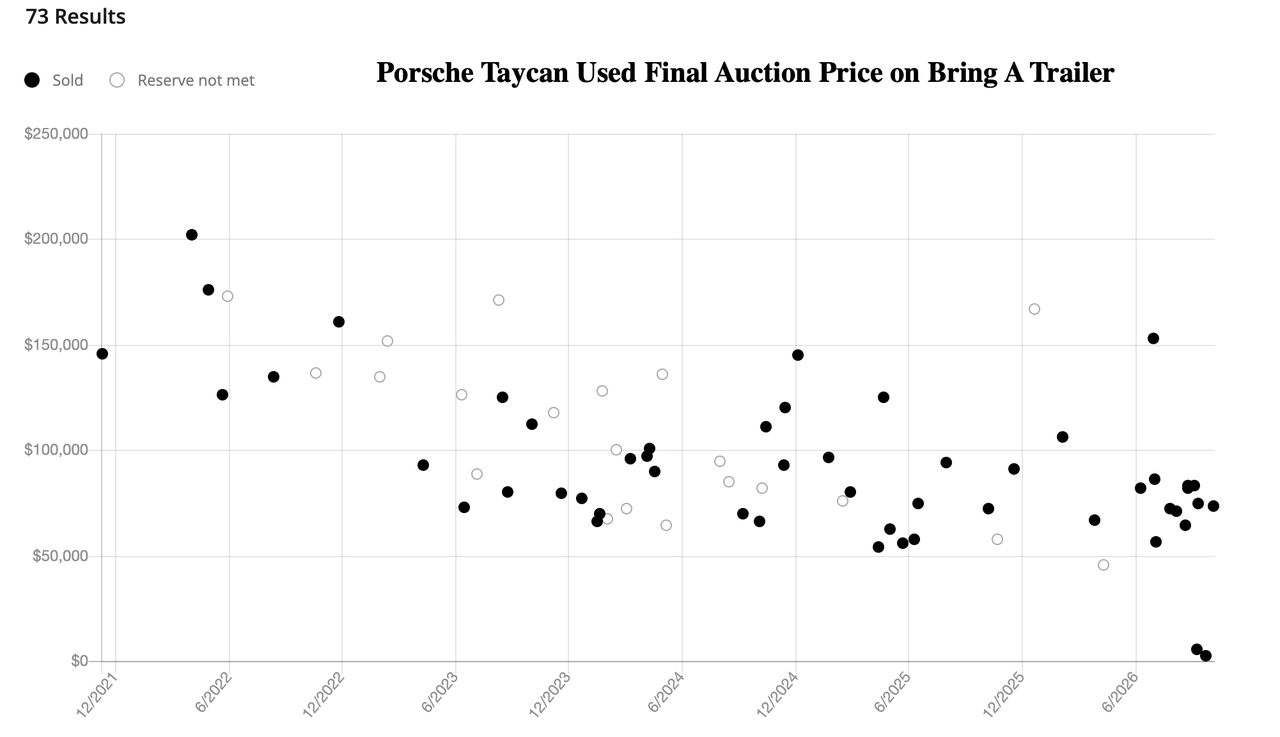
Sharp depreciation in used Porsche Taycans highlights the challenge of maintaining resale values for high-end EVs.
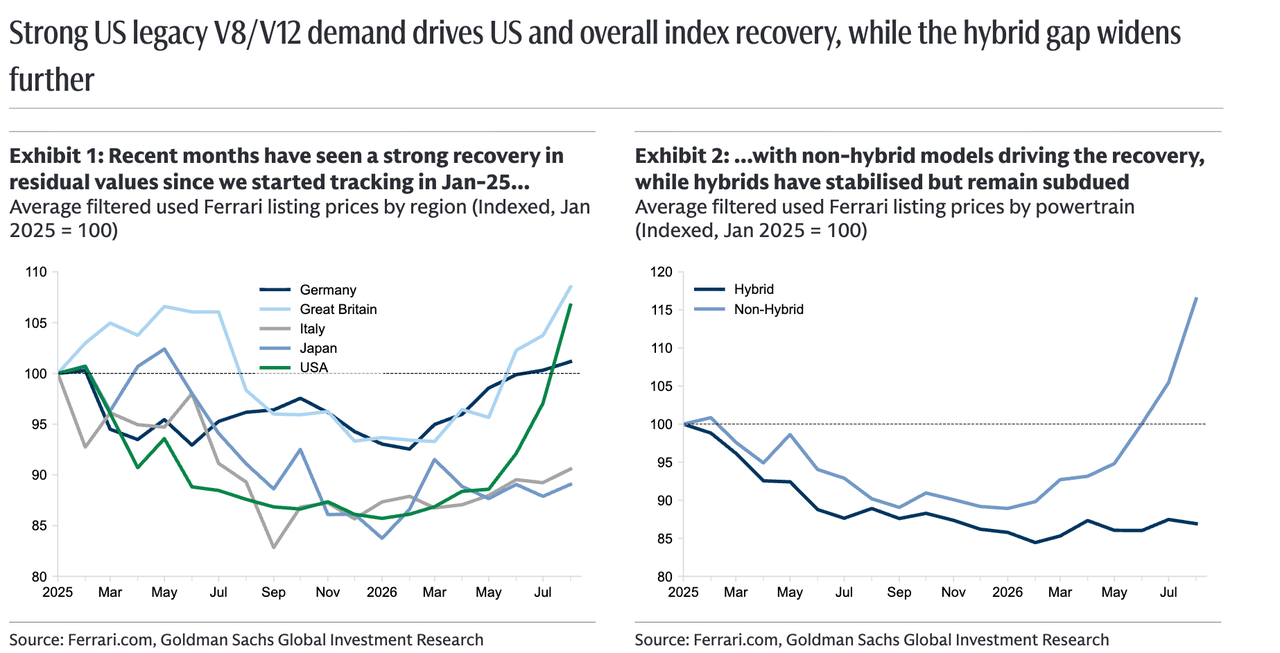
A recent Goldman report points to a similar divergence at Ferrari, where collectors favor V8 and V12 combustion-engine models while hybrids face pressure in the secondary market (read report).
Average prices for Porsche's top-end models are expected to exceed €330,000 ($370,134) by the end of the decade, up from about €270,000 this year.
"The top priority is to further strengthen our unique sports-car brand across the entire lineup, with new, desirable models in particularly high-margin segments," Leiters told investors in Stuttgart earlier today.
New sports cars, greater exclusivity, stronger profitability: at its Capital Markets Day, Porsche AG presents its strategy ‘Sportwagenschmiede '35’, which focuses on its medium-term ambitions. More: https://t.co/M7yUGf3qu9 https://t.co/4mZNM13SJa
— Porsche Newsroom (@PorscheNewsroom) October 7, 2026
Leiters outlined new regional plans, emphasizing drivetrain flexibility in Europe and stronger competitiveness in North America through combustion-engine and hybrid models.
Leiters also outlined plans for a new mid-engine vehicle model above the 911 that would return the struggling German automaker to the supercar segment for the first time since the limited-production 918 Spyder debuted in 2013.
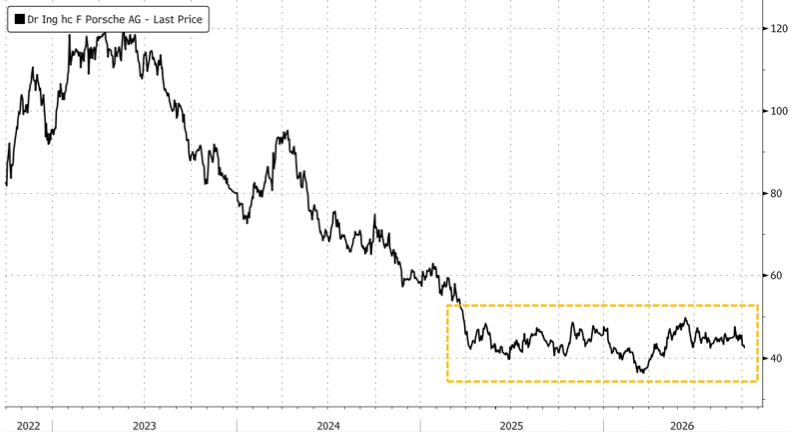
Porsche shares in Germany are flat on Wednesday morning. Shares remain down 64% since the peak of 120 euros in early 2023.
The Volkswagen subsidiary is targeting an operating margin of 10% to 15% over the medium term and 15% over the longer term, goals that hinge on a successful turnaround. Profitability tumbled to just 1.1% last year as restructuring costs, tariffs and soft demand weighed on earnings, before recovering to 7.8% in the first half of this year.
Volkswagen is also under severe pressure, shrinking its industrial footprint with a massive planned cut of 100,000 jobs, mostly in Germany, while Mercedes-Benz and BMW are also seeking turnaround plans.
The planned price hikes could support secondary-market values for high-end 911s by raising replacement costs and making existing models more attractive to buyers.