
By Maartje Wijffelaars, senior economist Rabobank
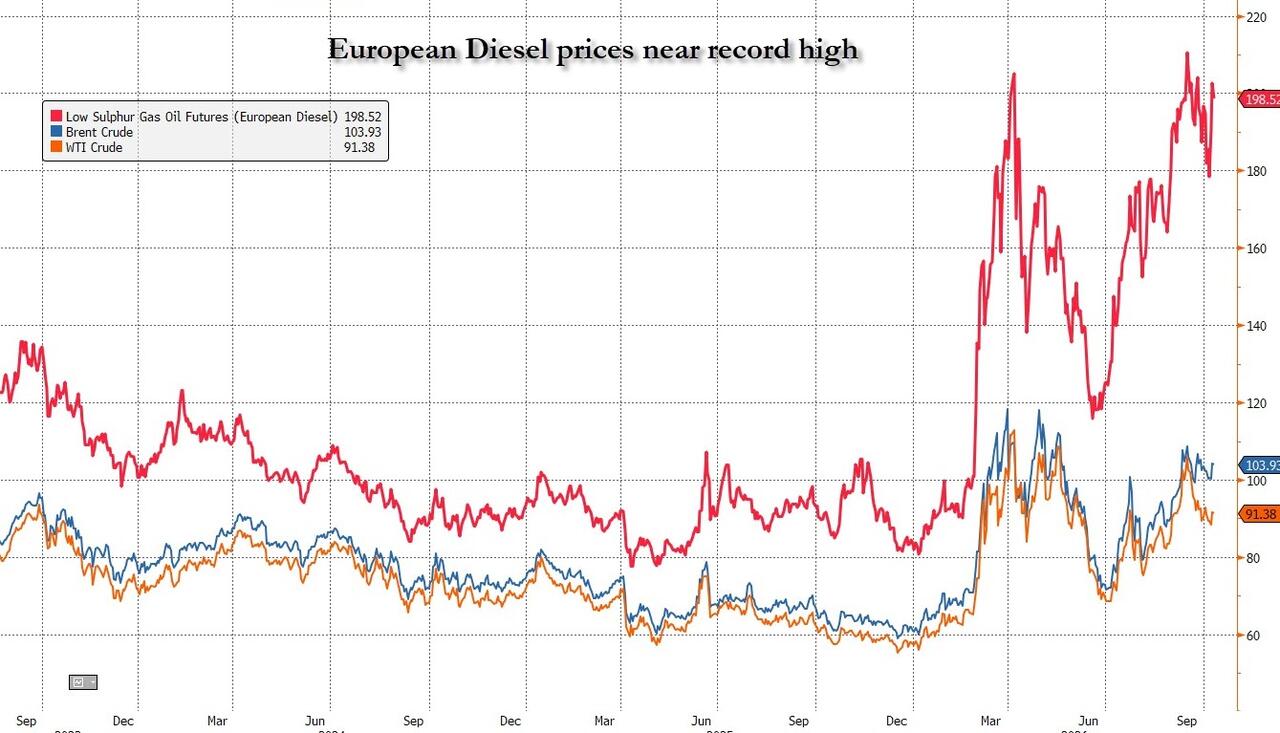
Oil prices rose again yesterday, reaching a session high of about $105 per barrel as Iran struck tankers – an outcome our energy analysts warned about if Iran appeared to be losing control over Hormuz. Reports that the US could strike Iran before the midterms and a hurricane hitting US output added pressure. Brent crude then fell after President Trump said talks with Iran were “productive” and that the US would not attack Iran before November’s midterm elections.
Oil prices nevertheless remained higher on the day and week, currently at $103.3 per barrel. Diesel prices have veered back up even more. Gasoil has risen 12% since Tuesday’s dip and is well above the temporary dip after the EU and others announced diesel stockpile releases late last week to avert a US diesel ban. Pump prices for diesel have surged to near-record highs.
US yields initially moved with oil prices but decoupled in the early evening, supported by stronger-than-expected demand for 30-year Treasuries. The strong auction pushed yields lower across the curve, led by the long end. The bid-to-cover ratio was 2.54x, above the one-year average, with strong foreign demand. This followed Wednesday’s strong 10-year auction, whose 2.77x bid-to-cover ratio was the highest since 2014 and also reflected particularly strong foreign demand. The 10-year Treasury yield ended the day pretty much stable at 5.2%, arguably a sign that yield levels have reached a point where real money investors are seeing them as more attractive despite the risks.
In Europe, the OAT-Bund spread edged up to close to last week’s post GFC-peak and 38% of French high-grade corporate debt is now said to yield less than government bonds owing to lower perceived credit risk. The French government has yet to reassure markets on its budget plans amid growing protests and political uncertainty ahead of next year’s presidential election.
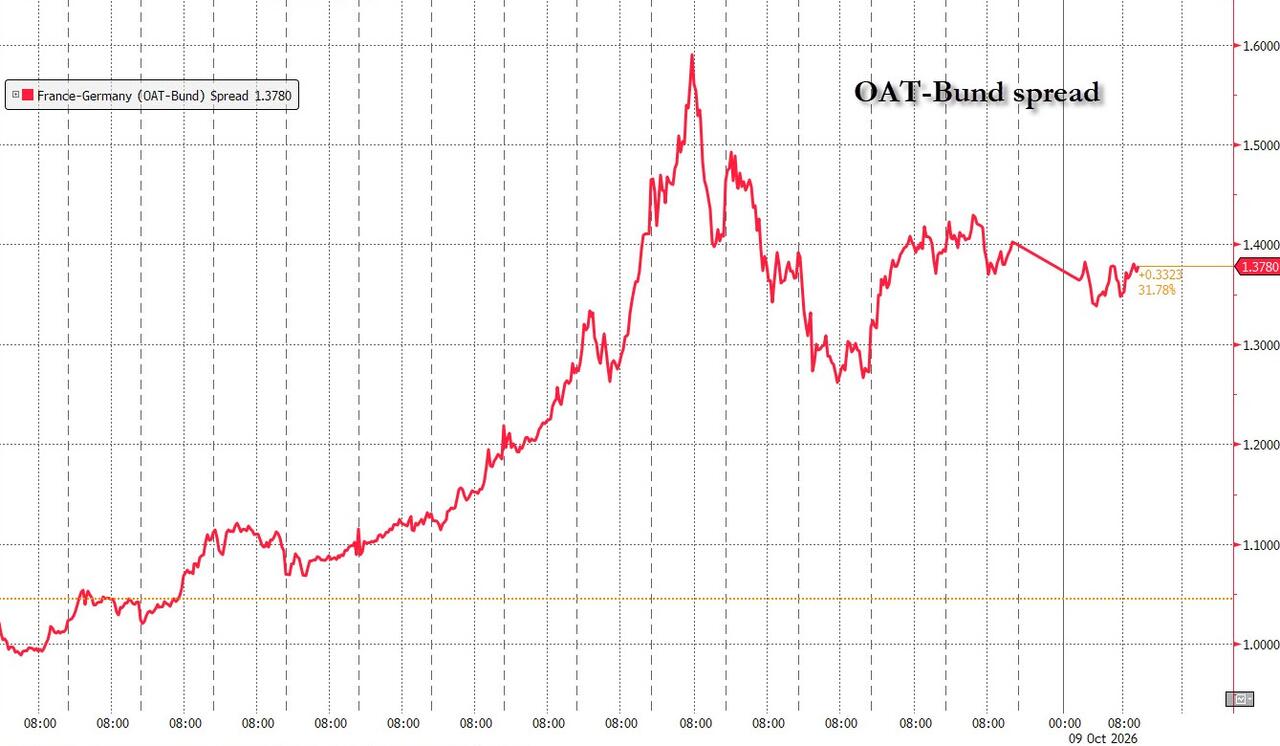
Still, although risks remain, most of the widening appears to be over for now. The spread seems to have become attractive to buyers of French debt, given the belief that France is too big to fail and the availability, if needed, of instruments and programmes created since the previous debt crisis, including the ESM, OMT and TPI. Against this backdrop, ECB President Lagarde reiterated that the ECB has instruments to counter unwarranted market dynamics, while Governing Council member Moulin and French finance minister Lescure said the conditions for direct intervention are not currently met.

Lagarde’s comments were expected, as we wrote in Monday’s Credit Compass. For now, ECB action is most likely to take the form of guidance, with policy intervention still unlikely. Other eurozone countries may meet TPI conditionality, but intervention is not yet warranted based on current spreads. For France to become eligible, the ECB would probably first require proof of a credible budget. If France were seen as complying with the structural expenditure path under EU budget rules and markets still failed to respond favourably, the ECB might step; but only after exhausting verbal intervention and pausing QT.
There are different ways to assess the chances of successful French budget negotiations. Talks begin next week in Parliament, while an increasingly broad group of protesters is taking to the streets and demanding support, adding to the challenge. Yet although no presidential candidate wants to endorse painful austerity, the risk of no budget may be lower than in recent years.
Le Pen has said she would prefer to have a bad budget to no budget in place if she becomes president – the most likely outcome in current polls – because a bad budget would be easier to amend than negotiating one from scratch in a fragmented parliament. While her fiscal plan lacks credibility in our view, she has advocated (how) she intends to tackle France’s debt burden and recognises that the problem will not solve itself. If Parliament rejects the budget, the government will probably use Article 49.3 to pass it without a vote, triggering a confidence vote that it may survive for the same reasons Le Pen prefers a bad budget to none. A proposal targeting a 5% deficit may therefore be achievable, though it remains unclear whether the European Commission would consider that sufficient. This would not solve the fiscal problem: risks remain, but markets have tested them and set them aside while the budget process unfolds.
Separately, European Commission finance chief Valdis Dombrovskis urged member states to maintain budgetary restraint at yesterday’s Ecofin meeting in Luxembourg, pushing back against Italian and Greek proposals for greater fiscal flexibility.
September’s ECB minutes showed policymakers weighing another rate hike against growth risks. They viewed a 2.5% rate as neutral, cited economic resilience, and kept communication deliberately non-committal. Future decisions will consider long-term yields, which could materially affect growth and inflation and have risen since the meeting. Policymakers will also monitor wages for second-round effects, though meaningful data are not expected until early next year.
The minutes barely moved rate expectations: an October hike remains unlikely, while a December hike is almost fully priced in, in line with our view.
Higher government bond yields and growing concerns about growth have pushed eurozone bank shares significantly lower in recent days: the Stoxx 600 Banks index fell as much as 2.2% on Thursday after Wednesday’s 3.3% decline, although some recovery is visible this morning. Banks with relatively high sovereign-bond exposure are bearing the brunt of the sell-off. On aggregate, domestic government bonds make up a relatively large share of Italian balance sheets.