
Authored by Jordan Schachtel via American Greatness,
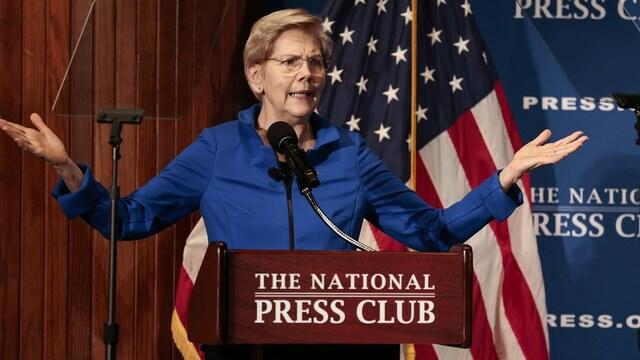
Just before the Senate adjourned for campaign season, big banks joined forces with longtime critic Elizabeth Warren and Senate Democrats to kill the Clarity Act.
The bill would have clarified federal rules for cryptocurrency markets and created a reliable, trustworthy entrance point for Americans to access digital assets.
After advancing the bill out of the Banking Committee on a bipartisan basis, Democrats blocked the bill from even being debated and amended on the Senate floor, giving the banks exactly what they wanted: less competition.
Warren, who spent much of her career opposing banks, has suddenly found common cause with them in opposing a critical component of the Trump Administration's financial innovation agenda. As Sen. Cynthia Lummis put it, Warren "hates President Trump so much that she'd rather have no rules of the road for the digital asset industry - leaving consumers vulnerable and law enforcement empty-handed - than take the win for consumers."
Throughout negotiations, Democrats and the big banks won concession after concession. Nearly 250 pages of big bank and Democratic priorities were added to the bill, including an agreement by President Trump to a sweeping and unprecedented ethics package. The banks and Democrats refused to take yes for an answer, stalling and eventually killing Clarity.
As Clarity negotiations heated up, another fight over the future of Americans' finances simmered on the back burner: Open Banking. What is open banking? Put in simple terms, open banking allows consumers to securely share their financial data with the third-party apps, payment processors, and services of their choice. That means a customer can connect a bank account to a budgeting app, compare loan offers, or use a payment service without the bank choosing the service for them.
Right now, the Consumer Financial Protection Bureau, with input from the White House and other decision-makers in the administration, is in the process of finalizing the open banking rule (known to DC policy wonks as Section 1033 of the Dodd-Frank Act). The open banking rule will determine who has control over Americans' bank data, how it can be used, and whether banks can charge tolls for customer-authorized apps to access that data.
According to a recent research report from S&P Global, 8 in 10 Americans use financial apps, engaging in the digital economy to spend, save, and budget. And as pundit Mary Katharine Ham pointed out this summer, there are direct implications for the president's eponymous Trump Accounts.
With Clarity sidelined for the foreseeable future, the open banking fight is heating back up and could very well be the next pillar of the administration's innovation agenda to be toppled by the big banks. Codifying a weak open banking rule would not only give the banks another win at the expense of President Trump's agenda, but it would also come at a cost for American families and workers.
Making it harder or more expensive for Americans to connect their bank data with apps of their choice - which is what our country's biggest banks ultimately want, whether they say it or not - would give legacy financial institutions the upper hand over competitors and encourage customers to use the bank-backed apps and services. Who wants to be forced to use a bank-backed app over something as simple as Venmo?
That's what the gatekeepers of our financial system want. Major banks are aggressively lobbying for changes that would restrict competition, and if they succeed, those changes will make it harder and more expensive for customers to choose their own services. They would also stifle everyday innovations like custodied cryptocurrency wallets, which rely on open banking to seamlessly verify accounts and buy digital assets.
American consumers, not the big banks, should decide which apps can view their sensitive financial information. That principle should apply across the financial services industry so people can connect their accounts to the payment apps, lenders, and crypto wallets they choose.
A strong Section 1033 rule would protect that choice. It would also give new, innovative apps a fair shot to compete by allowing them to design financial services around consumers' needs.
With the rule back on the drawing board, big banks are attempting to seize the advantage and capture more ground. They are lobbying to add provisions to charge "data rationing" fees or limit data access under the guise of security. Strong safeguards are essential, but data security cannot be weaponized to limit customers' access to competing services.
Smaller fintech firms, upstart payments innovators, and crypto-wallet providers would have a harder time absorbing the data-access fees that banks could charge them. The result would be fewer services, less pressure on banks to improve their products, and fewer choices for Americans trying to manage, save, spend, borrow, or invest their money. A bank that can control access to a customer's data can control which competitors ever get a meaningful chance to compete.
The Clarity vote showed how far big banks and Democrats will go to kill the Trump agenda and choke off innovation and competition that responds to families' needs. We can't let that happen again.
Handing another victory to the unholy big bank-Democrat alliance is bad politics, bad policy, and bad for our wallets. No more fees, no tolls, and true open banking will make life easier and cheaper for all Americans. The CFPB should reject pressure from the banks and write a consumer-friendly Section 1033 rule.