Not-Ship turns one next week!! To mark it, I'll be kicking off a campaign for new members. I won't spam you; free subscribers will only get three extra emails on top of the weekly edition.
But first, can I ask for a small birthday present? Hit reply and finish this: I read Not-Ship because...
💙 Amanda
Last week I wrote about how Amazon's search page is designed to screw you over: the top row trap, the swamp of ads, the discount-washing. Today, I'll explain what's going on behind the scenes, and how Amazon's rules make sure prices stay high not just at Amazon, but everywhere you shop.
In a nutshell, here's what's happening:
This isn't just my theory. This system is at the heart of the US Federal Trade Commission's (FTC) upcoming antitrust case against Amazon.
Let's get into it.
Amazon charges sellers a lot of fees
Amazon relies on independent sellers to populate its online marketplace, and it charges them to be on the site. Amazon takes a big cut. In 2014, this was about 19% of sales. But today, many sellers hand close to half of every sale to Amazon. Half!
Amazon's basic commission (15% of the sale price in most categories) is in line with what eBay and Walmart charge. What pushes Amazon's cut higher are the other fees stacked on top.
Where an Amazon sale goes
Based on an apparel seller that opts for Amazon fulfillment, storage, returns and advertising.
There's the referral fee, which is the commission Amazon takes on every sale. The fulfillment fee is the cost to have Amazon pack and ship items from its warehouses. Then there's advertising: those sponsored spots in the top row we saw in last week's article.
Of these costs, only the referral fee is mandatory. Sellers can choose to ship orders themselves, for example, or forgo advertising. But in practice, the choice isn't actually much of a choice.
Here's what it looks like for a seller considering these so-called options:
In other words, the real choice for sellers isn't between paying for extras or not; it's between making sales or not. The FTC calls Prime eligibility, which effectively requires Amazon's fulfillment service, "a virtual necessity for doing business on Amazon." It says the same of advertising.
So, sellers have to raise prices
Here's where the fees are passed on to us consumers. When sellers give roughly half of their sales to Amazon, the other half isn't profit. That money has to cover making the product, shipping it to Amazon's warehouses, paying staff and everything else. So even if they wanted to absorb Amazon's fees on your behalf, most companies can't afford to. They have to raise their prices.
Don't forget, Amazon's biggest single fee — the referral fee — is a percentage of the price. So when prices go up, Amazon's cut goes up, too.
And they can't charge less elsewhere
Now here's where it gets really crazy. Amazon's Fair Pricing Policy lets it remove the Buy Box (the "Add to Cart" button), or even suspend a seller, if they're offering their item cheaper elsewhere. So, a seller who raises prices on Amazon to cover the fees has to raise them everywhere else too — even on their own website! — or risk losing their Amazon sales.
The consequence is clear: We pay Amazon prices, even when we're not shopping on Amazon.
It's been documented again and again. In 2024, Amazon sellers told CNBC they lost the Buy Box after Target put their products on sale. In an ongoing lawsuit, California's attorney general alleges Amazon pushed brands to get Walmart, Target and other retailers to raise their prices. And when progressive media outlet More Perfect Union reported on this, they even found an Amazon seller who was suspended over a one-cent price gap with Target.
Ideally, market competition would sort this out. High prices send shoppers elsewhere and force fees down. But when sellers can't charge less anywhere else, there's nowhere cheaper to go.
There's no easy way out
For sellers, this is frustrating. So, why don't they just leave? Because Amazon is where the shoppers are: it accounts for about 40% of all US online retail sales. For many sellers, not being on Amazon isn't an option.
At least regulators have noticed. In 2023, the FTC and 17 US states sued Amazon, arguing that it illegally maintains its monopoly power by, among other things, punishing sellers who offer lower prices elsewhere, effectively forcing them to use its warehouses and charging ever-higher fees. Amazon denies any wrongdoing, and the case is set to go to trial next year. In Europe, Germany ordered Amazon to stop controlling its sellers' prices earlier this year, though the decision isn't yet final.
After last week's piece, a Not-Ship reader wrote to say none of this is new: plenty of online stores push ads and fake discounts. That is true. But what's different about Amazon is its reach. When prices increase on Amazon, they tend to increase elsewhere too. You can, of course, choose not to shop on Amazon. But if the FTC is right, you may be paying Amazon's prices anyway.
Let's chart the chaos.
Not-Ship's data dispatch. In your inbox, weekly.
No spam. Just lots of charts. Unsubscribe anytime.
FULL DISCLOSURE
I spent two years working at the Washington Post, which Amazon founder Jeff Bezos owns. During that time, he was busy dismantling the publication, so he wasn't well loved in the newsroom.
CLASSIC ENSHITTIFICATION
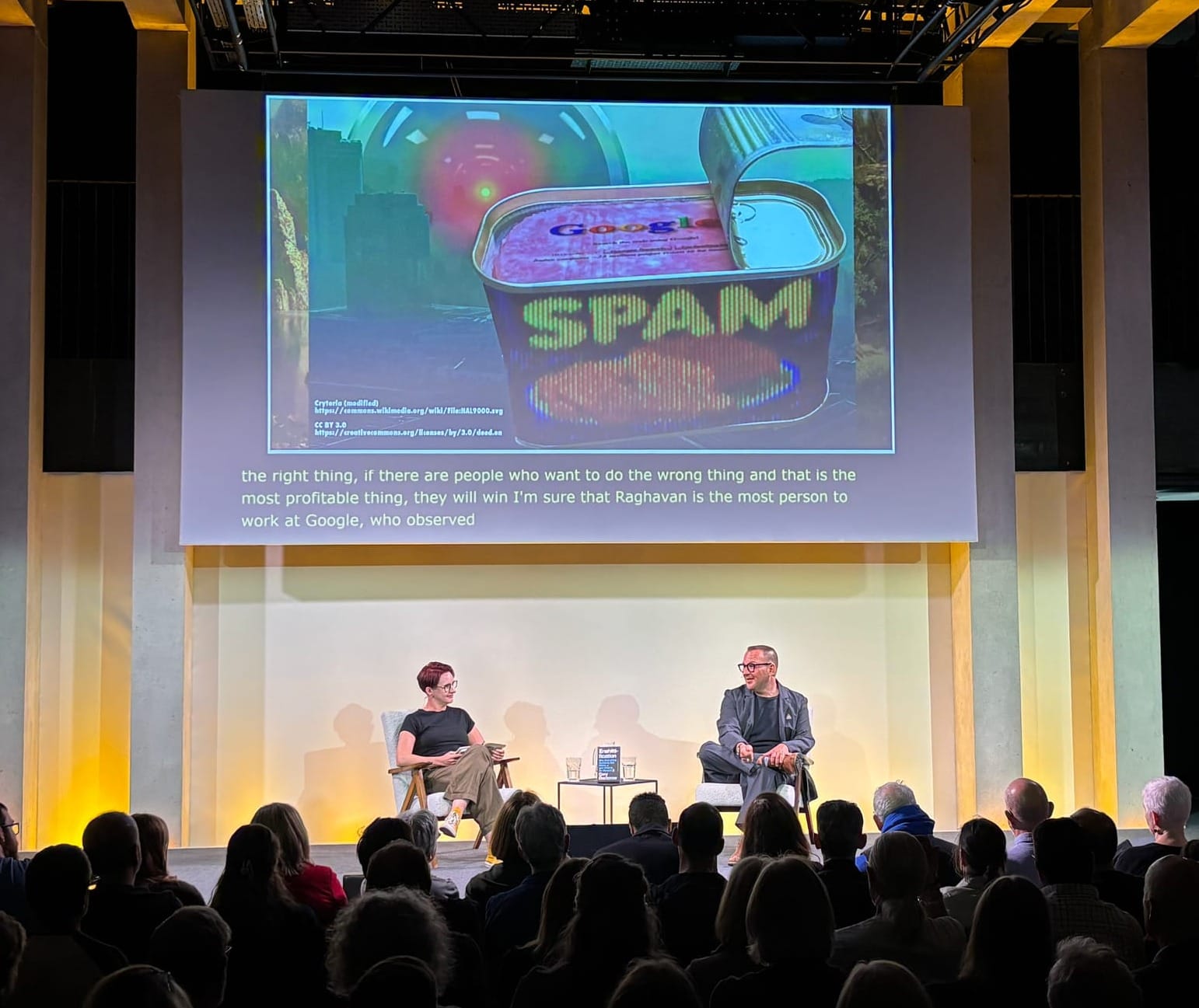
In August, I saw Cory Doctorow speak at the Edinburgh International Book Festival. His enshittification concept — the process by which online platforms shift from serving their users to squeezing them — inspired this two-part series on Amazon. If you want to understand it all a lot better, I highly recommend his book Enshittification: Why Everything Suddenly Got Worse and What to Do About It. Somehow it makes antitrust issues both accessible and entertaining!
FROM ELSEWHERE
Here's what I found interesting, important or delightful this week:
Life after death? Alvin Chang's latest masterpiece has dropped! It’s about what people around the world believe happens after we die, drawn from surveys of nearly 130,000 people in 23 countries. (Proud to count Alvin as a Not-Ship subscriber 💙.)
Stunning embroidery. If you haven't seen the work of Irene Saputra, get yourself over to Instagram. Endlessly inspirational.

Instant knowledge. The Ars Notoria was a medieval magic book that promised scholars university learning through prayers, rituals and diagrams. No studying required!
MORE NOT-SHIP
In annual reports, fossil fuel companies have a new playbook for greenwashing
Words are cheap — especially when they’re about the future.
What’s good for Amazon is good for ... Amazon
How the world’s largest company makes you pay more for less.
Birds might help us get through this
The mental health benefits of “joy watching” are what we need right now.