
Authored by Norm Singleton via RealClearMarkets,
During this time of increased political polarization, it is good to know that there is one issue uniting Trump-loving MAGA Republicans, Bernie Sanders-style Democratic Socialists, and everyone in between: opposition to data centers, especially large data centers built for artificial intelligence (AI). Part of the opposition stems from the public's increasing skepticism of AI. An even larger part is generated by concerns over how AI will drive up electricity costs for those living close to the centers, as well as the high amount of water necessary to run the centers.
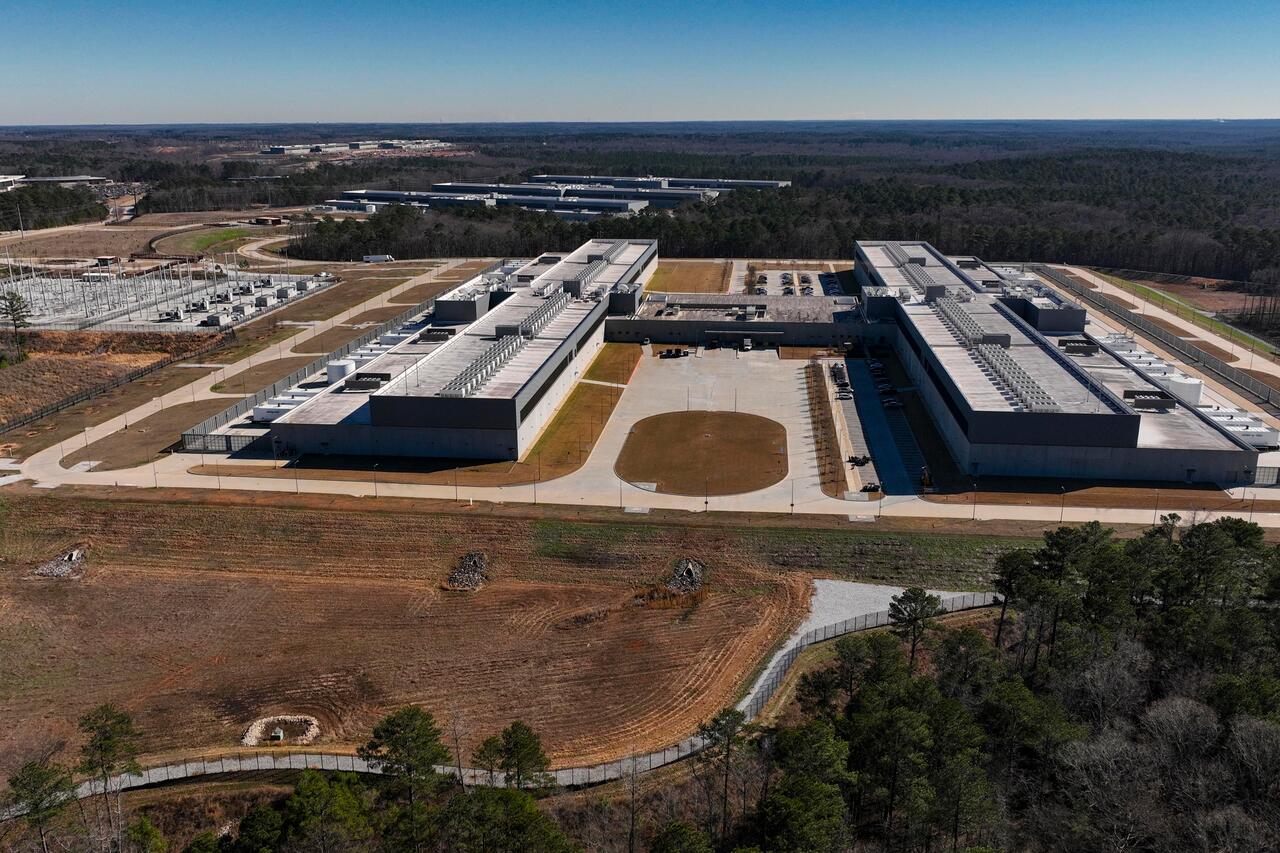
Many data center critics ignore the fact that these kinds of facilities have been around for years. As the name suggests, data centers are buildings (or centers) that house the infrastructure and data necessary for the operations of digital services such as the cloud. The typical data center includes servers, switches, routers, and fiber optic cables. These data centers make it possible for individuals to use their phones,and tablets to store and share their photos, messages, and documents, as well as to download and use a wide variety of apps.
While some companies, such as JP Morgan Chase, operate data centers for their own use, other companies operate hyperscalers. These hyperscalers are large enough to host multiple clients. Leading tech firms, including Meta (parent company of Facebook, Instagram, and WhatsApp), Google, and Amazon Web Services operate hyperscalers that provide services to private companies and government agencies.
Data centers are not just the physical foundation of the internet; they are a source of high-paying jobs. For example, data centers transformed Ashburn, Virginia from a small rural town to a technological hub. The tax revenue generated from the center helped fund improvements in infrastructure, public facilities, and schools. Data centers did not became controversial until the need for larger data centers to accommodate AI led many to blame AI data centers for the increase in electric prices.
Since 2020, residential electric prices have risen by more than 36%. However, studies show that data centers pay a large and growing share of utilities fixed charges, thus reducing costs for other consumers. In addition, tech companies Microsoft and Anthropic have both pledged to pay for any increased electric costs incurred as result of their AI data centers. Other technology companies have signed President Trump's Ratepayer Protection Pledge to ensure that increased electric costs from AI Data centers are not borne by consumers.
The problem with the electric grid is not that data centers are using too much electricity, but that public utilities failed to invest resources in infrastructure placement during 20 years of flat demand. The increased revenue from AI data centers can help finance the necessary upgrades to the nation's energy grid. AI companies are also exploring uses of alternative energy as a way to reduce costs. Similarly, many AI data centers, including Amazon Web Services and Microsoft, are using recycled water to reduce their demand for fresh water. Some technology firms are exploring a way to expand AI data centers without increasing their neighbors' bills by building them in the ocean. Microsoft has already shown that underwater data centers can be just as, if not more, effective than land-based ones.
According to University of North Carolina Management Professor Nir Kshetri:
"In 2015, Microsoft launched a research project to explore the feasibility, benefits and challenges of underwater data centers." Part of that effort included setting up a waterproof data center on the seafloor near Scotland's Orkney Islands in 2018. It contained 864 servers and was connected to shore by an underwater cable.
"After two years, Microsoft reported that the servers in the underwater data center failed at about one-eighth the rate of servers in comparable land-based data centers. The company is still studying the possible reasons but hypothesizes that in a sealed underwater environment the equipment is less exposed to oxygen, humidity, and temperature fluctuations - as well as less jostling from people working to replace broken components."
Unfortunately, despite their initial success, Microsoft has suspended its underwater data centers when they ended the experiment in 2024. Hopefully, Microsoft or another tech company will take up underwater data center development and/or discover other ways to meet the need for AI data centers without increasing other Americans' electric bills. Tech companies can do this as long as government limits its role to ensuring that companies compensate Americans for any harms caused by their operations.
We publish a variety of perspectives. Nothing written here is to be construed as representing the views of ZeroHedge.