
Authored by Jonathan Turley via Jonathan Turley,
Marc Elias has long been at the center of controversial election tactics, including criminal investigations. If lawyers had to take an oath to first do no harm, the court-sanctioned Democratic lawyer would leave Hippocrates gobsmacked. Well, Elias is back and his legal team is threatening the media with what appears an entirely meritless defamation lawsuit on behalf of former Gov. Roy Cooper, the Democratic nominee for the United States Senate.
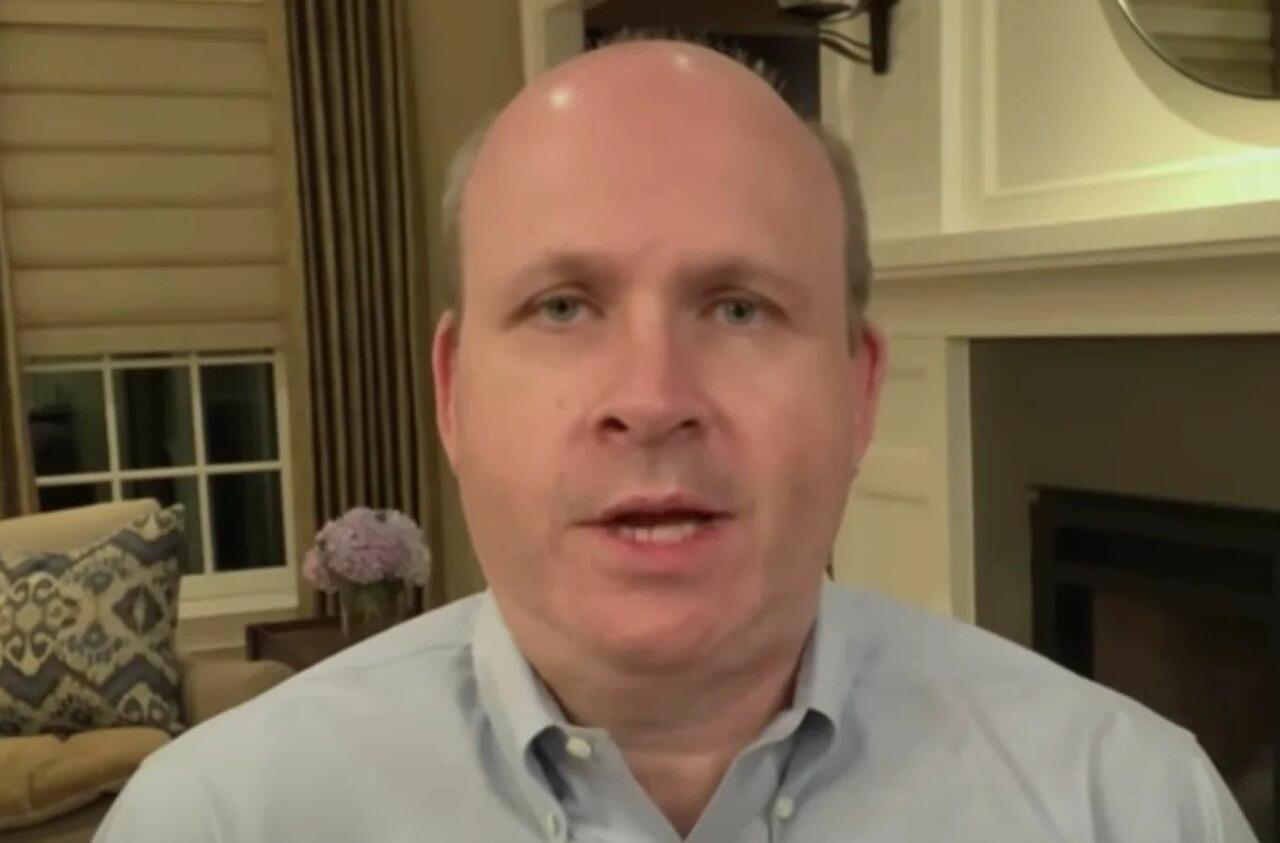
This seems to be an effort to deter the media from raising the issue of the health of Cooper, who is 69 years old. Such health related issues have been much in the news for politicians ranging from former President Joe Biden to Sen. Mitch McConnell (R-Ky.).
It is obviously a legitimate matter for media inquiry and the threat seems designed to deter others from raising the issue before the midterm elections. In typical Elias fashion, it is a smash-mouth approach that only generated national coverage of the issue - working against the interests of his client.
The North State Journal reported that it had asked the Cooper campaign if there were any health problems that might impede him from completing his term:
"North State Journal (NSJ) has previously emailed questions to the campaign eight times this year, and all but two went unanswered. The ninth time, NSJ received a cease-and-desist letter threatening legal action from the Elias Law Group.
The Journal reports on such stories as "the only statewide newspaper in North Carolina."
In a letter to make this "exceedingly simple and crystal clear to you," the lawyer for the Elias Law Group warned the Journal that any suggestion that Cooper is "'experiencing a neurological issue,' or that any health condition would prevent him from completing his term, is categorically false and defamatory."
While I have taught torts for 30 years, I must be missing the Elias Group's simple clarity on this issue. In demanding that the media "cease and desist," the Elias Group lays out the defamation law in North Carolina in making "false, defamatory statements of or concerning the plaintiff, which were published to a third person, causing injury to the plaintiff's reputation."
Notably, the Elias Group stated that "a publication that is obviously defamatory constitutes defamation per se." That specific assertion is challengeable if it is referring to the common-law per se categories. Such a publication can be defamation, but the per se categories are laid out as a matter of state law. (The letter goes on to make a more specific per se defamation claim).
The common law per se categories began as categories of slander where damages would be presumed in the same way as libel. The allegation would fall into one of the "per se" categories of defamation. Under the common law, these per se categories of defamation allow for presumed damages and include: (1) disparaging a person's professional character or standing; (2) alleging a person is unchaste; (3) alleging that a person has committed a criminal act or act of moral turpitude; (4) alleging a person has a sexual or loathsome disease; and (5) attacking a person's business or professional reputation.
North Carolina has a broad definition of defamation per se, including alleging that the person (1) has committed an infamous crime; (2) has an infectious disease; (3) imputes a person's trade or profession; or (4) otherwise tends to subject one to ridicule, contempt, or disgrace. That last category is obviously somewhat elastic.
The letter references a more specific basis for a per se category for "imputing insanity or impairment of mental faculties is libelous per se." Jarman v. Offutt, 239 N.C. 468, 472 (1954). The Elias Group adds menacingly, "The North State Journal - and you personally - would be liable for any such publication."
What the letter does not address is the fact that Cooper is a public figure.
In New York Times v. Sullivan, the Supreme Court crafted the actual malice standard, requiring public officials to shoulder the higher burden of proving defamation. Under that standard, an official would have to show either actual knowledge of its falsity or a reckless disregard of the truth.
The standard was later extended to public figures. The Supreme Court has held that public figure status applies when someone "thrust[s] himself into the vortex of [the] public issue [and] engage[s] the public's attention in an attempt to influence its outcome." A limited-purpose public figure status applies if someone voluntarily "draw[s] attention to himself" or allows himself to become part of a controversy "as a fulcrum to create public discussion." Wolston v. Reader's Digest Association, 443 U.S. 157, 168 (1979).
It is legally absurd to suggest that a media outlet would be liable for defamation, let alone defamation per se, for raising the mental or physical fitness of a candidate for political office.
It is indicative of Elias's sledgehammer approach that often does more harm than good for his Democratic clients. A few months ago, Elias caused a stir during the unsuccessful Democratic gerrymandering effort by reminding Democratic leaders that they could simply eliminate the entire Virginia government.
What is equally baffling is the desire of Cooper to be associated with Marc Elias while trying to appeal to Republican and independent voters. Despite his losses in cases such as National Republican Senatorial Committee v. Federal Election Commission, Elias is still a favorite of many on the left for his aggression and partisan loyalty. What makes him notorious for some makes him popular for others.
It was Elias who was the general counsel to the Clinton presidential campaign when it secretly funded the infamous Steele dossier and pushed the false Alfa Bank conspiracy. (His fellow Perkins Coie partner, Michael Sussmann, was later indicted but acquitted).
Clinton campaign officials denied any involvement in the Steele Dossier. When journalists discovered after the election that the Clinton campaign hid payments for the Steele dossier as "legal fees" among the $5.6 million paid to Perkins Coie, they were reportedly stonewalled. The campaign was ultimately sanctioned by the Federal Election Commission for the subterfuge.
New York Times reporter Ken Vogel said at the time that Elias denied involvement in the anti-Trump dossier. When Vogel tried to report the story, he said, Elias "pushed back vigorously, saying 'You (or your sources) are wrong.'" Times reporter Maggie Haberman later wrote that "Folks involved in funding this lied about it, and with sanctimony, for a year."
Elias's group later unsuccessfully led efforts to challenge Democratic electoral losses.
In Maryland, Elias's team supported another abusive gerrymandering scheme that a court found not only violated Maryland law but the state constitution's equal protection, free speech and free elections clauses. The court found that the map "subverts the will of those governed."
One media site accused Elias and his group of "making millions off gerrymandering efforts" while publicly denouncing Republican gerrymandering.
In 2024, Elias's legal team was also accused of pushing "to bar third-party presidential candidates - including Cornel West - from swing state ballots where they might siphon votes from the Democratic nominee [Kamala Harris]."
Likewise, the New York Times reported that Elias's firm's work "on behalf of a Soros-funded PAC in Texas...was opposed by a left-leaning election watchdog as undermining laws intended to limit the influence of major donors."
His group's work for New York redistricting was ridiculed as not only ignoring the express will of the voters and also effectively negating the votes of Republican voters.
In 2024, the Chief Judge of the Western District of Wisconsin criticized the Elias Law Group for one of its challenges. Judge James Peterson (an Obama appointee) said that the argument "simply does not make any sense."
Cooper, however, wanted Elias and his legal team to represent him and must have approved threatening a media outlet rather than answering a predictable question from a journalist.
Jonathan Turley is a law professor and the New York Times best-selling author of "Rage and the Republic: The Unfinished Story of the American Revolution."