
Authored by Steve Watson via Modernity.news,
The BBC’s education platform, used by nearly 1.7 million schoolchildren every week, is gamifying open borders. In a Roblox-hosted game called Increasing Immigration aimed at pupils aged 11 to 14, choosing to deport migrants living in the UK without proper visas loses points on the economy and public health.
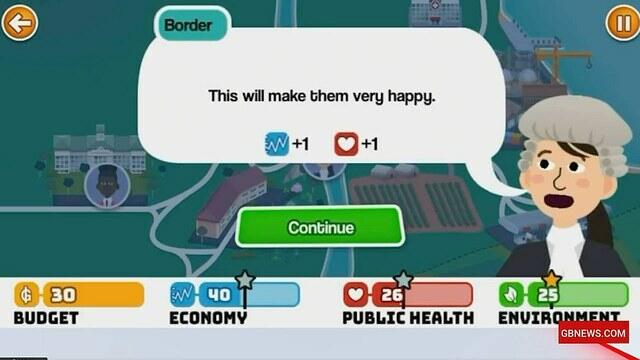
Players are warned: “This can be potentially dangerous for them [the immigrants]. Don’t expect this to be unchallenged!”
Grant them an amnesty instead and the message is clear. “This will make them very happy.” Economy and public health scores rise.
A separate scenario tells geography pupils that allowing people to pass through the border easily “could really help grow our economy.” Selecting open borders yields three economy points and two public health points. Rejecting it as “too radical” scores nothing.
Instructions open with the claim: “We don’t have enough people of working age to keep our society running smoothly. We should try to attract migrant workers and incorporate them into our economy.”
Materials elsewhere state that concerns migrants will take jobs from locals “likely arises from prejudice.” The site lists twice as many benefits of migration as disadvantages.
Housing set aside for migrants scores positively. Almost every option aligned with border control produces negative results.
BBC Bitesize is promoted by almost every UK state school and reaches half of children aged four to 16.
Nick Timothy MP called it what it is.
Shadow Education Secretary Laura Trott demanded the game be removed. “The BBC has crossed a line. They have a duty to remain impartial, and yet they are using learning tools as a vehicle to push a Left-wing political agenda onto young children. Advocating open borders encourages illegal small boat crossings. These are the type of toxic resources dressed up as education which should be nowhere near the classroom.”
Former Education Secretary Gavin Williamson was more direct: “The mask has slipped and the BBC has yet again betrayed its rampant Left-wing political agenda. The state broadcaster brainwashing children using a homework game is like something from a North Korean re-education camp.”
Alex Burghart, Shadow Cabinet Office Secretary, said the BBC was set up “to inform, educate and entertain – not misinform, re-educate and brainwash.”
Former BBC Television controller Danny Cohen called for an investigation: “The BBC needs to explain why its educational website is pushing extreme Left-wing ideologies to schoolchildren… There is such a lack of balance… it cannot be seriously defended as coincidental.”
He added that “parents ought to be deeply concerned that the BBC is encouraging children to conform to extreme ideas such as open borders. It is yet another unacceptable failure of the BBC’s requirement to ensure impartiality.”
A BBC spokesman said the service works with educational consultants to align with curricula, does not accept the characterisation, regularly reviews content, and will review these examples. Director-general Matt Brittin has spoken of tools to monitor bias while the corporation faces charter renewal and declining licence-fee take-up.
This is not an isolated homework tool. It sits inside a broader pattern of materials that treat border control and concern about rapid demographic change as the problem to be solved rather than a legitimate policy choice.
Schools have distributed worksheets that place critics of mass migration alongside Nazis.
Government-funded games under the Prevent programme have warned children that researching immigration statistics, questioning job impacts, or protesting changes in Britain can place them on a pathway toward extremism referrals.
Classroom books have told primary pupils there is plenty of room for small-boat arrivals.
The Green Party has proposed teaching materials that frame opposition to high migration levels in the same category as extremism.
BBC children’s output has given activist groups direct access to shape storylines, and its flagship soap has carried pro-migrant messaging produced with campaign input.
The same institution that docks points for deportation in a children’s game has previously handed external campaigners the ability to influence what young viewers see.
Welsh geography materials on Bitesize have asked whether technology can help deliver “a truly borderless world.”
Net Zero content encourages pupils to petition local government and change personal behaviour. Progressive icons and movements are presented positively while dissenting views on migration are labelled prejudice.
Parents and taxpayers are not required to accept that a licence-fee-funded service used for homework is the appropriate vehicle for teaching that controlling the border is the radical option. The pattern across schools, government programmes, and BBC output is consistent: materials that normalise high migration and treat opposition as prejudice or extremism. The game simply makes the scoring visible.
The BBC says it will review the examples. Review is not the same as removal. Until the content is taken down or rewritten to present border control and amnesty as competing policy choices with equal weight and no predetermined point scores, the charge of one-sided instruction stands.