
Authored by Steve Watson via Modernity.news,
A publicly funded advert from the Dublin Rape Crisis Centre's We-Consent campaign shows grandparents arriving at the front door. One grandchild rushes in for a hug. The other winces and recoils as the older couple lean in. The voiceover declares: "Not everyone wants a hug. Even from the people who love them. Awkward? Maybe. Important? Absolutely."
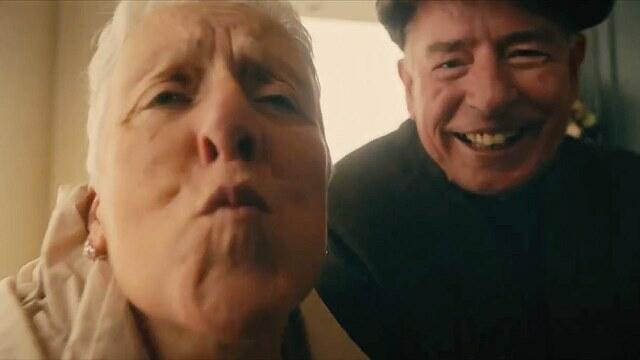
This is not a measured reminder about bodily autonomy. It is a deliberate attempt to plant suspicion inside ordinary homes, cast grandparents as potential abusers, and train the next generation to treat spontaneous family affection as something that requires official clearance.
The same ideological current that wants to erase the words "mother" and "father," rewrite sex education as social engineering, and replace "husband and wife" with sterile inclusive language is now targeting the simple act of a grandmother putting her arms around a grandchild.
The 25-second clip is part of the broader We-Consent programme funded by the Department of Justice and aims, in its own words, to inform and educate the public about "all forms of consent" across every relationship.
In practice it has produced a video that visually distorts the grandparents' approach so they appear threatening.
Also, as Graham Linehan pointed out, the makers of the advert even managed to crowbar in a diverse grandchild who looks nothing like the grandparents, just for the sake of it.
On GB News, Patrick Christys reacted with open disbelief, remarking that you would try telling that to his Greek grandmother.
The backlash was immediate and cross-party. Justice Minister Jim O'Callaghan stated that the video "does not represent the views of the Government," was "both inappropriate and demeaning to grandparents," and had been removed by the Dublin Rape Crisis Centre after officials engaged with them.
He added: "It goes without saying that having loving grandparents in a child's life is an incredibly positive thing to be cherished and not something to be campaigned against."
He further noted that while consent education around sexual relationships is vital, "this video did not advance that aim and in many ways was counterproductive."
Aontú leader Peadar Tóibín called the advert "bonkers" and said it was "planting the seed that a grandparent's hug may be insidious and a suspicious activity," which he described as "really wrong."
He argued that grandparents possess the "emotional intelligence" to know when a child does not want to be hugged, that the state has no business in this space, and that it "owes grandparents an apology."
Fine Gael Senator Gareth Scahill labelled the piece "a complete waste of resources," "offensive and potentially damaging to our older population," and "a million miles off the mark." He observed that the distorted imagery gave "a distinct impression of threat" and asked: "What's next? Will we need to sign consent forms at arrival halls... before we can greet family members?"
Councillor Gavin Pepper slammed the government and NGOs for "losing the run of ourselves." He wrote that while children should never be forced into unwanted contact, "we also need a bit of common sense." The grandparent-grandchild bond is "one of the most important bonds in Irish family life," and "a hug from a loving grandparent should not be presented as something strange or suspicious." "Irish culture, family and traditions matter."
None of this is an isolated misstep. It sits inside a wider pattern of institutional hostility toward the nuclear and extended family. The same political and cultural forces that fund these campaigns have pushed to strip "mother" and "father" from official language, treat biological reality as optional, and reframe parental authority as a risk to be managed by the state.
The We-Consent campaign's own materials speak of moving "from a Moment to a Movement" and of changing culture so that consent becomes "an integral part" of every interaction. In the grandparents advert that ambition collapses into the grotesque: ordinary love is reframed as a potential violation requiring prior negotiation.
Families that once operated on shared affection, known character, and instinctive boundaries are now to be tutored by state-funded NGOs in the correct way to greet their own kin.
Public money was spent to produce and circulate this video, and the organisations involved saw no problem with casting Irish grandparents as the face of unwanted physical contact. Real sexual violence is a serious crime. Pathologising a grandmother's hug is not a contribution to preventing it. It is a contribution to the long project of making the family itself feel unsafe, contingent, and in need of external supervision.
Parents and grandparents will continue to hug their children. The state can keep commissioning ads that treat that fact as a problem. The rest of the country has already decided which side of that argument is deranged.