Travel the universe with Dr. Ethan Siegel as he answers the biggest questions of all.
The Universe’s normal matter consists, humbly, of atoms.
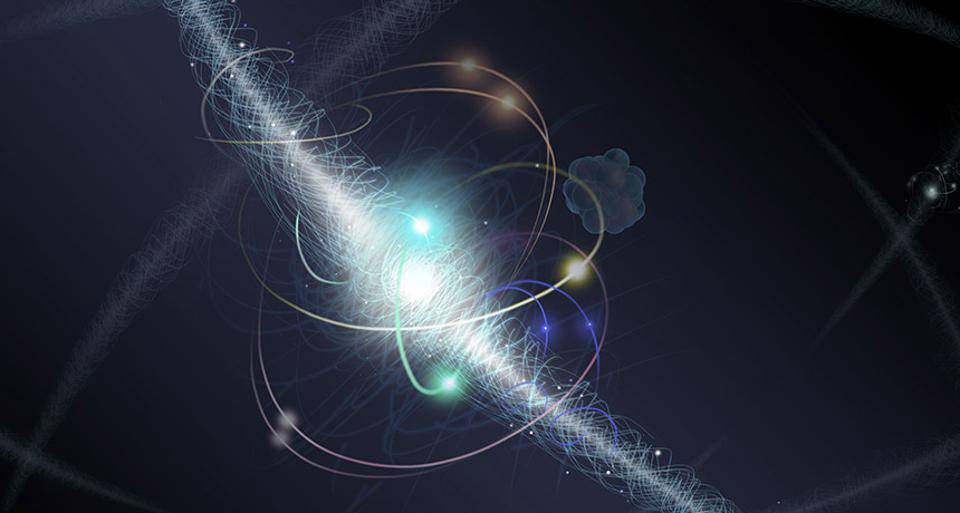
This artist’s illustration shows an electron orbiting an atomic nucleus, where the electron is a fundamental particle but the nucleus can be broken up into still smaller, more fundamental constituents. The simplest atom of all, hydrogen, is an electron and a proton bound together. Other atoms have more protons in their nucleus, with the number of protons defining the type of atom we’re dealing with. (Credit: Nicole Rager Fuller/NSF)
Every atom’s nucleus contains protons, whose number determines that element’s properties.
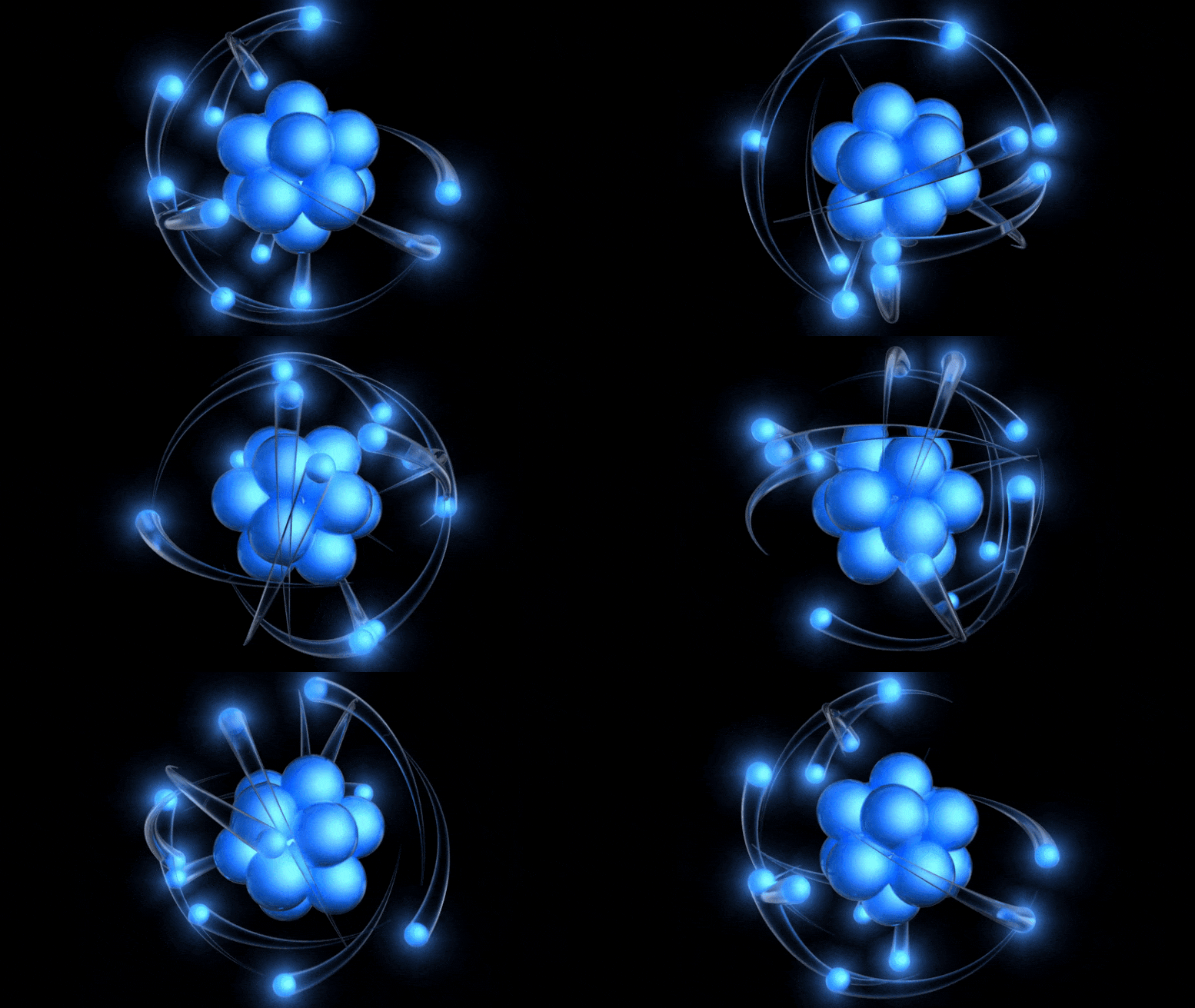
Every atom with more than one proton in its nucleus is a mix of protons and neutrons bound together. Overall, the positively charged nucleus is responsible for the negatively charged electrons orbiting around it, as well as the physical and chemical properties inherent to each element. (Credit: U.S. Department of Energy)
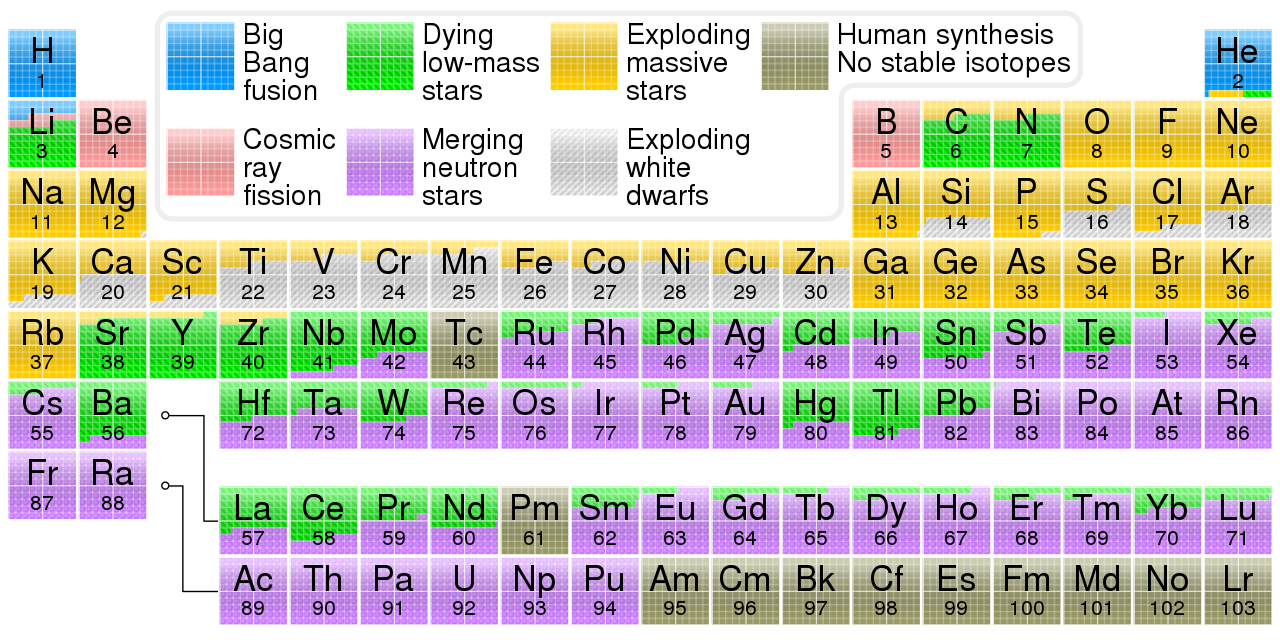
This periodic table of the elements is color coded by the most common way(s) the various elements in the Universe are created, and by what process. All unstable elements lighter than plutonium are naturally created through radioactive decay, not shown here. (Credit: Cmglee/Wikimedia Commons)
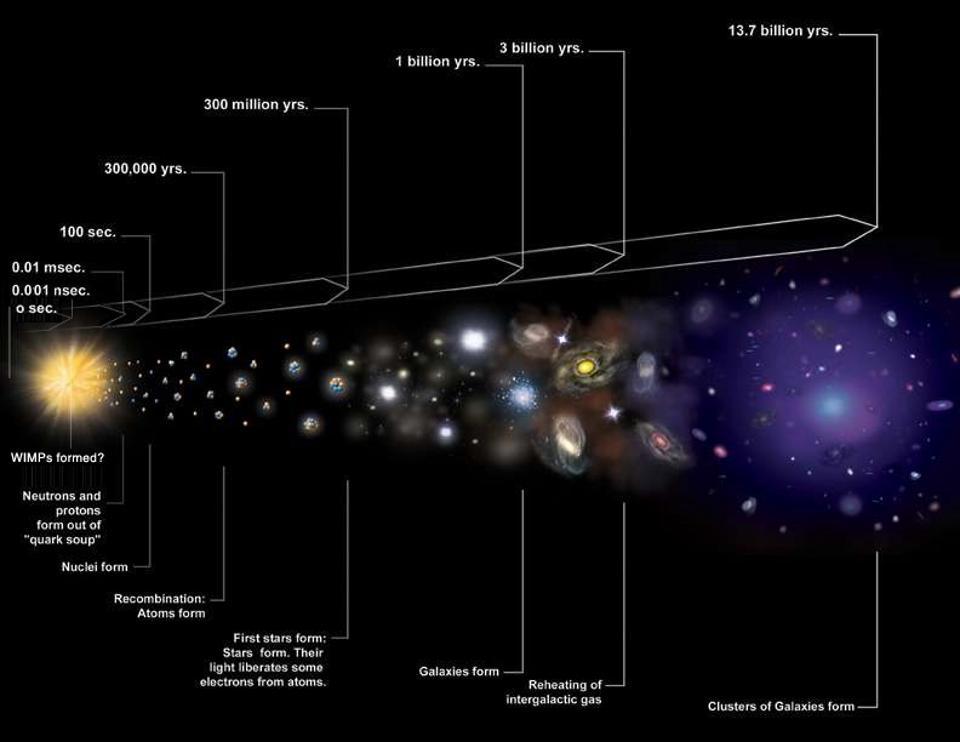
A visual history of the expanding Universe includes the hot, dense state known as the Big Bang and the growth and formation of structure subsequently. The full suite of data, including the observations of the light elements and the cosmic microwave background, leaves only the Big Bang as a valid explanation for all we see. (Credit: NASA/CXC/M. Weiss)
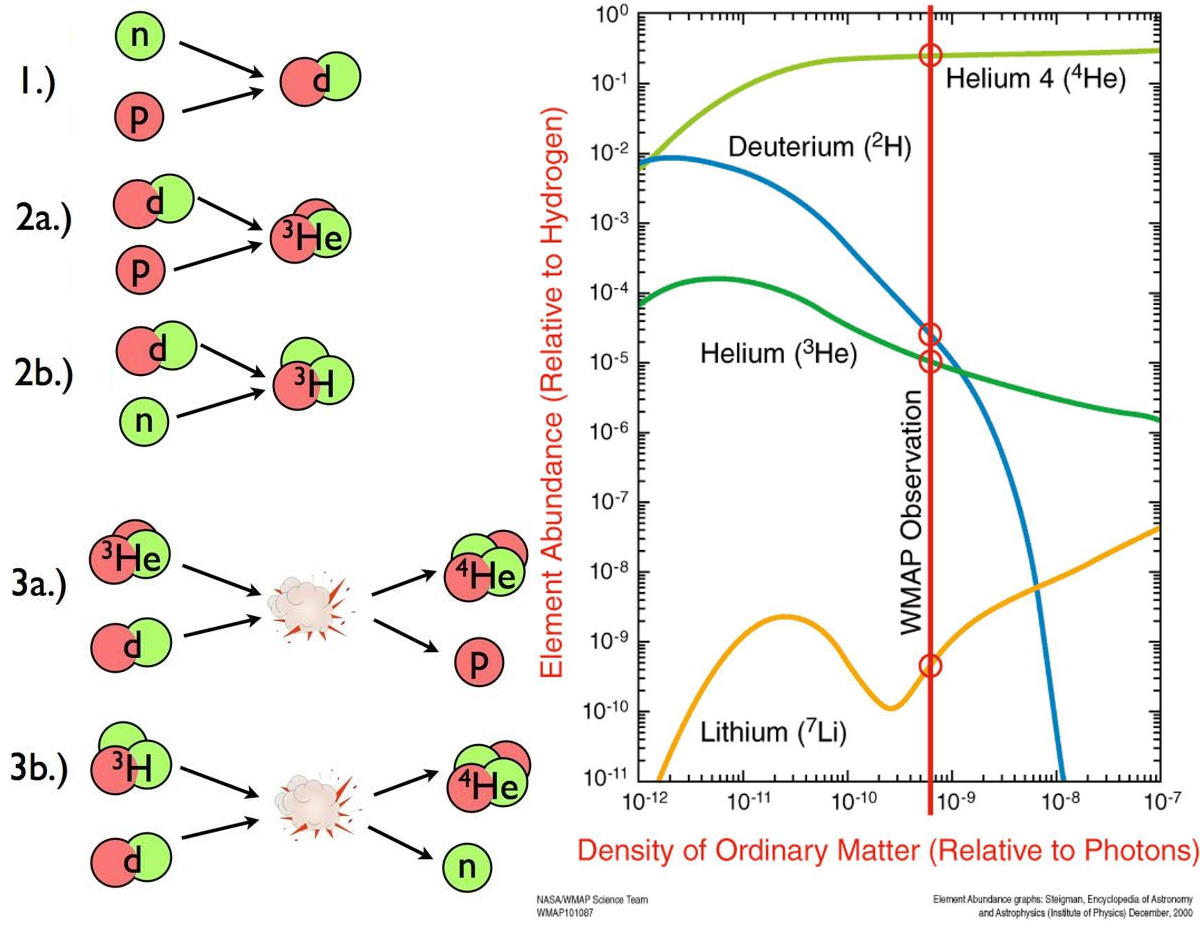
1.) The Big Bang. The early, hot, dense state first created protons and neutrons.
The lightest elements in the Universe were created in the early stages of the hot Big Bang, where raw protons and neutrons fused together to form isotopes of hydrogen, helium, lithium and beryllium. The beryllium was all unstable, leaving the Universe with only the first three elements prior to the formation of stars. (Credit: E. Siegel/Beyond the Galaxy (L); NASA/WMAP Science Team (R))
Credit: E. Siegel/Beyond the Galaxy (L); NASA/WMAP Science Team (R)
Only the lightest stable elements, up through lithium (3), fuse this early.
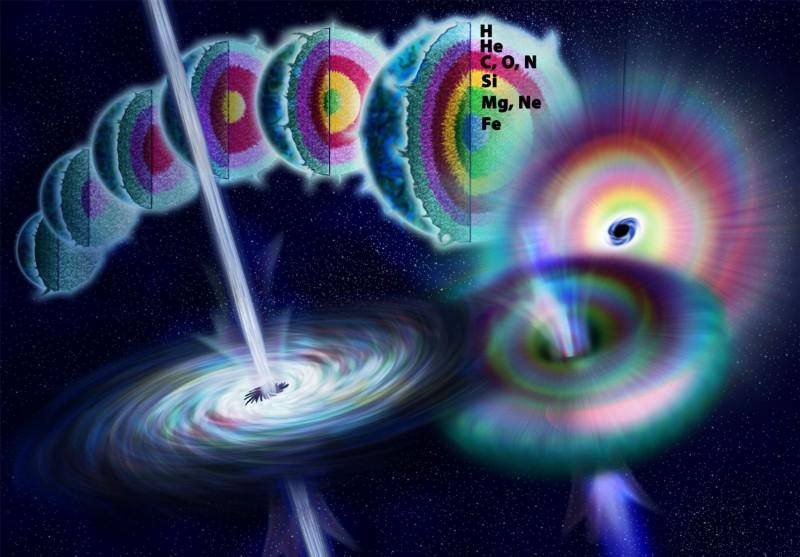
The anatomy of a very massive star throughout its life, culminating in a Type II Supernova when the core runs out of nuclear fuel. The final stage of fusion is typically silicon-burning, producing iron and iron-like elements in the core for only a brief while before a supernova ensues. Core-collapse supernovae can efficiently produce elements up through about atomic number 40, but not sufficiently higher. (Credit: Nicolle Rager Fuller/NSF)
2.) Massive stars. The most massive stars are the shortest-lived.
This image from NASA’s Chandra X-ray Observatory shows the location of different elements in the Cassiopeia A supernova remnant including silicon (red), sulfur (yellow), calcium (green) and iron (purple), as well as the overlay of all such elements (top). Each of these elements produces X-rays within narrow energy ranges, allowing maps of their location to be created. (Credit: NASA/CXC/SAO)
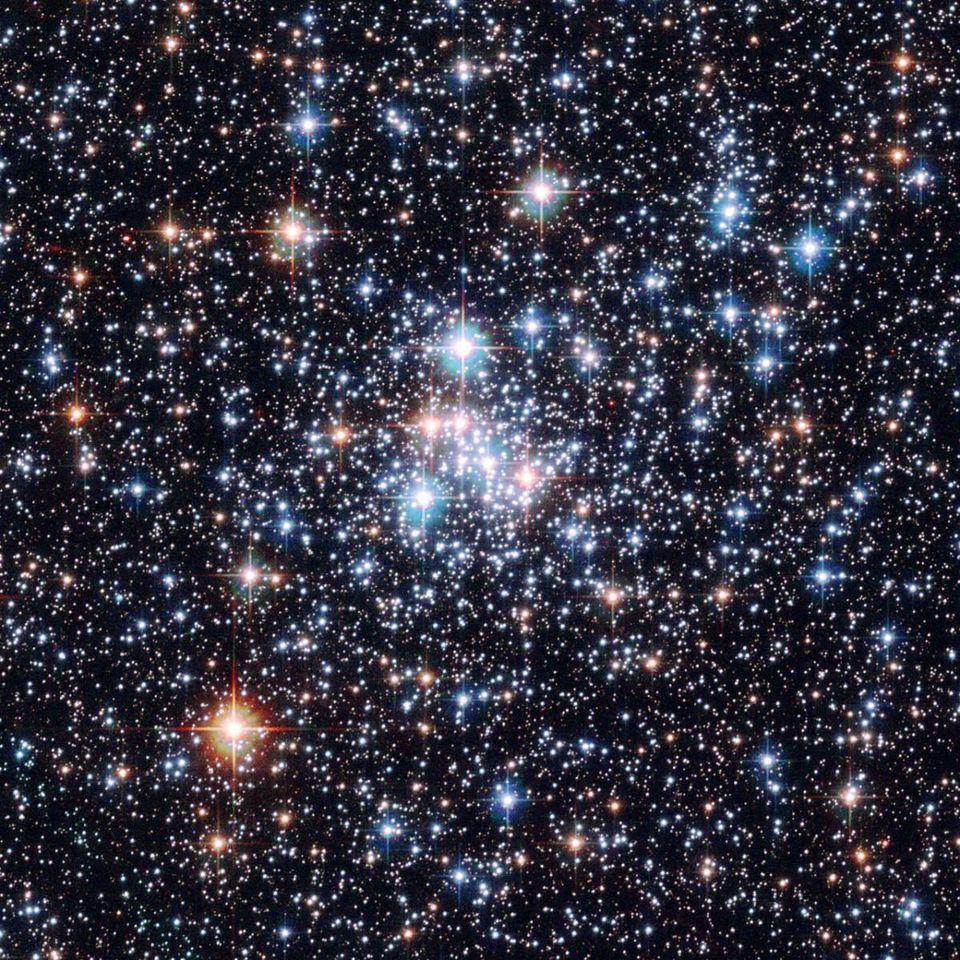
The open star cluster NGC 290, imaged by Hubble. These stars, imaged here, can only have the properties, elements, and planets (and potentially chances-for-life) that they do because of all the stars that died before their creation. This is a relatively young open cluster, as evidenced by the high-mass, bright blue stars that dominate its appearance. The fainter, yellower and redder stars are more Sun-like, and will live longer but contribute different elements to the Universe. (Credit: ESA and NASA; Acknowledgment: E. Olszewski (University of Arizona))
Credit: ESA and NASA; Acknowledgment: E. Olszewski (University of Arizona)
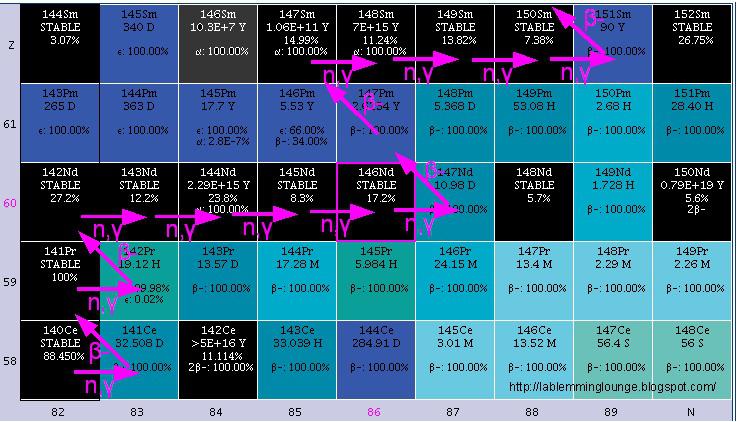
The creation of free neutrons during high-energy phases in the core of a star’s life allow elements to be built up the periodic table, one at a time, by neutron absorption and radioactive decay. Supergiant stars and giant stars entering the planetary nebula phase are both shown to do this via the s-process. (Credit: Chuck Magee)
Before dying, slowly adding neutrons produces elements from strontium (38) through bismuth (83).
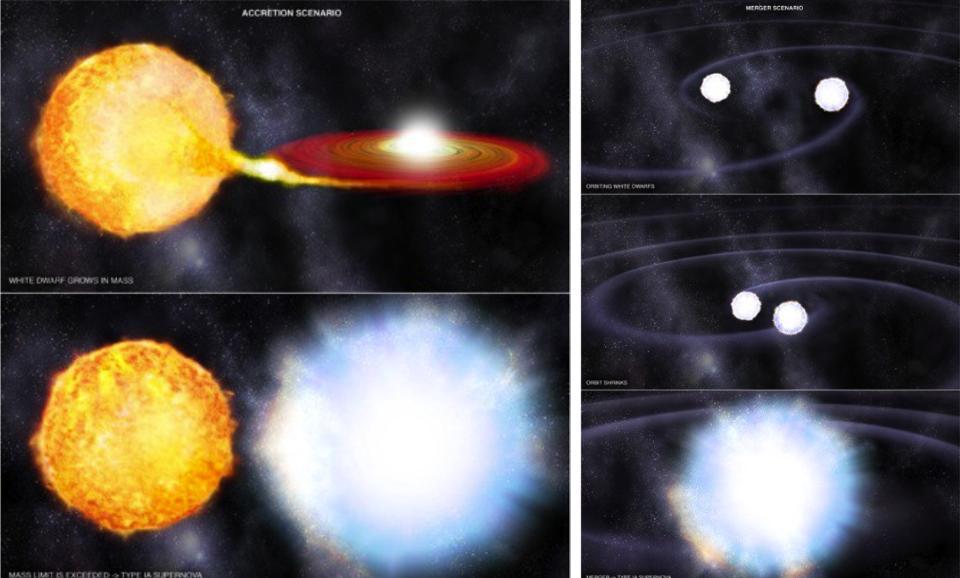
Two different ways to make a Type Ia supernova: the accretion scenario (L) and the merger scenario (R). The merger scenario is responsible for the majority of many of not only the heaviest elements in the Universe, but also iron, which is the 9th most abundant element in the Universe. (Credit: NASA/CXC/M. Weiss)
4.) White dwarf explosions. Accretions and mergers trigger white dwarf explosions: type Ia supernovae.
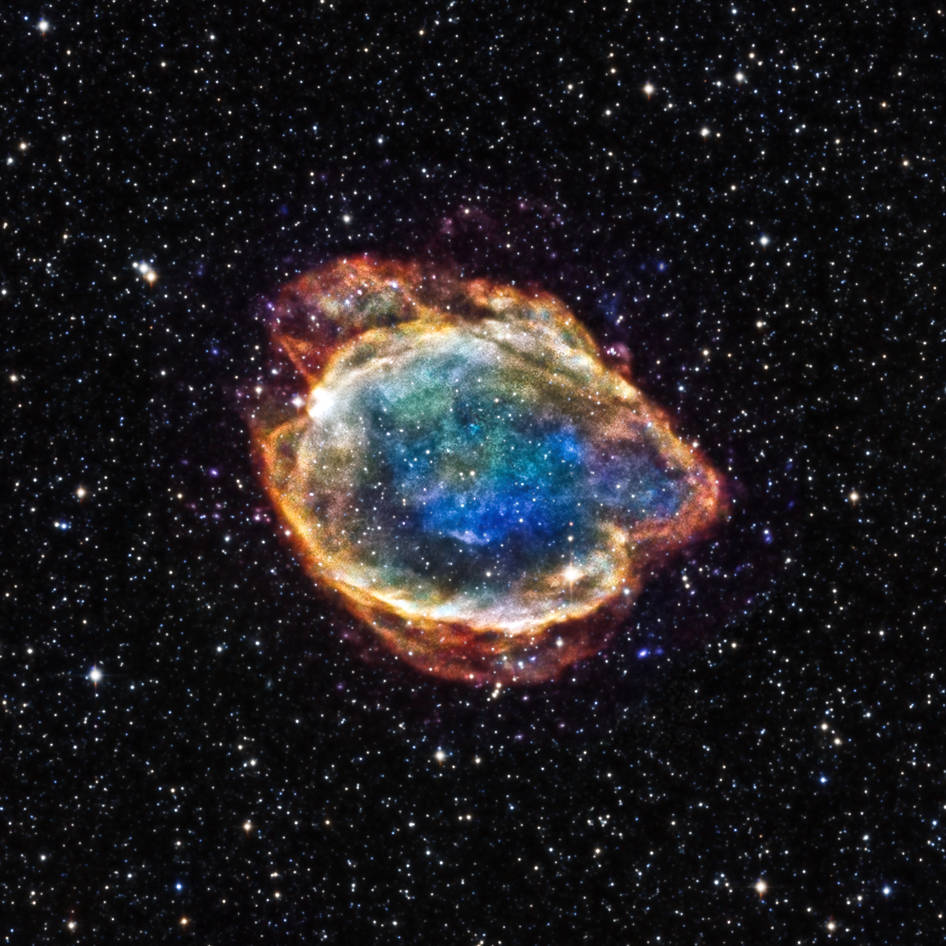
A type Ia supernova remnant, resulting from an exploding white dwarf after accretions or mergers, will have a fundamentally different spectrum and light-curve from core-collapse supernovae. They enrich the Universe with a different set of elements from other types of supernovae. (Credit: NASA/CXC/U.Texas)
These yield elements from silicon (14) through zinc (30).
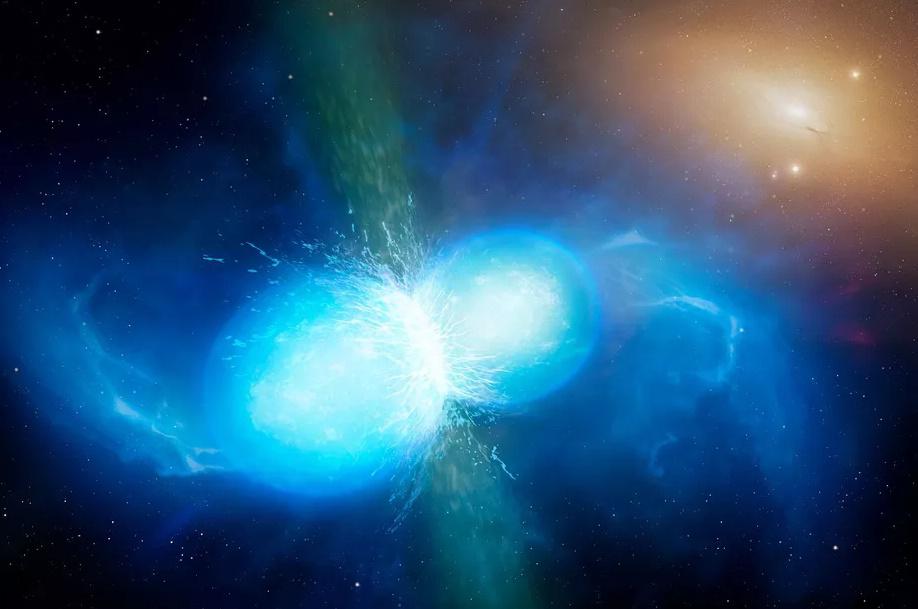
In the final moments of merging, two neutron stars don’t merely emit gravitational waves, but a catastrophic explosion that echoes across the electromagnetic spectrum. Simultaneously, it generates a slew of heavy elements towards the very high end of the periodic table. (Credit: University of Warwick/Mark Garlick)
5.) Merging neutron stars. Kilonovae greatly enrich the Universe.
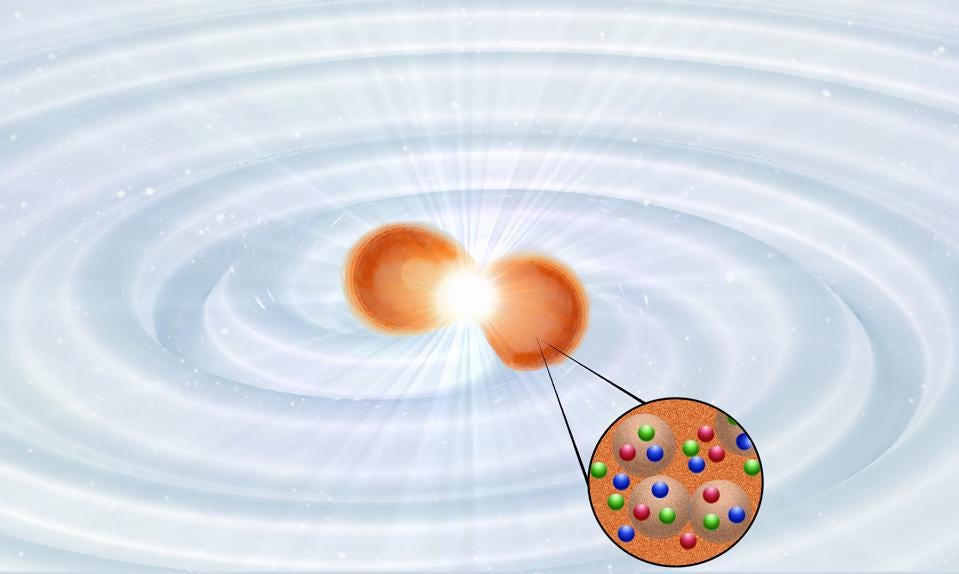
Collision of two neutron stars showing electromagnetic and gravitational waves emitted during the merger process. The combined interpretation of multiple messengers allows it to understand the internal composition of neutron stars and to reveal the properties of matter under the most extreme conditions in our Universe. This process is, in fact, the origin of many of our heaviest elements. (Credit: Tim Dietrich)
Collision of two neutron stars showing electromagnetic and gravitational waves emitted during the merger process. The combined interpretation of multiple messengers allows it to understand the internal composition of neutron stars and to reveal the properties of matter under the most extreme conditions in our Universe. This process is, in fact, the origin of many of our heaviest elements. (Credit: Tim Dietrich)
From niobium (41) through plutonium (94), they create the heaviest natural elements.
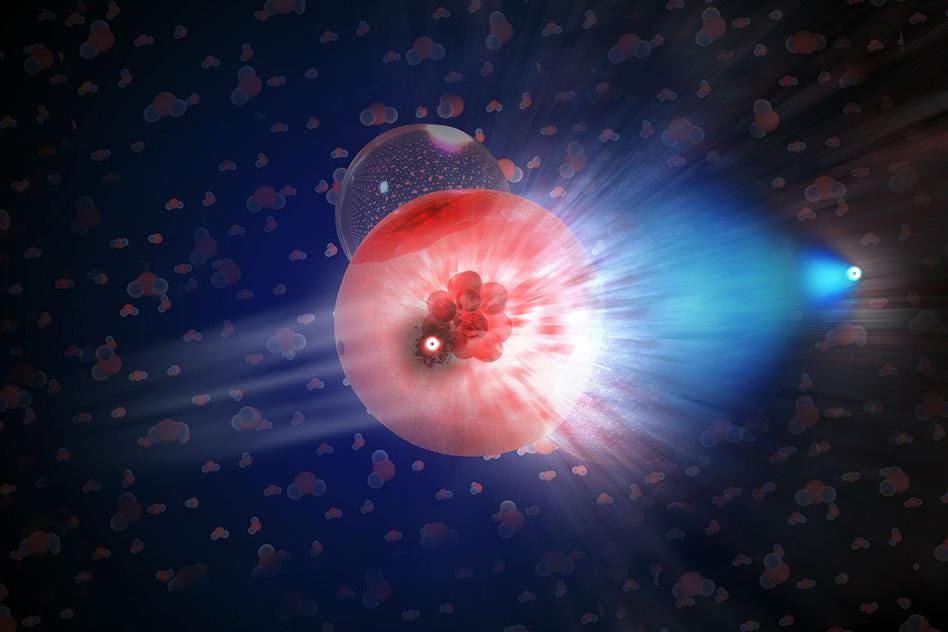
When a high-energy cosmic particle strikes an atomic nucleus, it can split that nucleus apart in a process known as spallation. This is the overwhelming way that the Universe, once it reaches the age of stars, produces new lithium, beryllium and boron. (Credit: Nicolle Rager Fuller/NSF/IceCube)
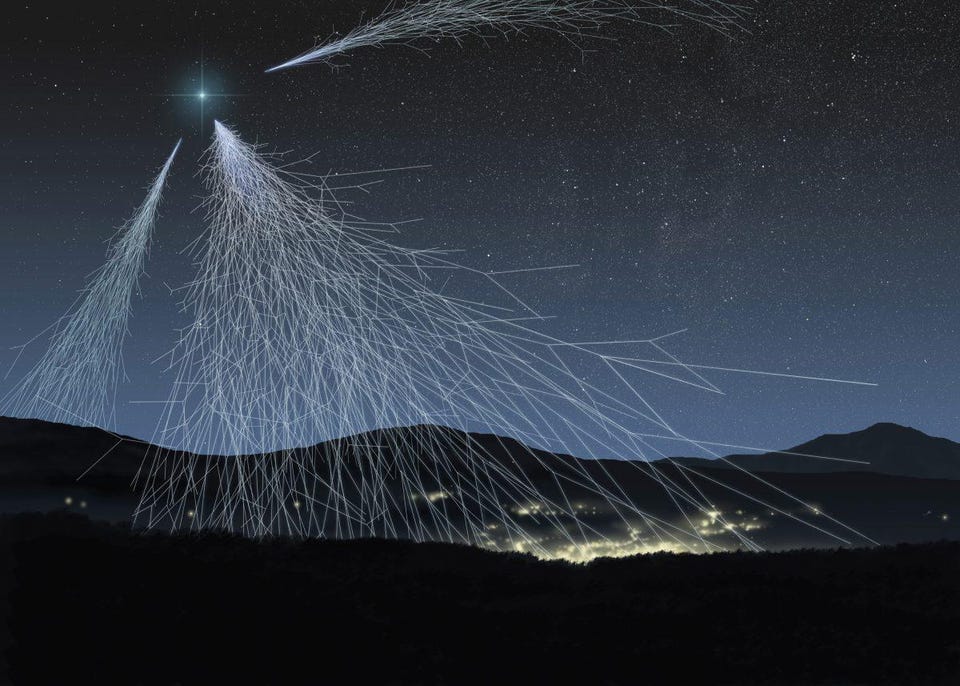
Cosmic rays produced by high-energy astrophysics sources can reach Earth’s surface. When a cosmic ray collides with a heavy nucleus, spallation occurs, producing lighter elements by blasting the original nucleus apart. Three elements, lithium, beryllium, and boron, are made by this process in substantial amounts. (Credit: ASPERA Collaboration/Astroparticle EraNet)
Spallation creates the Universe’s lithium (3), beryllium (4), and boron (5).
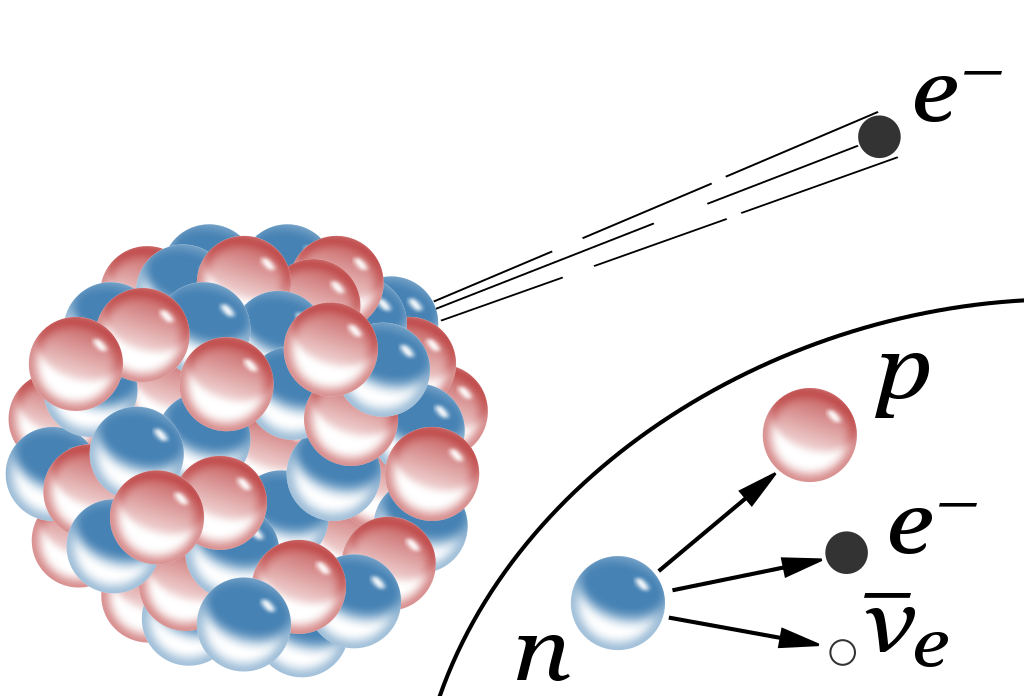
Heavy, unstable elements will radioactively decay, typically by emitting either an alpha particle (a helium nucleus) or by undergoing beta decay, as shown here, where a neutron converts into a proton, electron, and anti-electron neutrino. Both of these types of decays change the element’s atomic number, yielding a new element different from the original. (Credit: Inductiveload/Wikimedia Commons)
Curium, element 96 on the periodic table (with its atomic name corrected from the original “Cu” to the proper “Cm”), may be produced in some stellar cataclysms, but decays away before it can persist in planets like Earth. Radioactive decay chains like this produce many elements that are naturally produced in no other sustaining fashion.
Credit: BatesIsBack/Wikimedia Commons & Chloe Reynolds/UC Berkeley; modifications by E. Siegel
Decays produce technetium (43), prometheum (61), and many elements heavier than lead (82).
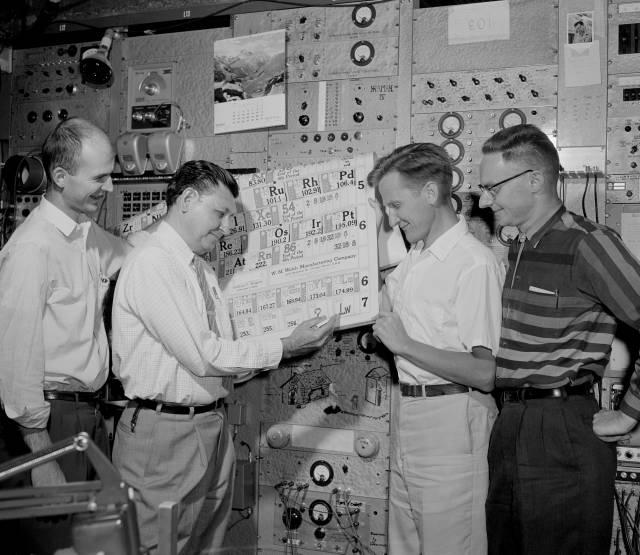
Updating the periodic table, Albert Ghiorso inscribes “Lw” (lawrencium) in space 103; codiscoverers (l. to r.) Robert Latimer, Dr. Torbjorn Sikkeland, and Almon Larsh look on approvingly. It was the first element to be created using entirely nuclear means in terrestrial conditions. (Credit: Public Domain/US Government)
Updating the periodic table, Albert Ghiorso inscribes “Lw” (lawrencium) in space 103; codiscoverers (l. to r.) Robert Latimer, Dr. Torbjorn Sikkeland, and Almon Larsh look on approvingly. It was the first element to be created using entirely nuclear means in terrestrial conditions. (Credit: Public Domain/US Government)
8.) Human-made elements. The trans-plutonic (>94) elements are exclusively lab-made.
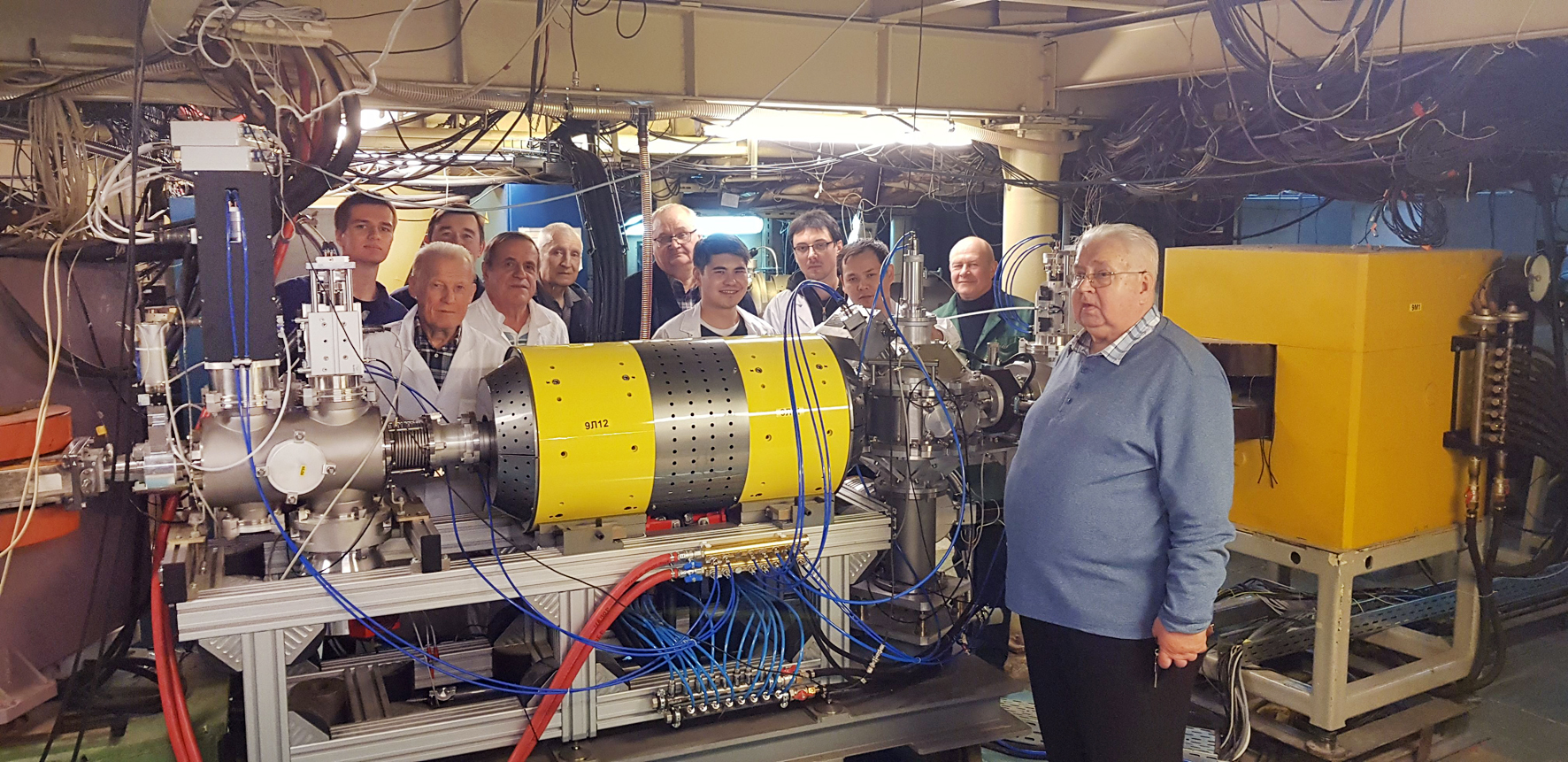
Heavy ions are accelerated and collided in our efforts to make the heaviest elements possible, including those that do not occur naturally. The current record-holder is element 118, Oganesson, which is the only “noble gas” that may not be gaseous at room temperature. (Credit: Joint Institute for Nuclear Research/MAVR facility/Flerov Laboratory of Nuclear Reactions)
Heavy ions are accelerated and collided in our efforts to make the heaviest elements possible, including those that do not occur naturally. The current record-holder is element 118, Oganesson, which is the only “noble gas” that may not be gaseous at room temperature. (Credit: Joint Institute for Nuclear Research/MAVR facility/Flerov Laboratory of Nuclear Reactions)
Only human-caused nuclear reactions create them: all the way up to Oganesson (118).
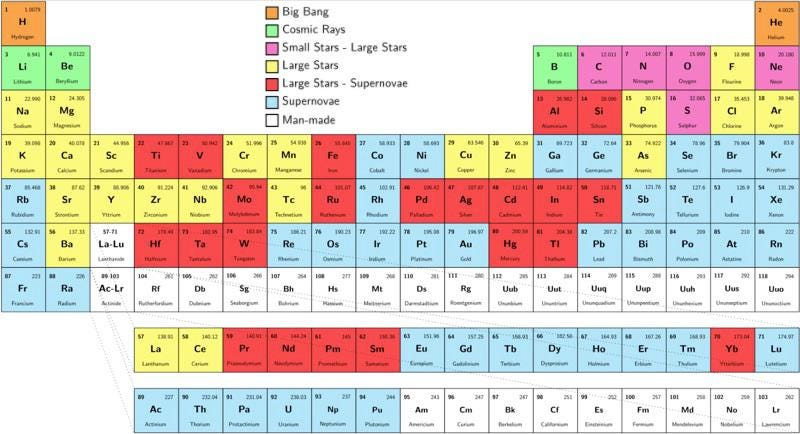
The primary source of the abundances of each of the elements found in the Universe today. A ‘small star’ is any star that isn’t massive enough to become a supergiant and go supernova; many elements attributed to supernovae may be better-created by neutron star mergers. (Credit: Peroidic Table of Nucleosynthesis/Mark R. Leach)
(Credit: Peroidic Table of Nucleosynthesis/Mark R. Leach)
Mostly Mute Monday tells an astronomical story in images, visuals, and no more than 200 words. Talk less; smile more.
Sign up for the Starts With a Bang newsletter
Travel the universe with Dr. Ethan Siegel as he answers the biggest questions of all.