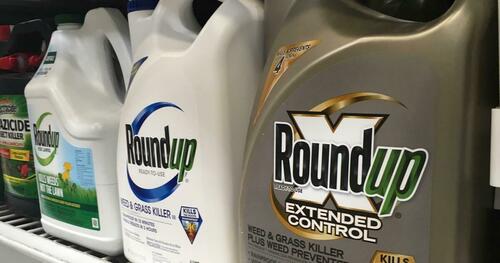
Bayer AG shares moved higher in European trading after the U.S. Supreme Court agreed to hear its appeal of a Roundup verdict, raising new hopes the ruling could undermine thousands of related lawsuits over cancer risks.
Last Friday, the Supreme Court said it would hear an appeal from Bayer, which petitioned the court last year. Bayer argues that users of the weedkiller shouldn't be able to sue the company for failure to warn about cancer risks because federal regulators have determined that Roundup's main chemical, glyphosate, does not require a cancer warning.
The case challenges a $1.25 million Missouri jury award over claims Bayer failed to warn that Roundup causes cancer. Bayer argues the claims are preempted by federal law and maintains the product is safe.

The Wall Street Journal noted, "The Supreme Court will likely hear arguments in the case this spring, with a ruling expected by early July. If Bayer prevails, it could help lead to the dismissal of thousands of cases against the company."
The lawsuit stems from Bayer's $63 billion acquisition of Monsanto, the developer of Roundup, in 2018. Glyphosate remains the most heavily used herbicide on American farms, with 300 million pounds applied annually.
The Roundup litigation sent Bayer shares in Europe into a decade-long bear market. In 2025, what appears to be a bottoming year, the stock troughed near 2004 levels around 20 euros and has since more than doubled to roughly 44 euros. Shares are up more than 7% on Monday.

"The Supreme Court decision to take the case is good news for U.S. farmers, who need regulatory clarity," Bayer CEO Bill Anderson told WSJ in a statement. "It's also an important step in our multi-pronged strategy to significantly contain this litigation."
Last month, the Trump administration urged the Supreme Court to take up the Roundup case.
The EPA has "repeatedly determined that glyphosate is not likely to be carcinogenic in humans, and the agency has repeatedly approved Roundup labels that did not contain cancer warnings," Solicitor General John Sauer wrote in a December legal brief.
"A manufacturer should not be left subject to 50 different labeling regimes prescribing different requirements," Sauer said.
Bayer said it expects a Supreme Court decision by summer. Watch shares of the company likely squeeze higher.
Loading recommendations...