Authored by Janice Hisle via The Epoch Times (emphasis ours),
ST. PAUL, Minn.—Erin Campbell, Minnesota’s top financial officer, told a state anti-fraud committee at the state Capitol on Jan. 21: “Unfortunately, there’s not a ‘silver bullet’ to stop the type of fraud that we’ve seen in our public-assistance programs.”

The lack of a quick fix is largely because “state government is about as complex as it gets,” Campbell told the Fraud Prevention and State Agency Oversight Policy Committee.
That bipartisan committee of eight state representatives began meeting nearly a year ago to tackle large-scale defrauding of the state’s public-assistance programs. That was about 10 months before investigative reports and a viral video drew focus to Minnesota’s massive problem with fraudsters. The scandal has been building for years.
Since 2022, federal prosecutors have charged nearly 100 suspects—mostly of Somali descent—in Minnesota fraud cases; officials estimate that fraud losses, now being probed as far back as 2018, could exceed $9 billion. President Donald Trump’s administration froze funding for some programs and mobilized investigations from multiple federal agencies, ranging from the Treasury Department to the IRS and the Justice Department.
Campbell, commissioner of Minnesota Management and Budget, told the lawmakers’ committee that her employees “work as hard as we can to support agencies” that are expected to follow the “systems of financial management” that her office creates.
Those systems involve “statutes, processes, policies, culture, agencies, practices, and [information technology] ... that have been developed over decades,” she said.
Thus, addressing fraud requires “layers” of coordinated changes, she said, such as analyzing data, upgrading technology, and changing state laws that govern program eligibility.

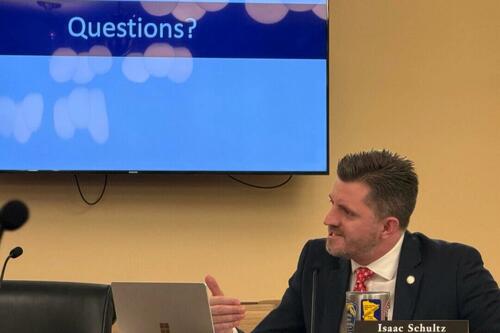
However, noting that the state government has swelled to 59,000 employees, state Rep. Isaac Schultz said: “This is outrageous for the people of Minnesota, that our state government, at its largest size in state history, can’t take care of this mess.”
“I can’t understate it—how frustrated Minnesotans are right now with the level of fraud and the lack of accountability that we’ve seen,” he said.
Campbell said that 75 employees on her team face the gargantuan task of supporting the statewide government, with its $65-billion budget and hundreds of state agencies, boards, and commissions, “while we’re making 2.5 million payments every year.”
Thus, Campbell said, her office lacks “the capacity ... or the appropriate line of sight” to identify and tackle fraud in individual state agencies.
When other state agencies see signs of fraud, it’s up to them to pause payments and refer cases to law enforcement agencies or the state attorney general for criminal investigations, Campbell said. Her office lacks authority to hold other agency heads accountable if procedures aren’t followed, she said.
The governor does have that power, Campbell and others agreed.
When Schultz asked whether Gov. Tim Walz, a Democrat, had “ever directed you or members of your team to stifle the reports of whistleblowers,” Campbell replied, “Absolutely not.”
That is one accusation that Walz has faced from whistleblowers. Three Republicans who serve on the fraud committee—Reps. Kristin Robbins, Walter Hudson, and Marion Rarick—testified about that at a congressional hearing in Washington earlier this month. Walz has defended his record and has denounced fraudsters. He is scheduled to testify about fraud Feb. 10 to the U.S. Committee on Oversight and Accountability.

The Democratic leader of the Minnesota anti-fraud committee, Rep. Dave Pinto, said that, on his side of the political aisle, “We all share just a sense of fury” over taxpayer dollars being stolen instead of benefiting “people in need.”
Schultz said he was glad to hear bipartisan agreement that “this is a real and significant problem that deserves federal, and state, and local level attention.”
“Minnesotans are sick of this and for too long it’s been hidden inside this state Capitol ... but not any longer,” Schultz said.
After the hearing, another Democrat, Rep. Emma Greenman, told The Epoch Times she expects to see a set of proposals to address fraud soon after the Legislature reconvenes next month. “Some of which, hopefully, we are working on with our folks across the aisle,” she said.
If not, “then we'll do it ourselves,” Greenman said.
Also in an interview after the hearing, the Republican who heads the committee, Robbins, said Republicans and Democrats appear to be approaching the fraud problem from different angles.
“I think our side is more driven for finding accountability and their side is more like, ‘fix the errors,’” Robbins told The Epoch Times.
Robbins noted that she repeatedly asked Campbell and other budget-management employees “What do you need?” to ensure tighter financial controls across agencies.
“They didn’t have an answer,” Robbins said. “So I don’t know that they want to hold people accountable.”
Still, however, there appears to be universal agreement on one point, Robbins said: “We want to stop the fraud.”
Democrats and Republicans joined forces last year on several anti-fraud measures, including a whistleblower-protection bill, Robbins pointed out. That history gives her hope that representatives of both parties can find common ground to further clamp down on fraud.
“I mean, everybody’s constituents are furious about this,” she said. “Nobody wants fraud.”
Loading recommendations...