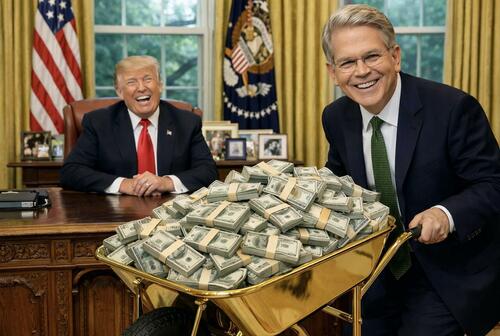
In the latest sign that we're living in unusual times, the sitting president of the United States is suing the US Treasury and Internal Revenue Service -- both housed in his executive branch -- and asking to be paid at least $10 billion in compensation for "reputational and financial harm," according to a complaint first publicized Thursday.

The suit springs from the IRS's failure to maintain the confidentiality of President Trump's tax returns. Between 2018 and 2020, then-IRS consultant Charles E. Littlejohn stole Trump's tax files and handed them over to The New York Times and ProPublica, which reported extensively on them. In 2024, Littlejohn was sentenced to five years in prison for stealing not only Trump's files, but also those of thousands more wealthy Americans, and giving them to the two news outlets. Prosecutors said he sought a role at the IRS with the intention of gaining access to Trump's information. He found such a role via Booz Allen Hamilton, which had a contract with the IRS. Citing the breach, Treasury killed all its remaining contracts with the firm earlier this week.
The Trump lawsuit makes for some strange dynamics within the executive branch: Trump-chosen Scott Bessent is both Treasury Secretary and acting IRS commissioner, and he'll have to figure out how to respond to a $10 billion demand presented by his own boss. Trump is joined in the suit by his two eldest sons, Donald and Eric, both executive VPs at the Trump Organization. In a 27-page complaint filed with the US District Court for the Southern District of Florida, the Trumps allege:
"[Treasury and the IRS] have caused Plaintiffs reputational and financial harm, public embarrassment, unfairly tarnished their business reputations, portrayed them in a false light, and negatively affected President Trump, and the other Plaintiffs’ public standing."
According to the complaint, the Treasury Inspector General for Tax Administration had warned the IRS about its insufficient protections for confidential taxpayer information -- not just once, but every year from 2010 to 2020. The uncorrected deficiencies enabled Littlejohn to steal Trump's information, upload it to a website and then share it, the Trumps allege: "Defendants were obligated to have appropriate technical, employee screening, security, and monitoring systems to prevent Littlejohn’s unlawful conduct. Defendants failed to take such mandatory precautions."

In late September 2020 -- about five weeks before that year's presidential election pitting Trump against Joe Biden -- the Times published a sprawling, multi-article analysis of Trump's tax filings, determining that he'd only paid $750 in taxes in 2016, and no taxes in 10 out of the previous 15 years. "His reports to the IRS portray a businessman who takes in hundreds of millions of dollars a year yet racks up chronic losses that he aggressively employs to avoid paying taxes," reported the Times. (In a telling indicator that leftist media's relentless obsession with Russia scaremongering was still going strong in 2020, the Times laughably had to acknowledge that the documents failed to "reveal any previously unreported connections to Russia.")
Trump was clearly done wrong by having his tax files exposed to public view without his consent. However, Trump's lawsuit underscores an exasperating aspect of man's relationship to the state: When governments do wrong and are compelled to pay damages, the cost is always passed on to the citizenry, whether through taxation or inflation.
Loading recommendations...