One surname is not "where you're from".
I've been interested to understand my family history for some years now. I already put some effort into talking with relatives, taking notes from our conversations, finding old documents, and consolidating information from different places.
There are many platforms or apps that can visually represent your tree. Using my family as an example (with anonymized names), below are some visualizations in the form of:
- an ancestor 'fan chart', starting with the subject and going back, omitting siblings
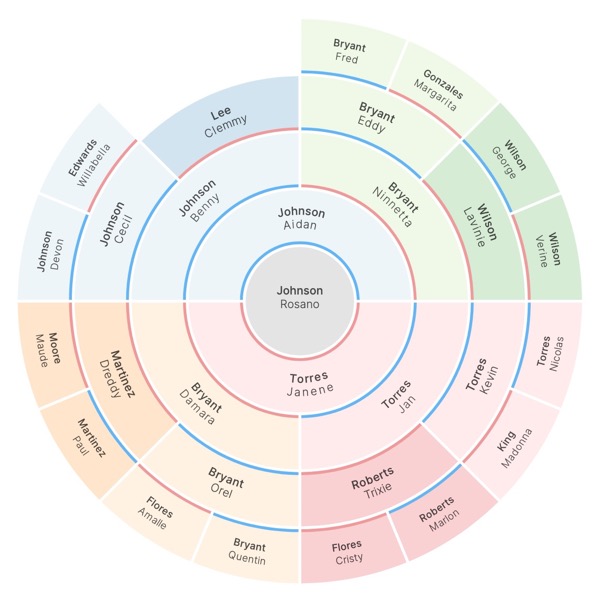
me in the center, paternal side above, maternal side below; via Gramps Web
- a descendant 'sun chart', radiating outward from a single 'root ancestor'
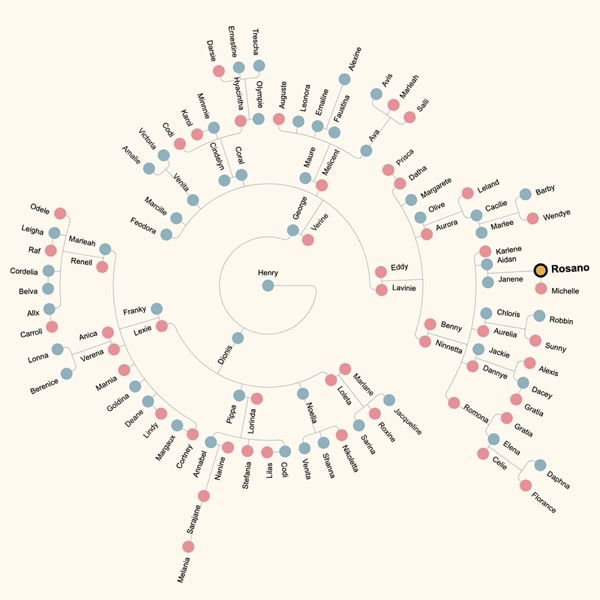
my 'top ancestor' in the center on a path to each descendant, me on the right at 3 o'clock; via SunTree
- the traditional 'tree', representing more comprehensively
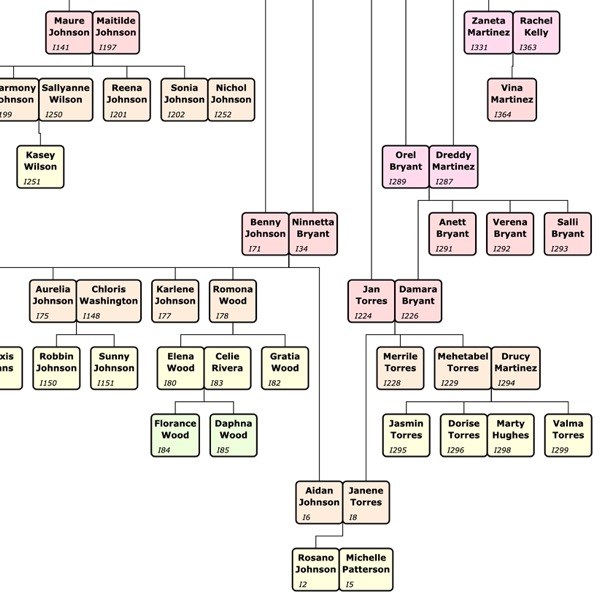
me at the bottom, lines connecting to all relatives; via Topola Genealogy Viewer
- 3D force-directed graph
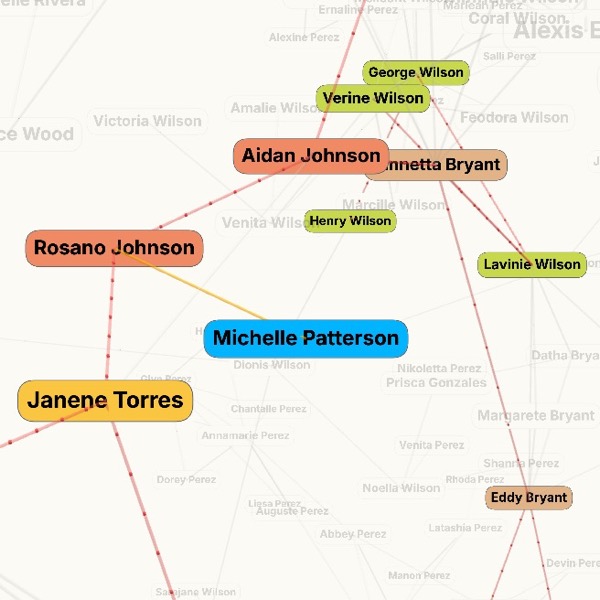
no particular center or emphasis; tree members in a hierarchy based on age and year; via blood lines
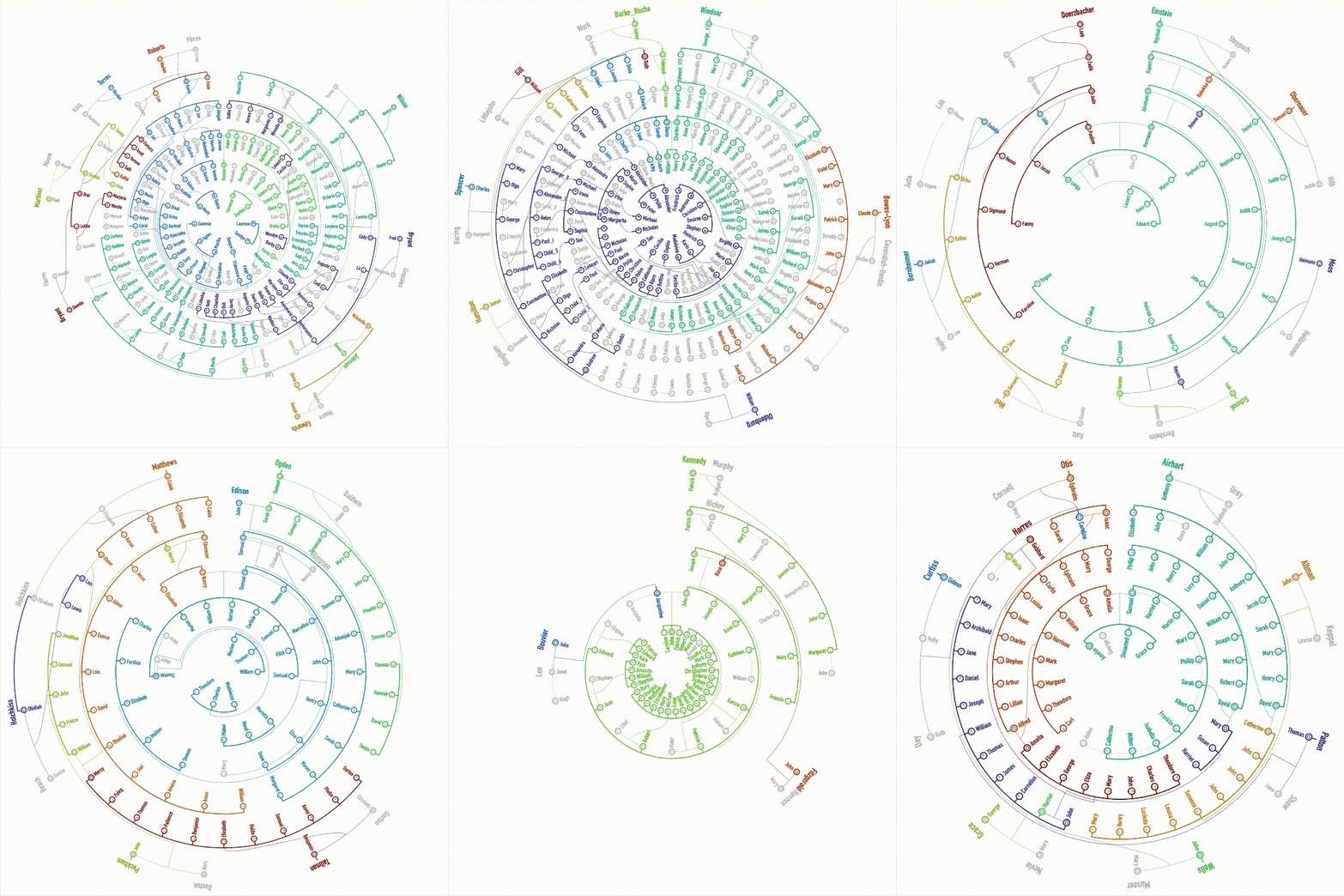
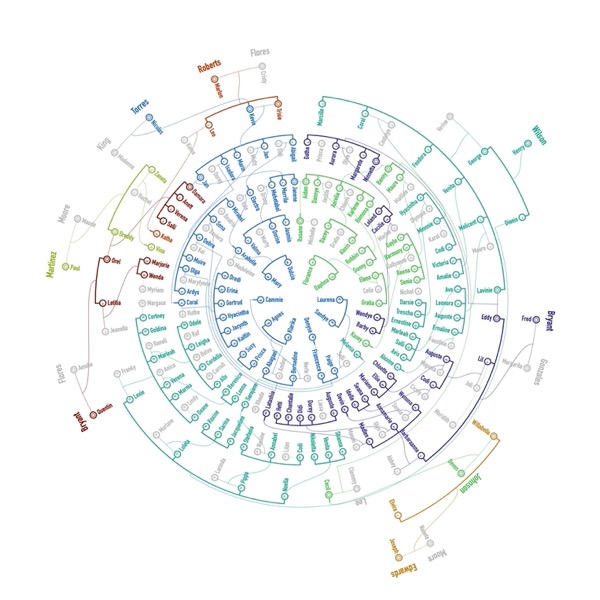
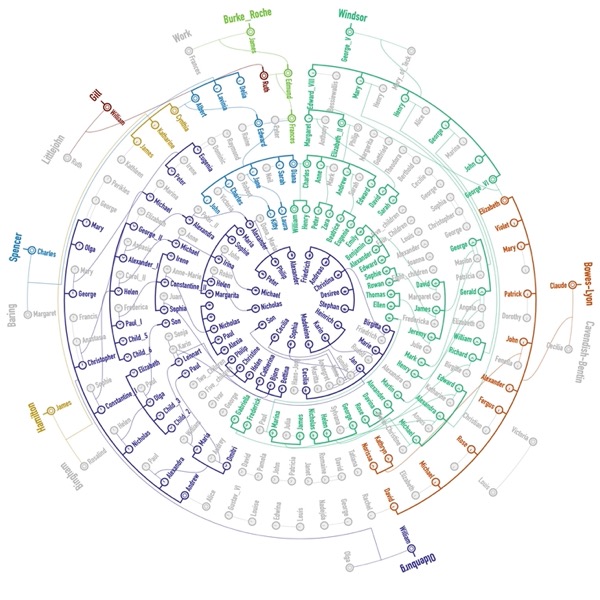
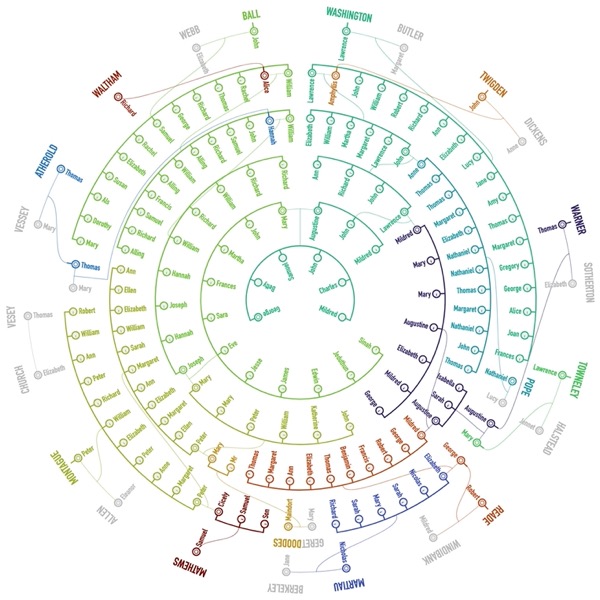
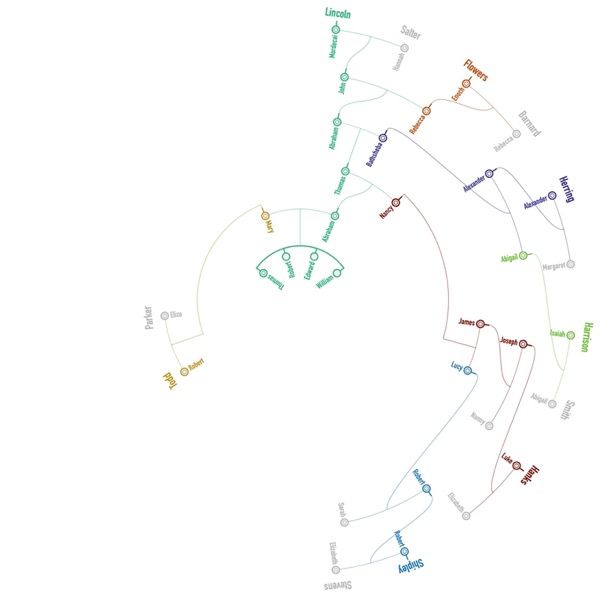
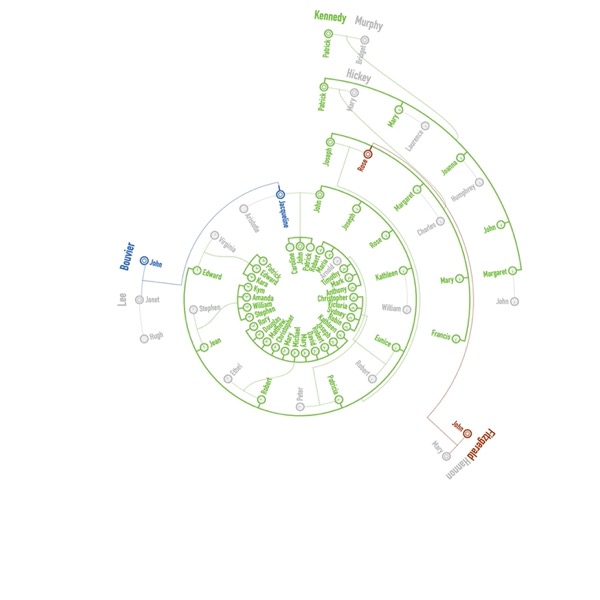
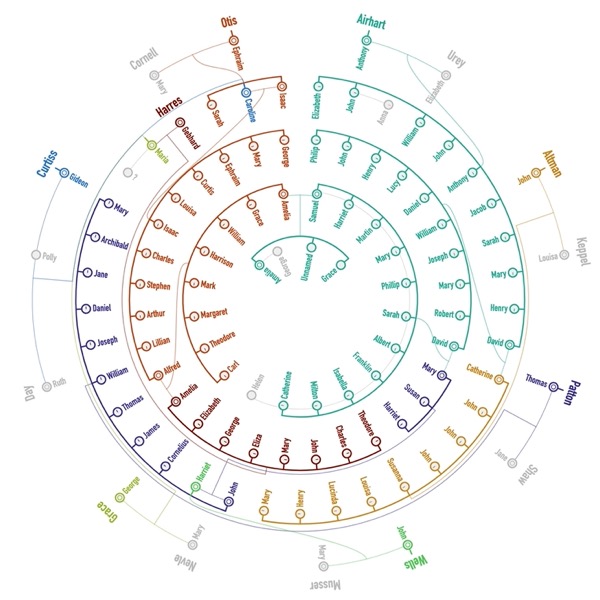
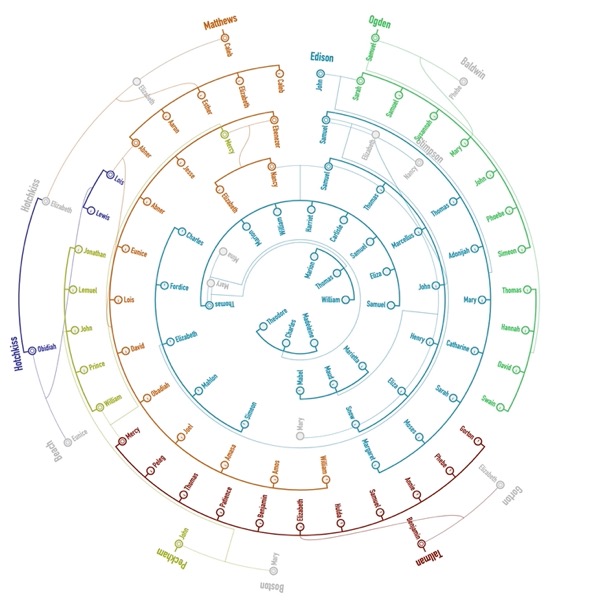
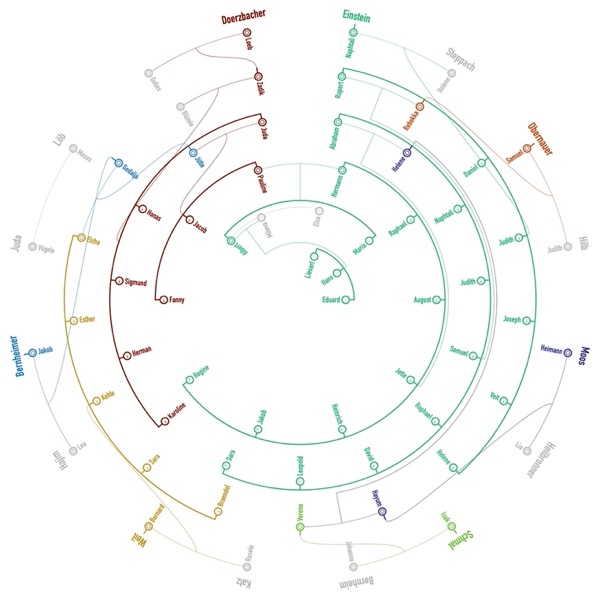
All of these look nice and are fun to explore but become harder to read as data accumulates. None of them help me orient to where people fit in the larger picture. So I made my own with the following characteristics:
- radial layout to maximize space and group by generation;
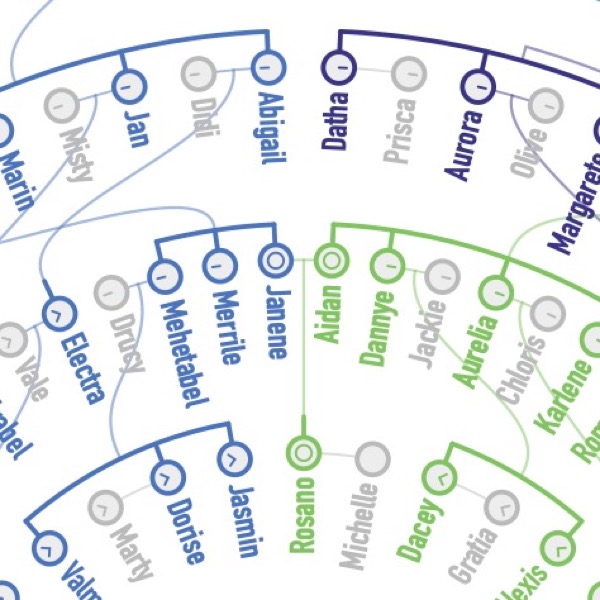
- lines to connect siblings, spouses, and children;
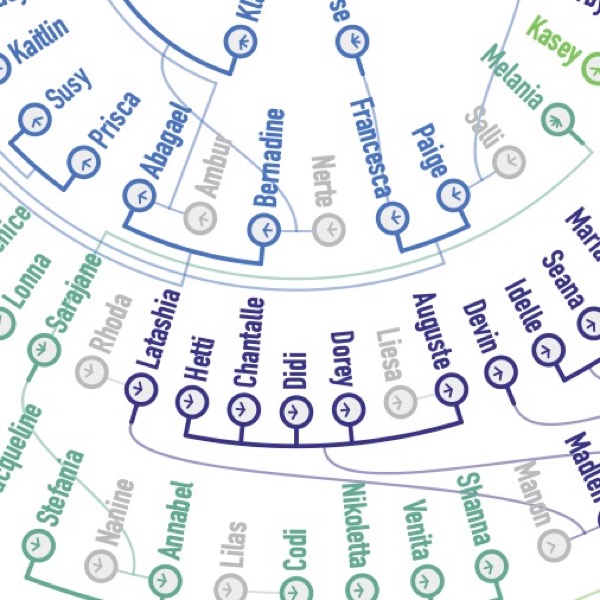
- colour to roughly track lineage based on last names;
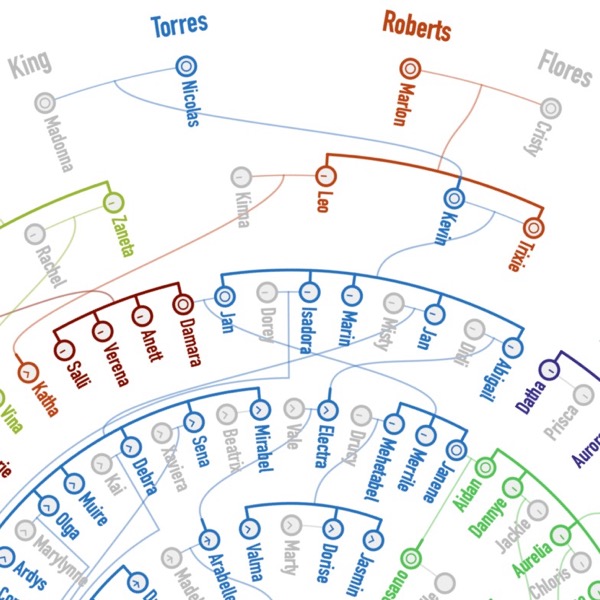
This finally gives me a sense of who my second and third cousins are, which I wasn't able to grasp before.
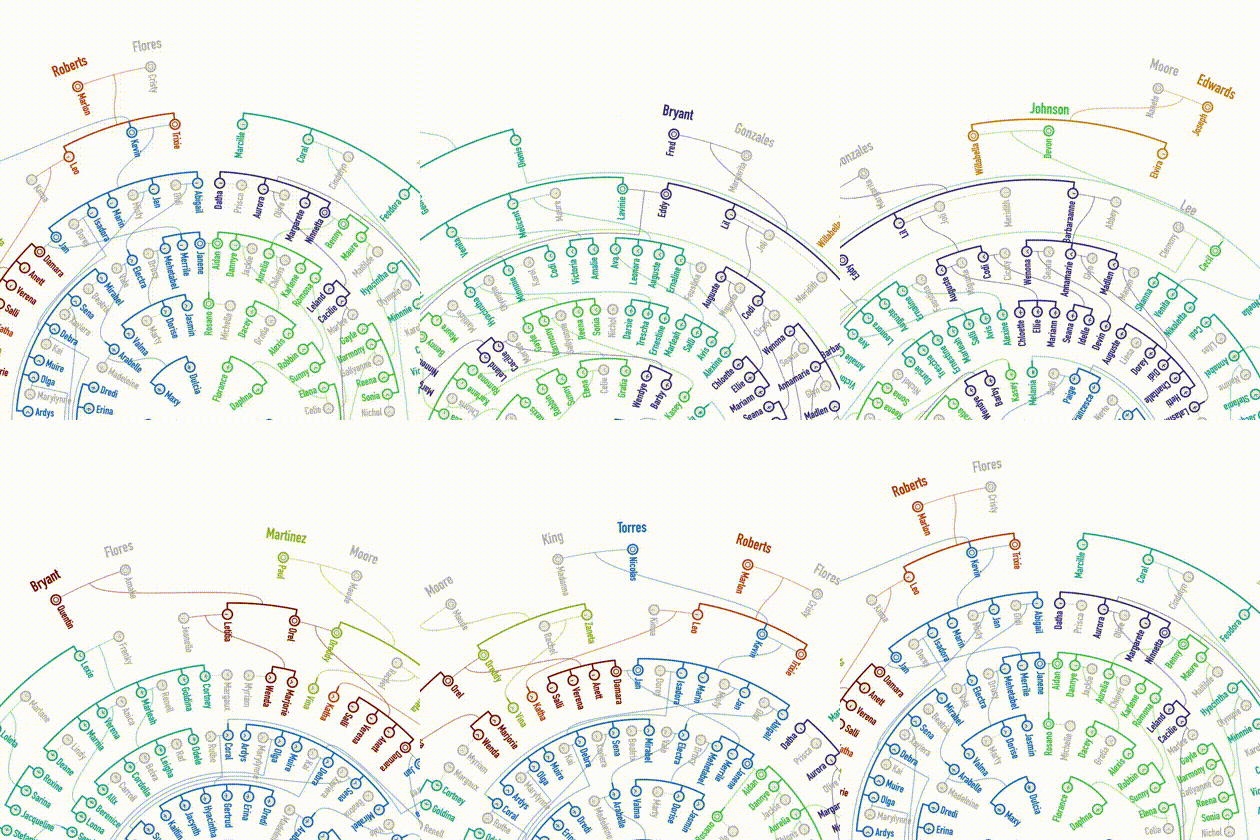
I also learned that surnames aren't the ultimate indicator of 'where one comes from'. Even though I commonly think of my last name as representing family origins, it really just emphasizes those who passed on their name; feels cool to realize that as one person I actually come from people with thirteen unique last names!
Another interesting set of trivia has to do with the Mormon Church. I never paid much attention to them, but through this work I've learned that they contribute heavily to family tree technologies and to ordinary people learning about their own family histories:
- they invented the GEDCOM file format in 1984, which all these apps use to import and export genealogical data
- they probably run a 'FamilySearch Center' near you to provide research help and free access to paid platforms
- their FamilySearch wiki has about 150,000 articles to help you find vital records for family research in most countries
- they've helped archive and digitize birth, death, and other records from all over the world (accessible through their FamilySearch platform or local centers)
There's more I'd like to do with this, but for now I'm happy just to have my own tree and share it with family.
For anyone who's curious, here are some full-size PDFs where you can see details:
If you're interested to explore deeper, I've compiled links from my research to save you some searching.
build family trees
visualize family trees
self-hosted genealogy tools
hosted genealogy tools
development
parse and serialize
only parse
experiments
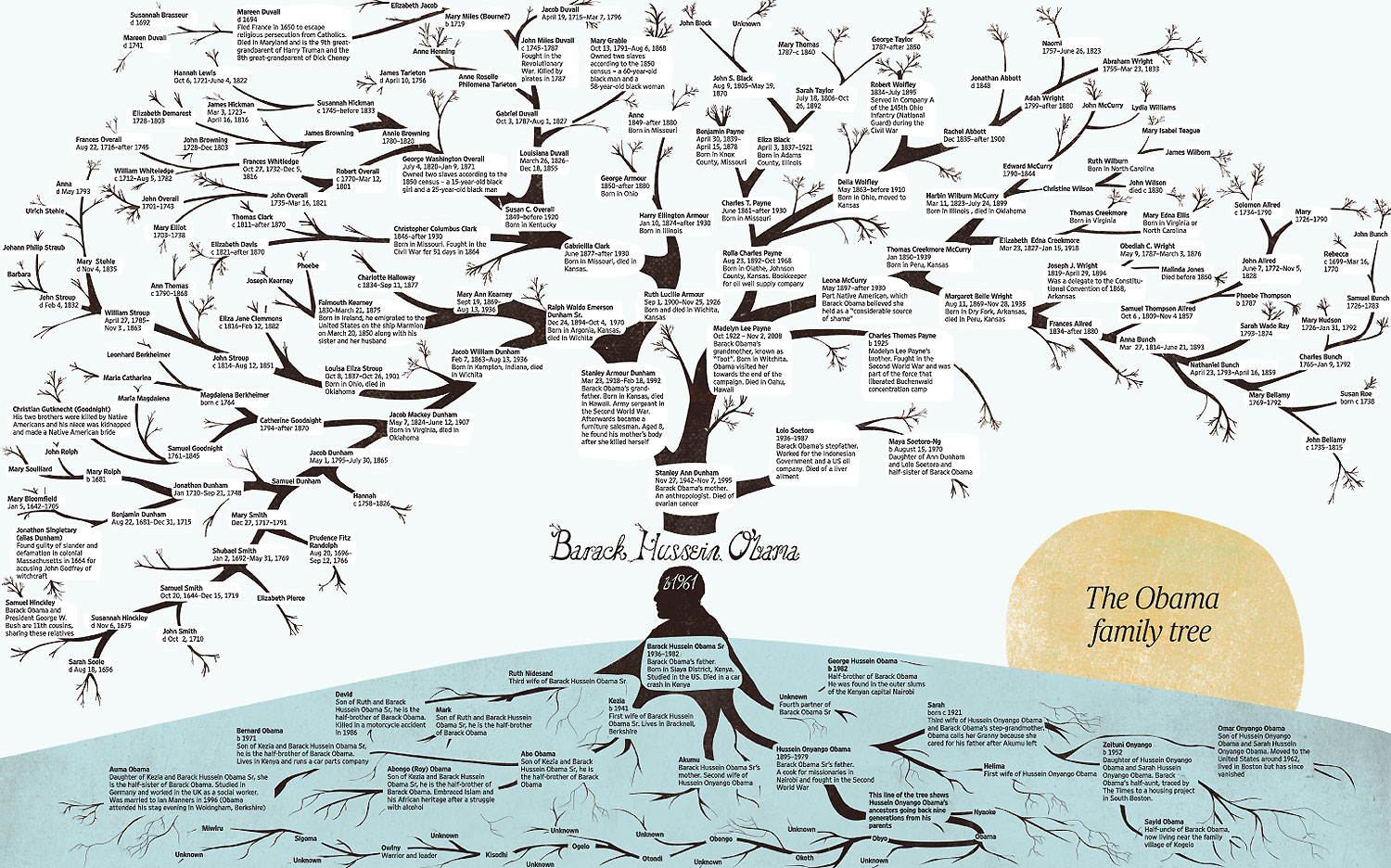
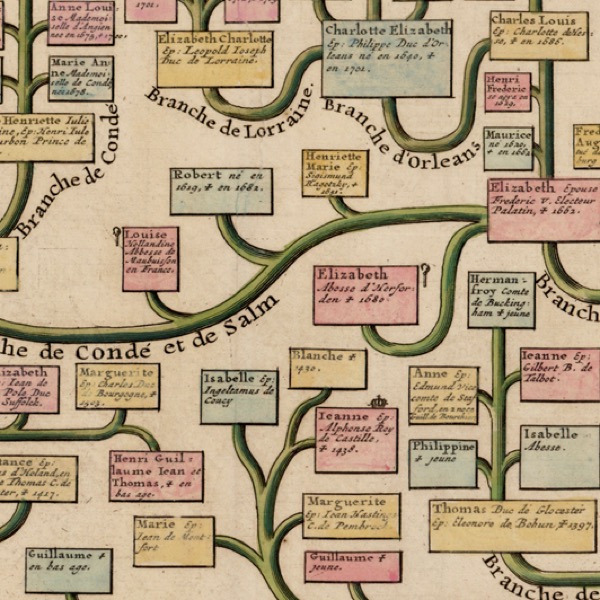
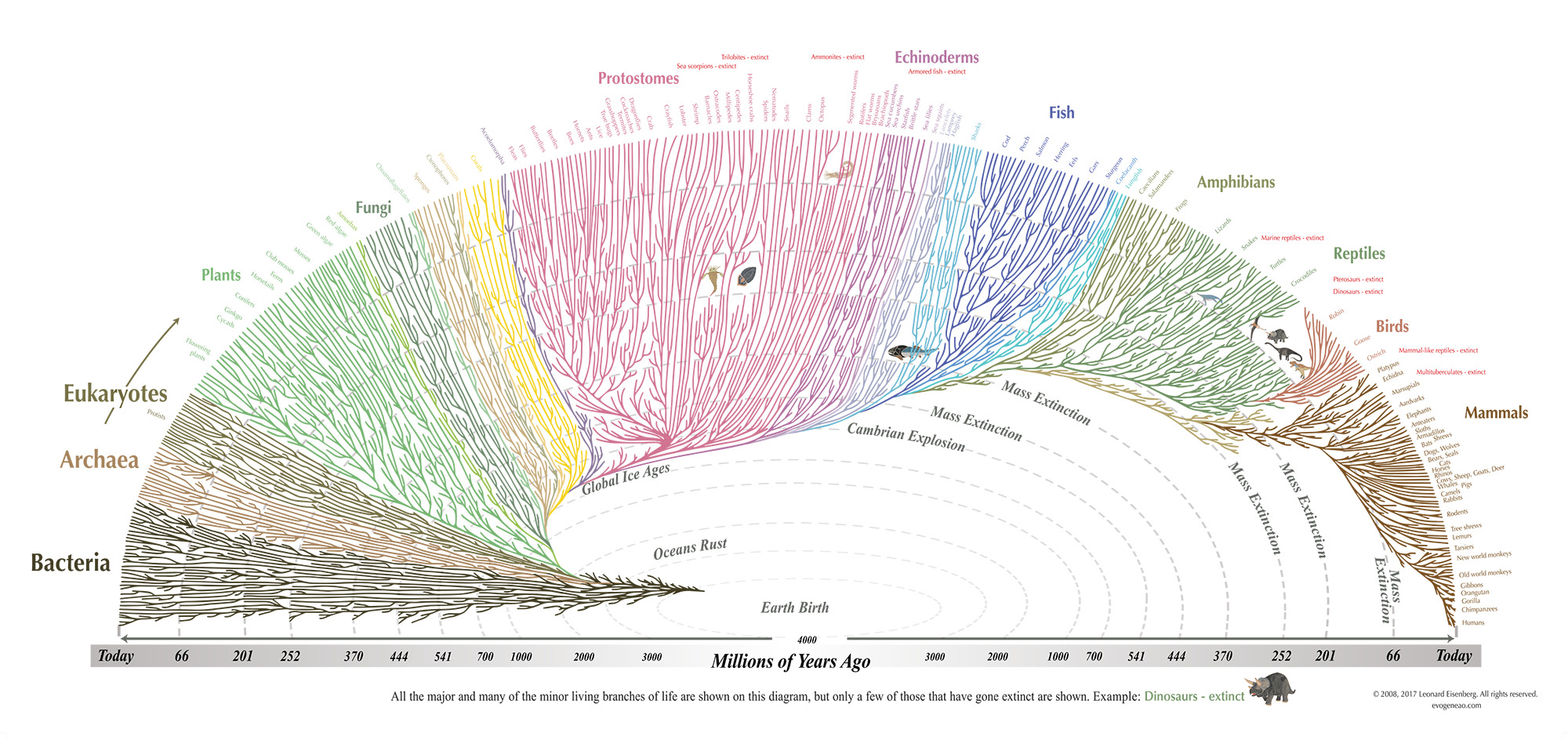
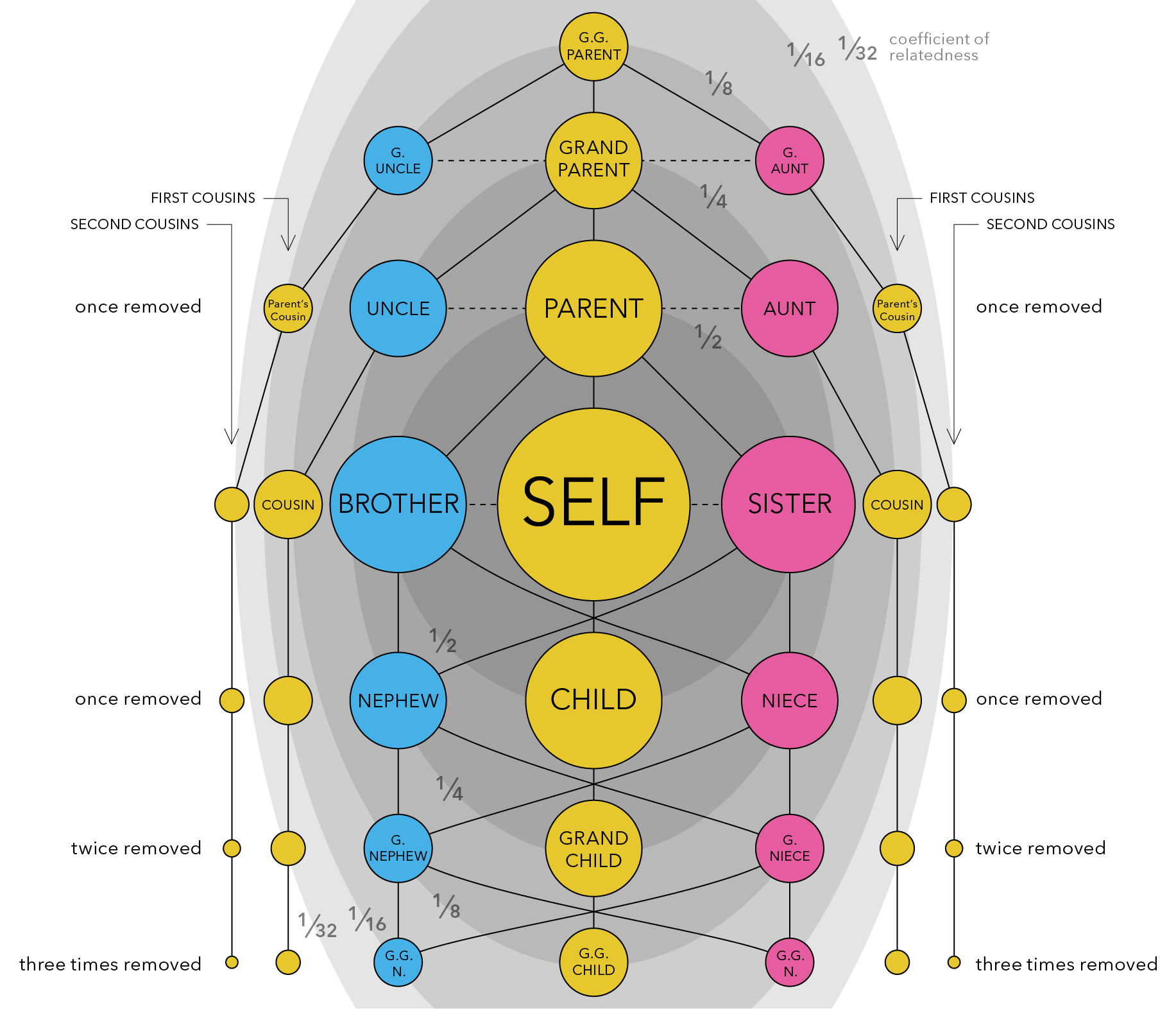
inspiration
.png)