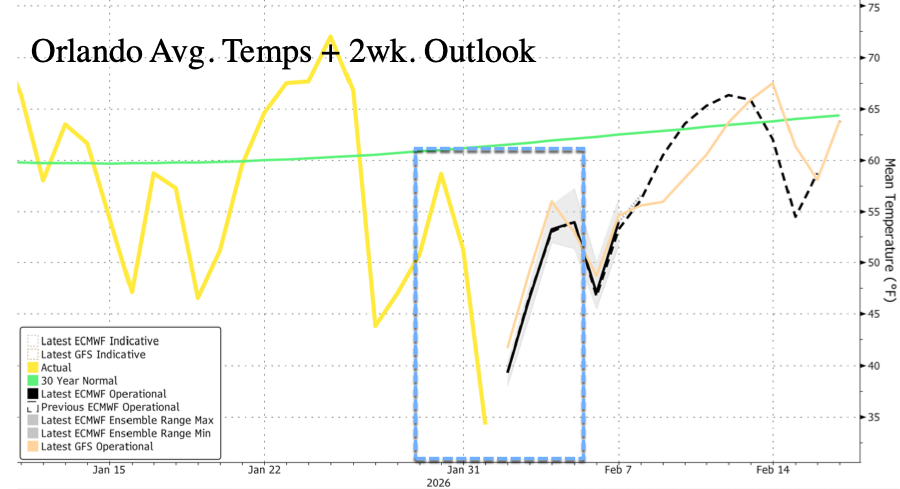
Floridians were once again warned this week to watch out for falling iguanas as an ultra-rare cold blast sent temperatures plunging to record lows of 22F in Jacksonville and 24F in Orlando. Whenever Arctic air pours into The Sunshine State, its citrus industry inevitably takes a hit, and this deep freeze comes on top of years of damage from greening disease and repeated blows from tropical cyclones that have already decimated the crop.
"There was significant damage to the remaining oranges to be picked in central Florida," said Jim Roemer, a meteorologist who publishes the WeatherWealth newsletter, quoted by Bloomberg.
Roemer added, "Many key areas were well below 28 degrees for over four hours between Sunday and this morning."
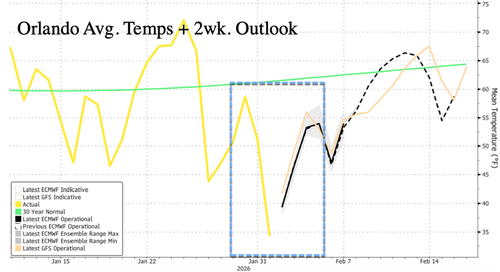
According to Bloomberg data, the average temperature in the Orlando metro area on Sunday was in the low 30s. The good news is that temperatures are expected to rise later in the week and, by mid-month, revert to 30-year seasonal norms around the mid-60s.
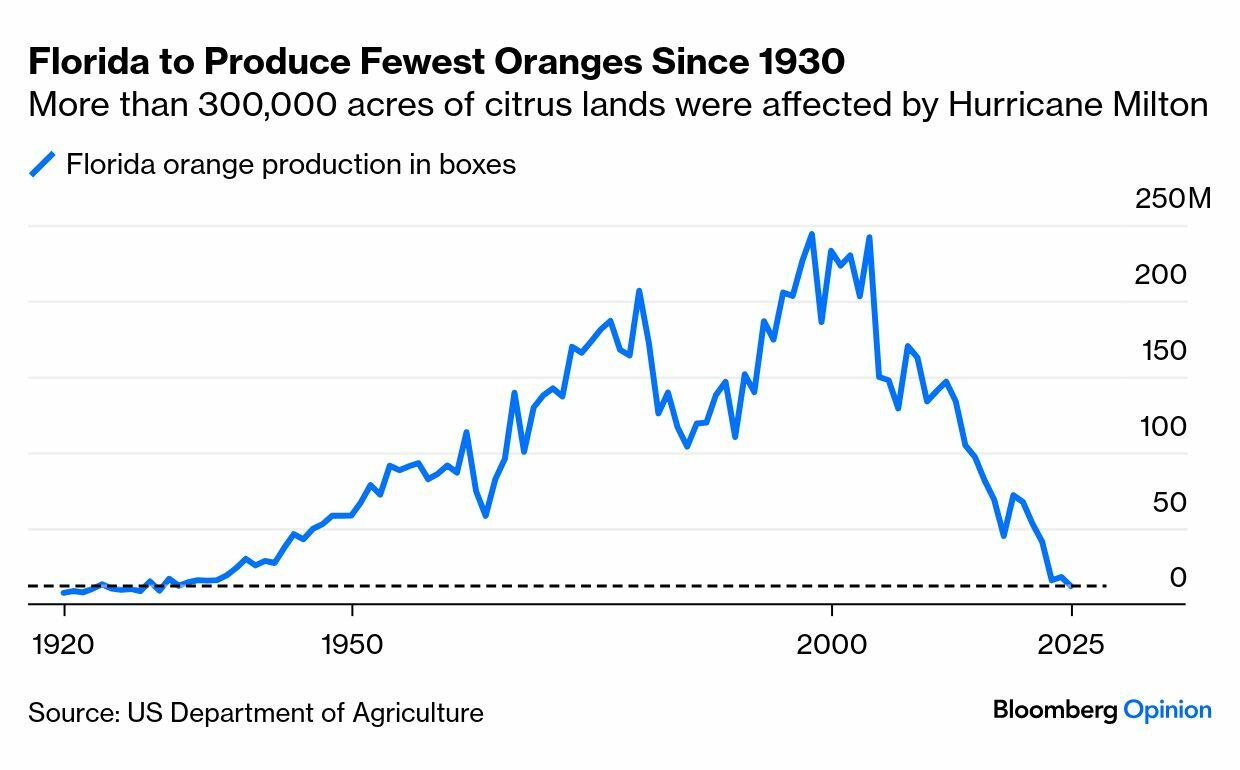
Even before the deep freeze, we have reported for years that the citrus industry in central Florida has been decimated by greening disease and tropical cyclones. The latest data from the USDA shows that this season's orange juice harvest will be the smallest since 1930.
Judy Ganes, president of J. Ganes Consulting, told the outlet that growers were already prepared with water sprayers to help insulate oranges, and that some unharvested fruit was mature enough to be salvaged.
She added that the cold weather is expected to help with that effort, noting: "They need to get the oranges off the trees and processed before the fruit goes soft and rots, so a freeze followed by a rapid warm-up is more challenging than a lingering cold."
Traders do not appear to view the deep freeze across major citrus-growing areas in Florida as a major issue, as orange juice futures in New York were down about 10% early Monday, trading at three-year lows after topping in early 2024 amid a citrus squeeze in US markets.
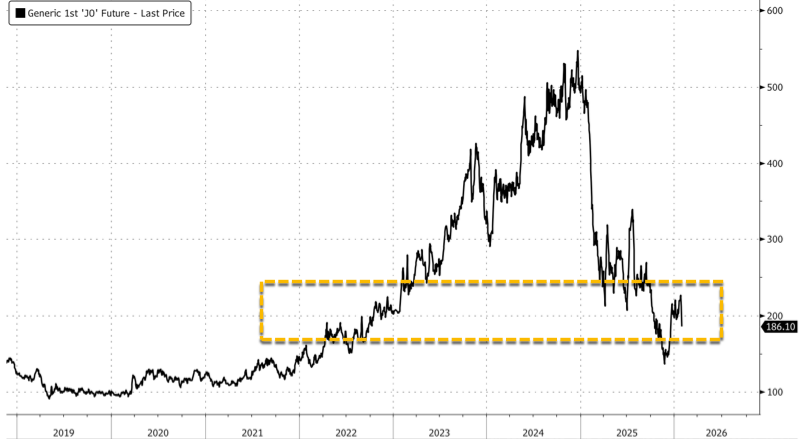
The surge in US orange juice imports from Brazil has allowed the Trump administration to mitigate potential price hikes, with prices sliding lower for much of 2025.